
Lieferung heute & morgen

Qualitätsgarantie

Willkommens-Angebote freischalten: KOSTENLOSE Lieferung | Bis zu 80 % RABATT | Kostenlose 30-Tage-JoyPlus-Testphase
App herunterladen
A food slicer should prepare ingredients evenly and feel safe to use. In practice, though, it quickly becomes clear that not every model suits every household. A basic vegetable slicer is ideal for cucumbers or carrots, while a potato cutter has different requirements when it comes to blades, stability and cleaning.
Names such as multi-function slicer, vegetable chopper or mandoline slicer sound versatile. What matters, though, is which inserts are actually included. Some models slice and grate, while others also come with julienne blades. An egg slicer or avocado slicer, by contrast, is usually designed for a specific type of food.
Before you buy, consider what you’ll mainly use it for:
Stainless steel slicers are not automatically suitable for every task. Check whether stainless steel is used for the blades, cutting wires or just the housing. Plastic can keep the weight down, but it still needs to be sturdy. With wire slicers, a solid frame and stable base are also important.
It’s worth checking the cleaning instructions before you buy, too. Some products are dishwasher-safe, while others need to be washed by hand and dried thoroughly afterwards. Cleaning them incorrectly can damage the blades, joints or cutting wires.
A sharp blade can make precise cuts, but using it incorrectly increases the risk of injury. A hand guard, food pusher or non-slip base is therefore an important feature. A potato or chip cutter should stay stable while you press down. With any slicer, keep your fingers away from the cutting area.
For a versatile fruit and vegetable slicer, it’s useful to have several interchangeable inserts. According to the product description, the 5five 3 Blades Slicer comes with three interchangeable stainless steel blades for slicing, julienning and grating. It’s a good option for households that want to prepare ingredients with different textures.
A potato cutter, on the other hand, usually has a fixed grid of stainless steel blades. The size of the openings and the strength of the frame are key. When comparing chip cutters, check the potato sizes they’re designed for and the cleaning instructions.
A compact appliance is easier to store in a drawer or kitchen cupboard. Larger mandolines often need more counter space, but give you a longer cutting surface. With an electric food slicer, you’ll also need to consider where it will sit, how to store the cable and the size of the carriage.
Models with fewer separate parts are usually quicker to assemble. If the blades are interchangeable, it should be clear which one is designed for each type of cut. Only assume a product is dishwasher-safe if this is explicitly stated in the product information. Hand-washing is often recommended for manual wire slicers.
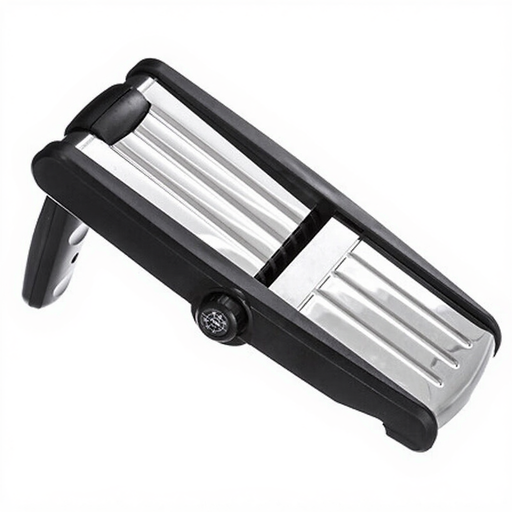
Why this product suits this profile: This compact manual vegetable slicer is ideal for everyday food preparation, with three cutting styles in one appliance.
The cutting functions are clearly stated: slicing, julienning and grating. This makes it easier to assess what the product can actually do before you buy.
Three interchangeable stainless steel blades, ABS plastic and compact dimensions of 24.5 × 13 × 12.7 cm.

Why this product suits this profile: For slicing larger quantities regularly, this electric food slicer offers variable settings and a 24 cm carriage.
The slice thickness is electronically adjustable, and the appliance comes with both a smooth blade and a serrated one.
Metal construction, an angled design and adjustable slice thickness up to 23 mm, according to the product description.
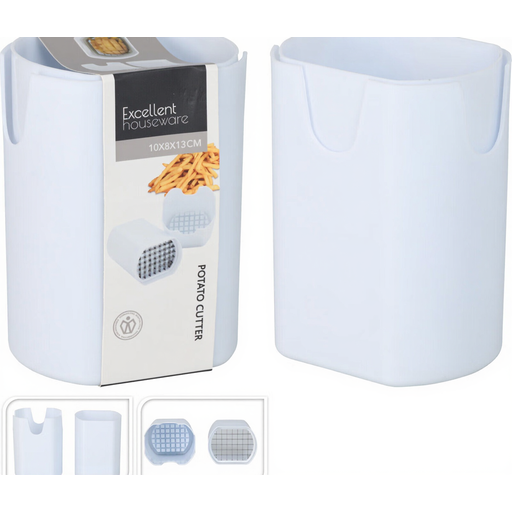
Why this product suits this profile: This potato cutter is designed to make evenly cut chips, making it a good choice for households that often prepare homemade chips.
It’s clearly designed for cutting potatoes into chips, rather than promising a range of features you may not need.
PP plastic body, stainless steel blades and manual operation; hand-wash with warm, soapy water.
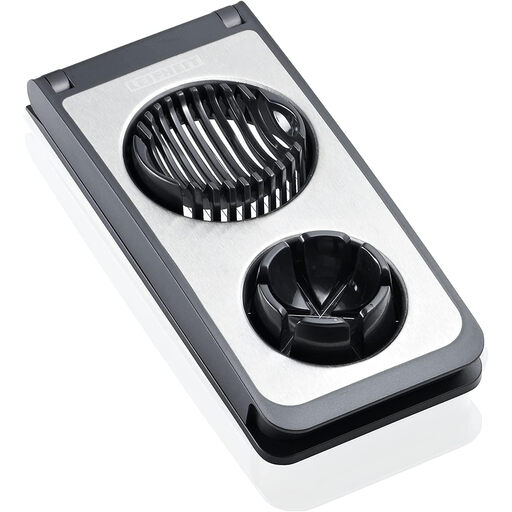
Why this product suits this profile: This egg slicer is designed for eggs, kiwis and cooked potatoes, and offers three ways to cut.
The intended uses and three cut shapes – round slices, oval slices and wedges – are clearly specified.
Stainless steel housing, rust-resistant stainless steel wires and three manual cutting functions.
We’ve put together a comprehensive, regularly updated list of products that meet these strict selection criteria and comply fully with the safety regulations in force in the EU.
A vegetable slicer or mandoline is ideal for evenly slicing cucumbers, potatoes or carrots. Look for a stable base, a hand guard and a clearly defined slice thickness. If you need different cutting styles, a multi-function slicer with interchangeable blades could be a good choice.
Remove food residue as soon as you’ve finished using the slicer, and follow the manufacturer’s care instructions. Products that are dishwasher-safe can be cleaned in the dishwasher. Cutting wires and blades intended for hand-washing should be cleaned with warm water, dried thoroughly and stored out of children’s reach.
An electric food slicer is particularly useful if you regularly need to slice large quantities. Before buying, check how much space it needs, its slice thickness range, the type of blade and its safety features. For the occasional vegetable slice, a manual fruit and vegetable slicer is often enough.