
Lieferung heute & morgen

Qualitätsgarantie

Willkommens-Angebote freischalten: KOSTENLOSE Lieferung | Bis zu 80 % RABATT | Kostenlose 30-Tage-JoyPlus-Testphase
App herunterladen
A high-quality professional food slicer in your kitchen promises perfectly sliced foods—from paper-thin prosciutto to uniform slices of bread. But the market is flooded with models whose marketing claims often don't match reality. Many buyers quickly discover their machine wobbles, the motor struggles with firmer foods, or cleaning is an unreasonable chore. This guide highlights the most common pitfalls and explains the technical features that truly matter, helping you make an informed decision for a durable kitchen appliance.
Before diving into the benefits, it's wise to understand the typical weaknesses that cause frustration with many models.
To avoid the problems mentioned above, you should focus on a few key, objective parameters when choosing a home food slicer. These features separate simple household gadgets from durable, precise tools.
The construction is the foundation for precise slicing. An all-metal food slicer offers decisive advantages here. Its substantial weight ensures a secure footing on the countertop and prevents it from shifting during use. Even more important is the material's rigidity: metal does not warp even under strong pressure, allowing the blade to guide through the food accurately and evenly. This is a fundamental requirement for paper-thin and consistent results, especially for a dedicated ham slicer. Look for terms like all-metal design or metal construction to identify durable kitchen appliances.
The wattage listed on the packaging is often just a marketing tool and says little about the actual continuous power and torque. A crucial quality indicator is the motor type. Many professional-grade slicers use a direct current motor (DC motor). Compared to conventional alternating current (AC) motors, these motors often run quieter, are more energy-efficient, and deliver constant power even at low speeds. This enables effortless slicing of firm foods without the motor reaching its limits or overheating.
The blade is the heart of every electric bread slicer. There are two main types:
For maximum flexibility, models where the blade is easy to change or that already come with both blade types are recommended. The blade's diameter (often between 170 mm and 190 mm) also determines the maximum size of the food you can slice.
Based on the quality criteria mentioned, we have identified models that offer a suitable solution for specific user profiles.
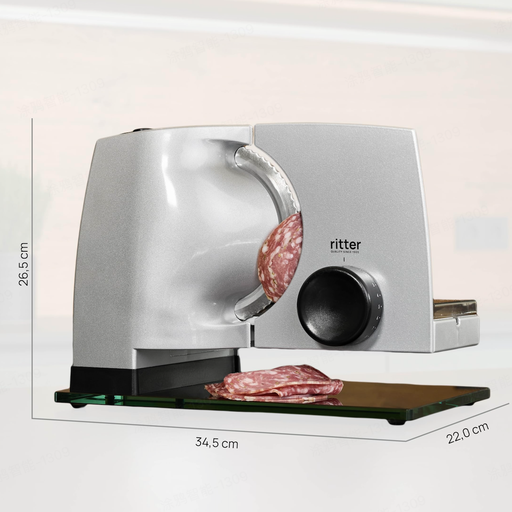
Why This Fits Their Persona: Ideal for users looking to upgrade from a basic plastic device to a durable, high-quality product. Perfect for daily tasks like slicing bread, cold cuts, and cheese with the quality promise of a Food Slicer Made in Germany.
The cantilevered metal construction provides high stability, preventing the bending and wobbling that leads to imprecise cuts in all-plastic models. The detachable carriage solves the problem of complicated cleaning.
Manufactured in Germany, which stands for high material and build quality. According to the manufacturer, the eco-motor operates energy-efficiently. The safety glass base plate is robust and easy to clean.
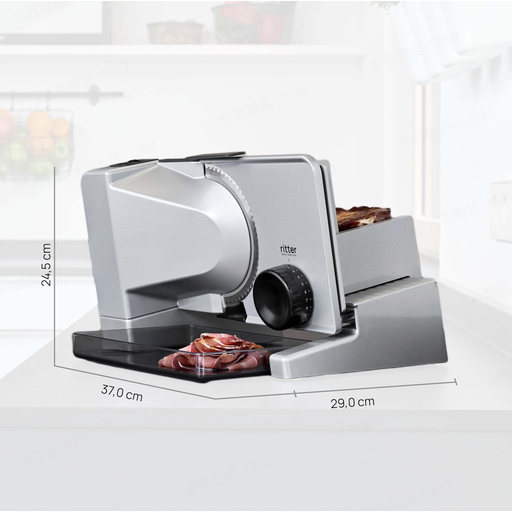
Why This Fits Their Persona: For users who refuse to compromise on performance and precision. Ideal for frequently slicing a wide variety of foods, from paper-thin carpaccio to rustic farmhouse bread, and who value maximum control and durability.
The tilted, all-metal food slicer design offers maximum stability. The powerful DC motor prevents power drops and overheating. Electronic speed control ensures optimal results with any food.
Comes with both a serrated blade and a smooth ham/deli blade, offering maximum flexibility. The electronic speed adjustment allows for precise adaptation to the specific food. Large 24 cm carriage travel.
We have compiled a complete, up-to-date list of products that fully meet these strict selection criteria and German safety regulations.
Always unplug the slicer before any cleaning. Ideally, the carriage should be easily removable for separate cleaning under running water or in the dishwasher (check manufacturer's instructions). The blade should also be removed if possible. Use cut-resistant gloves and carefully clean it with a brush and dish soap. Wipe the housing with a damp cloth and dry all parts thoroughly before reassembling the appliance.
This depends on your primary use. For an electric bread slicer, a serrated blade is essential as it glides effortlessly through hard crusts. However, if you frequently want to slice very fine deli meats like ham or sausage, a smooth blade delivers much cleaner and smoother cuts without fraying. For maximum versatility, a device that offers both blade options is the best choice.
Look for the term DC motor or direct current motor in the product description. These are considered particularly durable and powerful. A heavy appliance weight can also be an indirect indicator of a larger, more robust motor. Manufacturers who emphasize the longevity and repairability of their devices, as is the case with many products labeled Food Slicer Made in Germany, typically install higher-quality motor components.