For thinly sliced ham
If you often make ham sandwiches and want even, thin slices, check the blade type and what’s included with the exact variant. GRAEF and ritter describe smooth blades as suitable for particularly thin slices of soft ham.


If you want to slice cooked ham particularly thinly, look for a smooth ham blade that belongs to the exact model variant and is actually included in the box. For lunchboxes, easy-to-reach and clean parts, safe handling of small pieces, and enough room to use and store the slicer also matter. Sliced ham should still be kept chilled during storage and transport; a food slicer does not replace refrigeration.
If you often make ham sandwiches and want even, thin slices, check the blade type and what’s included with the exact variant. GRAEF and ritter describe smooth blades as suitable for particularly thin slices of soft ham.
If you slice small amounts on weekdays, you’ll need a slicer that’s easy to clean, as well as a way to keep the sliced meat chilled while storing and taking it with you. The Verbraucherzentrale and the German Federal Institute for Risk Assessment recommend keeping perishable foods chilled.
If you need to put the slicer away after use, check both the worktop space it needs while in use and the storage space required. GRAEF describes the MYtiny TWIN as a foldable model.
First, check that the blade and thickness settings suit your ham. Then consider cleaning, safe operation and how much space the slicer needs.
| What matters | What to look for when buying | Who is it most relevant to? |
|---|---|---|
| Thin slices of ham | Check whether a smooth ham blade is included with the exact variant; make sure you can adjust the slice thickness on the appliance. | If I want to slice cooked ham as thinly as possible for a lunchbox, the right blade matters more to me than a high wattage. Around 26% of consumers put thinly sliced ham first. |
| Cleaning and storage | Check how easy it is to reach the blade, carriage and end stop; slice only what you need and keep it chilled while taking it with you. | When preparing small portions over several weekdays, I want to clean the slicing parts easily and keep the remaining sliced meat chilled. Around 21% of consumers prioritise cleaning and keeping food chilled. |
| Safe handling | Check the food holder and finger guard; use and clean the appliance according to the instructions for the specific model. | When slicing small leftover pieces, I want to guide them with the accessory provided and operate the appliance with control. Around 21% of consumers put safe handling first. |
| Worktop and storage space | Compare the space needed while the slicer is in use, the room needed for the carriage to move and the dimensions of the storage space. | With limited worktop space, I want to be able to put the slicer away after use without overlooking the room needed for slicing. Around 16% of consumers prioritise space requirements. |
| Ham and bread | Check which blades are included and whether a suitable additional blade is available; consider how practical it is to change blades day to day. | If I want to use one appliance to slice both ham and bread, having the right blade for both jobs matters to me. Around 16% of consumers put versatility first. |
GRAEF specifically lists the additional smooth blade as part of the TWIN package. A similar model name alone doesn’t tell you which blades are included with a particular offer.
Before buying, compare the full model name and the listed contents.
GRAEF and ritter recommend different blade types for different foods, and specify smooth blades for particularly thinly sliced ham.
Check the blade type and adjustable slice thickness against your needs before comparing technical details such as motor power.
The Verbraucherzentrale points out that the increased surface area of sliced sausage and ham encourages it to spoil.
Slice only what you need, keep the remaining ham chilled according to the packaging instructions, and use a cool bag for transport.
GRAEF offers both food slicers and variants with an additional smooth ham blade.
The E 18 is a left-guided household food slicer supplied as standard with a serrated blade.
The AS 3915 is a household food slicer with continuously adjustable slice thickness from 0 to 15 mm.
The Home Line 200 PLUS is a household slicing machine for shoppers looking for a dedicated appliance for slicing cold meats.
The MS171 is a basic food slicer for a range of foods.
This selection includes electric food slicers for ham and other foods, with features such as adjustable slice thickness, a foldable design or removable parts.
 No image available
The foldable design and adjustable slice thickness make this a practical option if storage space is a consideration too.
Slice thickness: 0–15 mm; stainless steel blade; food holder and safety guard. According to the product description, it is not designed for slicing frozen food or bones.
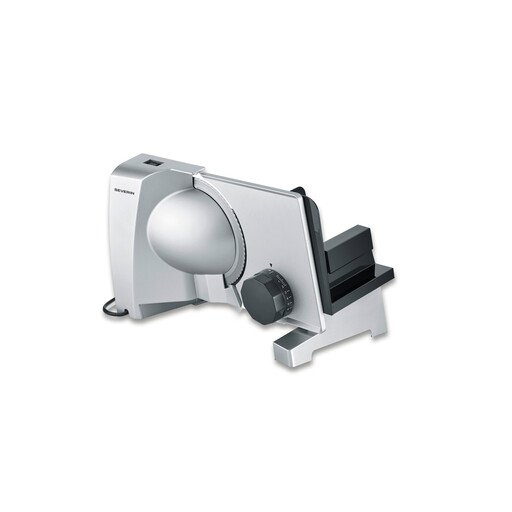 No image available
Continuously adjustable settings and removable parts are useful if you want to cut slices to different thicknesses and clean the appliance regularly.
Slice thickness: continuously adjustable from 0–23 mm; removable blade and removable support table. Foods listed include sausage and cheese; metal casing.
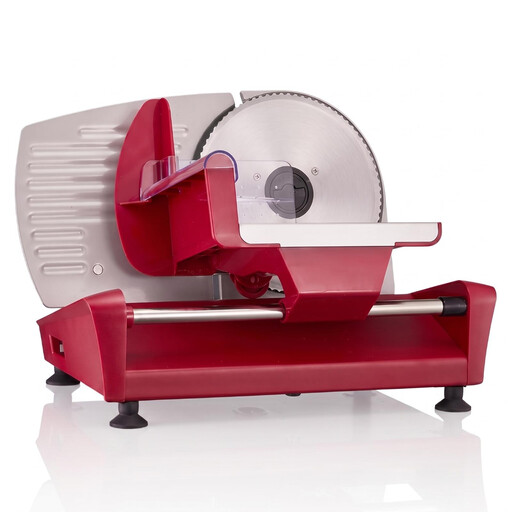 No image available
The product description lists a smooth ham blade and adjustable slice thickness for cutting different types of slices.
Power: 250 W; three blades, two serrated and one smooth; slice thickness: 0–15 mm; removable slicing table and collection tray.
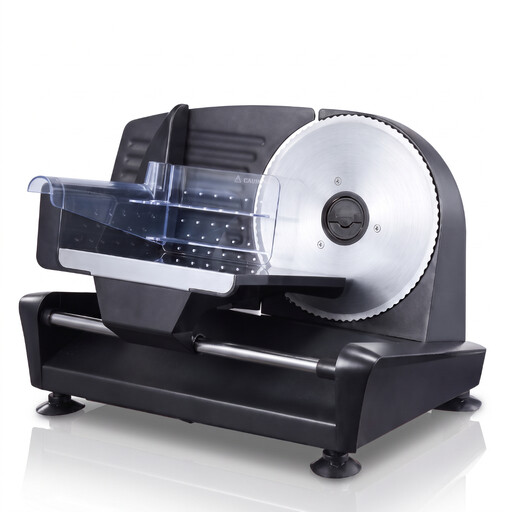 No image available
The product description lists a smooth blade for cold meats and removable parts for cleaning after slicing.
Motor: 200 W DC; two 19 cm stainless steel blades; slice thickness: 0–15 mm; food holder, safety lock and non-slip feet.
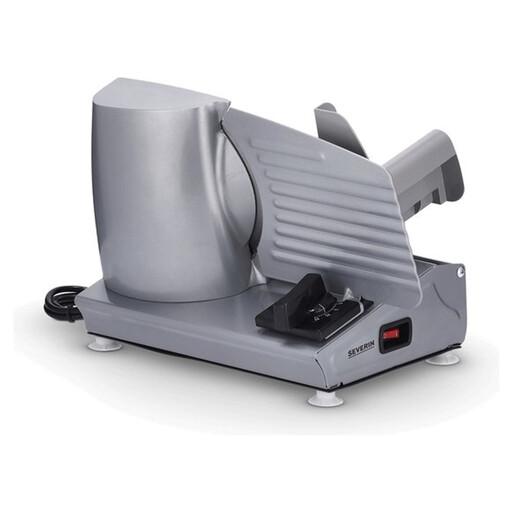 No image available
The listing includes a ham blade and continuously adjustable slice thickness for finely sliced cold meats.
Power: 180 W; slice thickness: 0–15 mm; removable stainless steel blades, including a smooth blade; finger guard, food pusher and food holder. Unplug the appliance before cleaning or changing the blade.
If particularly thin slices are your main priority, GRAEF and ritter recommend a smooth blade. Check whether it is included with the exact model variant or available to buy separately.
Use the carriage and food holder provided, and follow the instructions for your model. According to the manufacturer, the carriage on the SEVERIN AS 3915 tilts for cleaning. Unplug the appliance before cleaning or changing the blade if the instructions say to do so.
There’s no single recommended length of time for keeping it unrefrigerated. The German Federal Institute for Risk Assessment recommends keeping perishable foods as cold as possible until they’re eaten. The Verbraucherzentrale recommends keeping cold meats chilled and using a cool bag when transporting them in summer.
For the exact variant, check whether you’ll need a smooth replacement or additional blade, and find out what’s involved in cleaning, sharpening and repairs. GRAEF describes a paid factory sharpening service for its serrated blades; this does not mean there is one standard price for other models.
Look for the marking applicable to the specific product, a clearly identifiable manufacturer, and user and safety instructions in German. The European Union describes CE marking as the manufacturer’s declaration that the product complies with relevant product rules, not as a quality mark awarded by a central EU body. The German Federal Network Agency lists product identification and German-language instructions among the points to check. According to EUR-Lex, the current Machinery Directive remains applicable until 19 January 2027; the rules that apply to an individual product depend on its classification and the relevant date.