For finely sliced ham
If you mainly want thin slices of ham for a bring-and-share, compare the blade type and what comes with the exact model variant. GRAEF's blade guide says a smooth blade is suitable for wafer-thin slices such as ham.


If you mainly want to cut thin slices of cooked ham, check whether the exact model variant you choose comes with a smooth blade. Also consider how the food is guided, finger protection, access for cleaning and storage space. For a bring-and-share, keep the sliced ham chilled during transport, whichever machine you use.
If you mainly want thin slices of ham for a bring-and-share, compare the blade type and what comes with the exact model variant. GRAEF's blade guide says a smooth blade is suitable for wafer-thin slices such as ham.
If you're preparing ready-to-eat sliced meat for other people, look for easily accessible contact surfaces, safe handling and chilled transport. The Verbraucherzentrale recommends using a cool bag to transport sausages and sliced meat, while the German Federal Institute for Risk Assessment highlights the importance of keeping food sufficiently chilled during transport and storage.
If you only slice food occasionally and want to put the machine away afterwards, compare foldable designs and the storage space they need. SEVERIN describes the AS 3912 as having a foldable base plate.
The blade type and the exact specification of each model variant are important considerations when slicing cooked ham. GRAEF describes a serrated blade as versatile, including for bread, and a smooth blade as suitable for particularly thin slices of ham. These details relate to the respective blades and are based on the manufacturer's information.
A good fit if: Thin slices of ham are your priority and you check what comes with the exact model variant.
Consider: An additional blade needs to be stored and cleaned separately.
A good fit if: You regularly slice bread as well as cooked meats.
Consider: Check whether a suitable smooth blade is included or can be confirmed as compatible with the model you want, for the thickness of ham you plan to slice.
A good fit if: You only use the machine occasionally and want to put it away after slicing.
Consider: A foldable design alone tells you nothing about how well the machine slices thin ham or whether a smooth blade is included.
A good fit if: You often slice larger joints or prepare several portions, and have a permanent spot for the machine.
Consider: Compare the space it needs, the length of the cutting path and how you'll use it after the bring-and-share. Manufacturer claims about slicing performance are not an independent comparison.
| What matters | What to look for | Who is it important to? |
|---|---|---|
| Thin slices and other uses | Check which blade comes with the exact model variant, whether the cutting thickness is adjustable and, where relevant, whether a replacement blade is compatible. | If I want to slice the ham as thinly as possible for the occasion, I'll check the blade and model variant carefully. Around 33% of consumers prioritise fine slicing. |
| Cleaning and chilled transport | Check access for cleaning and read the instructions; plan to use a cool bag and keep the food chilled at your destination. | If I'm preparing sliced meat for other people, I want to clean the contact surfaces thoroughly and take the ham with me chilled. Around 27% of consumers prioritise cleaning and transport. |
| Safe operation and food guidance | Check the food holder, finger guard, switch and carriage on the exact model variant. | As the piece of ham gets smaller, I want to guide it with control and keep a clear view of how the machine operates. Around 20% of consumers focus first on operation and food guidance. |
| Storage and future use | Compare the dimensions when set up and stored, any foldable parts and the other foods you plan to slice. | If I only need the slicer occasionally, I want to be able to put it away after the occasion. Around 20% of consumers prioritise storage space and future use. |
GRAEF specifically lists the additional smooth blade as part of the G52 TWIN package. The G52 name alone does not confirm that the blade is included.
Before ordering, check the full model variant name and the stated contents of the package.
Buying a separate smooth blade means extra expense and storage; check in advance that it's compatible with your model.
The blade type, food guidance and ease of use also matter when slicing the piece of ham you have in mind. Models combine these features in different ways.
Consider the blade, carriage travel, food holder and thickness settings together, based on the piece you want to slice.
A food slicer does not chill the finished slices. According to the German Federal Institute for Risk Assessment, insufficient chilling during transport and storage can encourage harmful germs to survive and multiply.
Prepare only the amount you need, and plan to use a cool bag and keep the food chilled at your destination. The Verbraucherzentrale recommends using a cool bag to transport sausages and sliced meat.
If you don't already have a suitable cool bag, you'll need to arrange an appropriate way to keep the food chilled during transport.
Worth considering if you're weighing up a serrated blade against a model variant that comes with an additional smooth blade.
The E 16 and E 18 differ in features including how they are operated and how food is guided.
The AS 3912 is a foldable option if you want to put your slicer away between occasional uses.
The Home Line 200 Plus is a larger domestic slicer for buyers who regularly slice whole joints and have space to set it up.
The MS171 is described as a straightforward food slicer with a serrated blade and adjustable cutting thickness.
The electric slicers below are described as suitable for meat or cooked meats; features and cutting thicknesses vary by model. Before buying, check that the blade type, operation and cleaning options suit the cooked ham you want to slice.
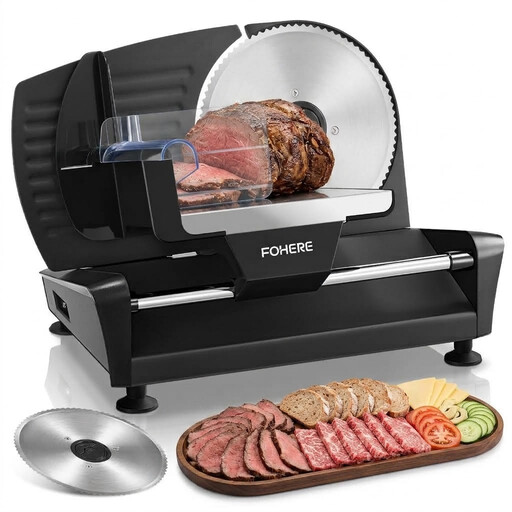 No image available
The description lists a smooth blade for meat and an adjustable cutting thickness of 0 to 15 mm. Check whether this suits the slices of ham you want.
According to the description, the blades and other parts can be removed without tools.
 No image available
The foldable design may suit occasional use if you want to put the machine away afterwards.
The description lists an adjustable cutting thickness of 0 to 15 mm and a stainless steel blade. Check the blade type and whether the exact model variant is suitable for very thin slices of ham.
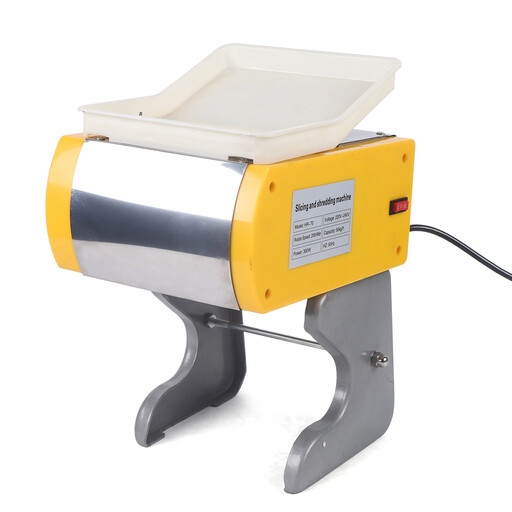 No image available
The title and description say this model is designed for slicing meat and has a large feed tray. Check whether its size and operating style suit the piece you want to slice.
Other details in the title include a forward and reverse function, plus 200 RPM and 110 lbs/h. These figures alone don't tell you whether the machine is suitable for thin slices of ham.
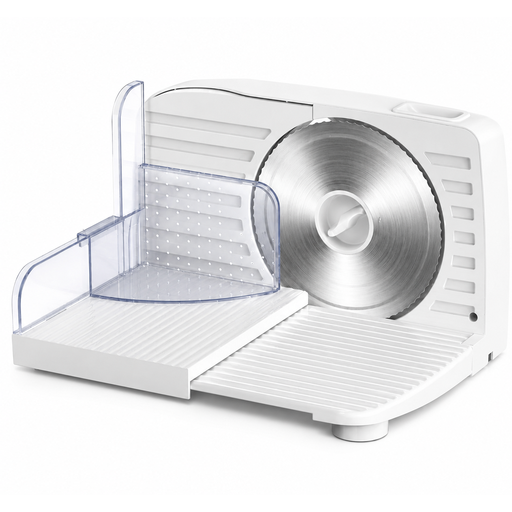 No image available
The description lists meat as one of its uses and says the foldable design makes it easy to put away after use.
According to the description, the cutting thickness is adjustable from 0 to 15 mm. Check which blade is intended for the thickness of ham you want to slice.
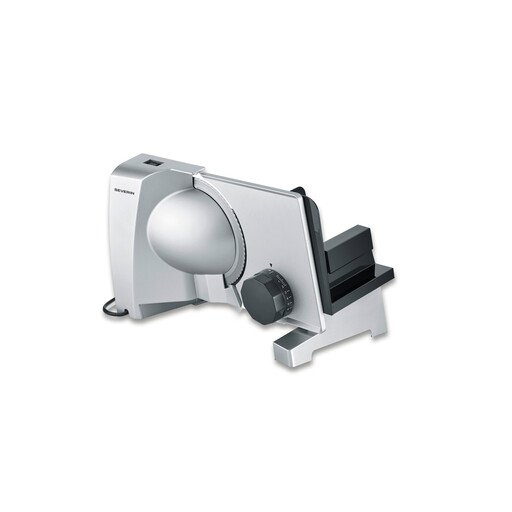 No image available
The description lists bread and cold cooked meats as suitable uses, and says the removable parts make cleaning easier.
According to the product details, the cutting thickness is continuously adjustable from 0 to 23 mm. Other features include a removable blade, removable food tray and metal housing. Check that the blade type is suitable for cooked ham.
Check what comes with the exact model variant: GRAEF specifically lists an additional smooth blade with the G52 TWIN. Don't assume this also applies to a G52 without the TWIN designation.
Unplug the machine before taking it apart or cleaning it, and follow the instructions for the blade, carriage and contact surfaces. Which parts can be removed depends on the model; ritter lists a removable carriage for the E 16.
Transport the sliced ham chilled and keep it chilled until it's ready to eat. The Verbraucherzentrale recommends using a cool bag for sausages and sliced meat, while the German Federal Institute for Risk Assessment emphasises the importance of keeping food sufficiently chilled during transport too.
Article 1(2) of Regulation (EC) No 852/2004 excludes the domestic preparation, handling and storage of food for private domestic consumption from the regulation. This is not a blanket statement about sales, commercial catering or public events organised in other ways; keeping the sliced ham chilled is still important.
For electrical appliances covered by the relevant rules, the CE mark is the manufacturer's declaration that the product meets the applicable EU requirements; it is not an independent safety test. The GS mark is a voluntary safety certification and does not confirm slicing performance or durability. Check the marks and details for the exact model variant.