Families who regularly eat bread
If you often slice a whole loaf, look for a suitable support surface, smooth guidance and an adjustable slice thickness. A finger guard and food holder are also useful when dealing with the last pieces.


For a loaf with a hard crust, start by choosing a food slicer with a serrated blade, then check that the support surface, carriage travel and adjustable slice thickness suit your bread. If you use it regularly, a safe, suitable place to set it up matters. If you’ll be putting it away after meals, compare its folded dimensions with the usable cutting area. A food holder, switch and ease of cleaning are other important considerations for family life.
If you often slice a whole loaf, look for a suitable support surface, smooth guidance and an adjustable slice thickness. A finger guard and food holder are also useful when dealing with the last pieces.
If you want to put the appliance away after a meal, compare its folded dimensions with the space it needs when in use. The unfolded support surface still needs to be large enough for your bread.
If you want to slice fine cuts of meat as well as bread, check which blades are included with the specific version. An extra blade also needs to be changed, cleaned and stored safely.
First compare the blade and guidance system with your loaf. Then consider how it works and where you’ll use it, followed by cleaning and spare parts.
| What matters | What to look for | Who should consider this? |
|---|---|---|
| Crusty bread and slice thickness | Check whether a serrated blade is included and whether the support surface, carriage travel and slice-thickness setting suit the dimensions of your loaf. Graef also promotes the SKS110’s serrated blade for bread with a hard crust. | When I’m slicing a whole loaf for a family meal, I need a suitable blade and guidance that lets me set the slice thickness I want. Around 36% of consumers put crusty bread and the quality of the slice first. |
| Safe guidance | Compare the food holder, finger guard and switch design on the exact model. Severin lists a food holder and finger guard for the AS 3915; Ritter describes a two-finger switch system on the icaro 7 and markant 7. | When slicing, I want to guide even the last piece safely and use the controls with confidence. Around 29% of consumers give safe operation top priority. |
| Space and set-up | Measure your worktop and storage space separately. For a folding model, compare the usable area when unfolded with the space it takes up when stored. | If my kitchen has limited storage, I want to be able to put the appliance away after a meal without limiting the space available for the loaf while slicing. Around 21% of consumers prioritise space requirements and storage. |
| Cleaning and spare parts | Check which parts can be removed and what the instructions say about cleaning. Ritter lists a removable carriage and blade for the icaro 7; when buying spare blades, compatibility with the model is essential. | After slicing, I want to be able to remove crumbs and leftovers from the parts designed for cleaning, and find the right version when buying a replacement part. Around 14% of consumers consider care and parts compatibility their top concern. |
The wattage alone won’t tell you whether you can guide your loaf safely or adjust the appliance to the slice thickness you want.
Compare the dimensions of your bread with the support surface and carriage travel of the exact model, and check whether it includes a serrated blade.
The dimensions when folded tell you how much space the appliance takes up in storage, not how much room you have to slice.
Measure your worktop and storage space separately, then check that the unfolded guidance system suits the size of your loaf.
For a Ritter replacement blade, the manufacturer says that the shape and gear colour must also match, as well as the size. The wrong part could mean you have to buy another one.
Before ordering, check the full list of compatible models and the features specified by the manufacturer.
The E 16, icaro 7 and markant 7 showcase different designs for slicing bread.
The SKS110 is one example of a food slicer that Graef describes as suitable for bread with a hard crust.
The AS 3915 and AS 3912 represent different designs, including a version that can be stored compactly.
The Tempo 1094 90000 is an option for slicing bread, with a serrated blade and adjustable slice thickness.
The Joybuy models below are electric food slicers for bread, including folding designs and versions with adjustable slice thickness. The product name specifies an additional smooth blade for some models.
 No image available
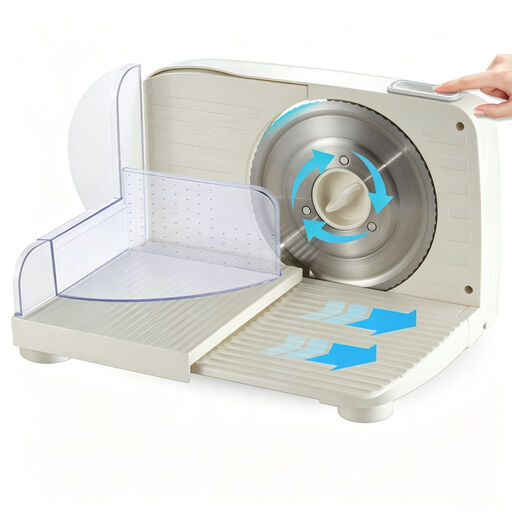
With adjustable slice thickness and a stated suitability for bread, this model is a good fit for households that like to vary the thickness of their slices.
The product name specifies a slice thickness of 0 to 15 mm, a folding design and a stainless steel blade.
 No image available
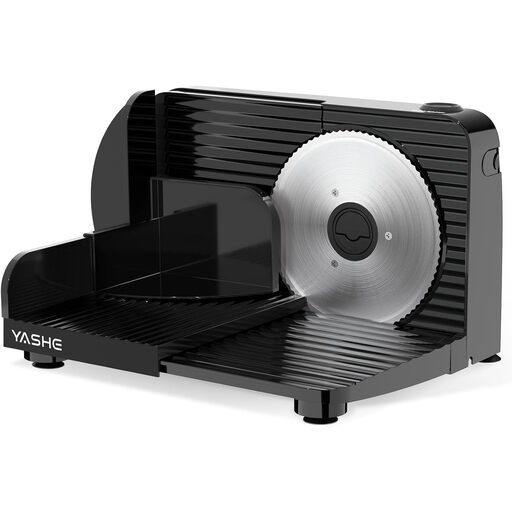
Its stated suitability for slicing bread and adjustable thickness are useful if you want to vary your slices as needed.
The product name specifies 250 W, two blades and an adjustable slice thickness of 0 to 15 mm.
 No image available
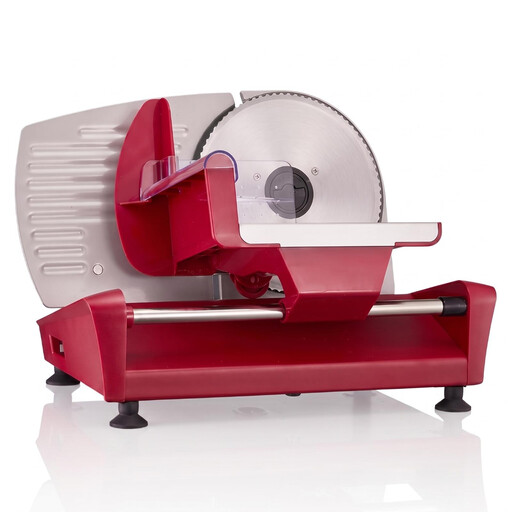
The folding design is worth considering if you want to put the food slicer away after use.
The product name specifies a 17 cm stainless steel blade and an adjustable slice thickness of 0 to 15 mm.
 No image available
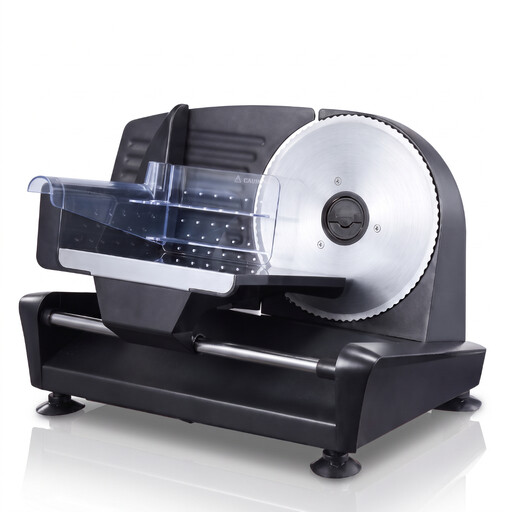
The blade types listed in the product name are worth considering if you want to use the slicer for other foods as well as bread.
The product name specifies two serrated blades, one smooth blade and an adjustable slice thickness of 0 to 15 mm.
 No image available
The stated suitability as a bread slicer and adjustable slice thickness are useful if you want to vary the thickness of your slices.
The product name specifies two 19 cm stainless steel blades and an adjustable slice thickness of 0 to 15 mm.
First check whether the slicer has a serrated blade designed for bread. Graef also promotes the SKS110’s serrated blade for hard crusts. Then check that the support surface and slice-thickness setting suit your loaf.
Set up the food slicer securely in accordance with the instructions, and use the safety and guidance parts provided. Ritter advises unplugging the E 18 when it is unattended and before taking it apart or cleaning it; always follow the instructions for your specific model.
No. Your statutory rights cover faults and apply against the seller; a guarantee is an additional voluntary promise, subject to its own terms. Verbraucherzentrale explains the difference. When buying replacement blades, also check the stated compatibility with your model.
Consumers generally have a right to cancel a contract made online; Verbraucherzentrale says the period is usually 14 days from receiving the goods. Notify the retailer that you wish to cancel and check the terms of your specific purchase.
In Germany, take your old appliance to an authorised collection point, such as a local council collection centre or a retailer required to accept returns. The German Federal Ministry for the Environment lists these as possible options; whether a particular retailer is required to accept returns depends on the applicable legal conditions.