Even slices of cheese
If you want to slice hard cheese to your preferred thickness rather than grate it, check the stated suitability of the exact model and its blade. Graef explicitly lists harder cheese among the foods the SKS100 can slice.


For hard cheese, choose a model whose manufacturer explicitly says that the specific blade is suitable for harder cheeses; for the Graef SKS100, this applies to the serrated blade supplied with it. If several people will use the appliance in turn, a suitable food holder, easy-to-understand controls and accessible parts for cleaning also matter. Manufacturer information is not an independent comparison of the results you can expect with your particular cheese.
If you want to slice hard cheese to your preferred thickness rather than grate it, check the stated suitability of the exact model and its blade. Graef explicitly lists harder cheese among the foods the SKS100 can slice.
If several people use the same kitchen in turn, it’s important to handle small leftover pieces safely and have parts that are easy to access for cleaning. ritterwerk says that a suitable food holder helps keep your hands further away from the blade while slicing.
If you need to put the appliance away after slicing, a folding design may be useful. SEVERIN lists this feature for the AS 3912; check the suitability of the specific model for cheese separately.
First, check the blade and the model’s stated suitability for hard cheese. Then consider how its controls, cleaning and storage will fit into your shared kitchen routine.
| What matters | What to check when buying | Who it matters most to |
|---|---|---|
| Hard cheese | Check the manufacturer’s information on harder cheese, as well as the blade type and thickness settings for the exact model. | If I want to slice hard cheese, I look for an explicit suitability statement for the specific blade. Around 36% of consumers put suitability for hard cheese first. |
| Shared use | Check the food holder, switch and safe-use instructions for the specific model. | If several people use the same appliance, I want small leftover pieces to be held safely and the controls to be easy for everyone to understand. Around 29% of consumers prioritise safe shared use. |
| Cleaning between uses | Check which parts can be removed and what the instructions say about cleaning and disconnecting the appliance from the power supply. | If the appliance needs cleaning between cooking tasks, I want to know which areas are accessible and how to fit cleaning into my routine. Around 21% of consumers prioritise cleaning between uses. |
| Space requirements | Check the dimensions when in use and when stored, and separately confirm that the same model is suitable for cheese. | If I need to clear the worktop after slicing, I look for a design that’s easy to store, without assuming it’s suitable for hard cheese before checking. Around 14% of consumers prioritise the space available. |
Manufacturers’ information varies between models: Graef lists harder cheese for the SKS100, while SEVERIN simply lists cheese for the AS 3917. Graef describes the Classic C20 as suitable for soft cheese, among other foods.
Check the information for the exact model and the blade supplied with it before relying on a general statement about cheese.
When several people take turns, the way small leftover pieces are held, the controls and access to parts for cleaning also matter. Removable parts don’t remove the need to handle a sharp blade with care.
Compare the food holder, switch and removable parts for the specific model, and follow the instruction manual.
ritterwerk specifies a short-time operating limit of 5 minutes for the ritter E 18. This doesn’t mean you can slice continuously without a time limit.
If you plan to slice several items in a row, check the operating and break-time guidance for your chosen model first.
Specifications vary by model: for the SKS100, Graef lists harder cheese as suitable for the serrated blade supplied; the Classic C20 has a cantilevered, all-metal design.
The AS 3917 has a removable blade and food carriage; the AS 3912 has a folding base plate.
On the E 18, ritterwerk places the food carriage on the left; the model has a serrated blade and a removable carriage.
The Joybuy models below list cheese, adjustable slice thickness or a folding design. If you’re slicing hard cheese, also check whether the specific version is suitable.
 No image available
The product information lists cheese among the foods it can slice and describes a foldable design; check the specific model details to see whether it’s suitable for your type of hard cheese.
Slice thickness: 0–15 mm.
Blade: stainless steel.
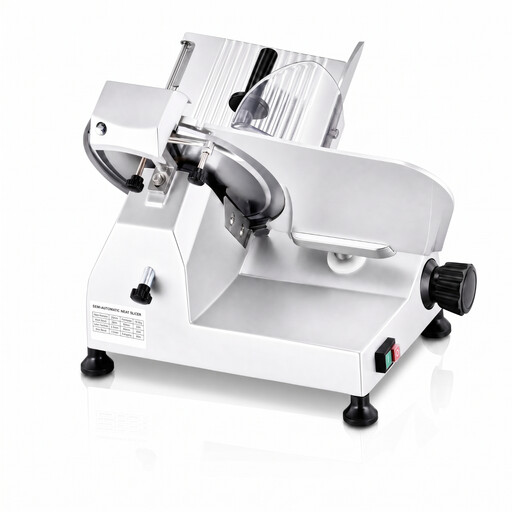 No image available
The product name lists meat and cheese among the foods it can slice. If you want to slice hard cheese, check whether the specific version is suitable and choose an appropriate setting.
Slice thickness: 0–12 mm.
Blade: 25.4 cm carbon steel.
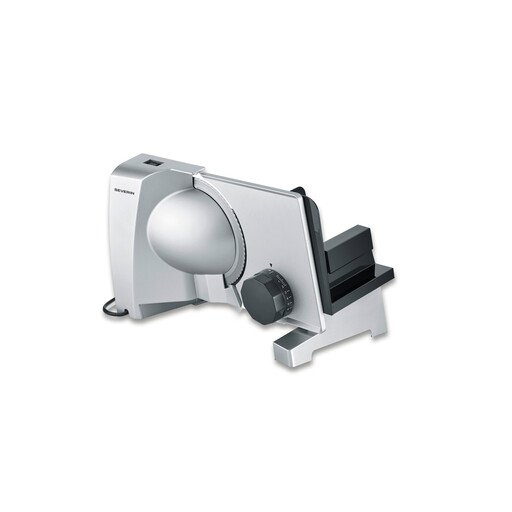 No image available
SEVERIN lists cheese among the foods it can slice, but doesn’t distinguish between hard and soft cheese. According to the product information, the blade and food carriage are removable.
Slice thickness: 0–23 mm.
Power: 130 W.
Housing: metal.
 No image available
The product information lists hard cheeses and a serrated blade. Before buying, check that the details apply to the version on offer.
Slice thickness: 0–15 mm.
Power: 180 W.
Blade: 17 cm stainless steel.
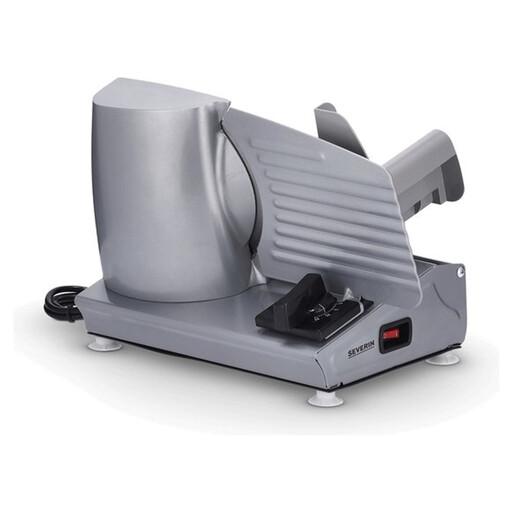 No image available
The product information lists cheese among the foods it can slice and includes removable parts. Frozen foods and bones aren’t suitable for slicing, according to the product description.
Slice thickness: 0–15 mm.
Power: 180 W.
The product name states that it includes a ham blade and stainless steel blades.
Check the information for the exact model and the blade supplied with it. For the SKS100, Graef explicitly states that its serrated blade is suitable for harder cheese too. This isn’t a guarantee for every type of cheese or for other models.
Use the food holder and carriage as instructed for your model. ritterwerk specifies a short-time operating limit of 5 minutes for the ritter E 18, so bear this in mind if you’re slicing for longer periods. Disconnect the appliance from the mains before taking it apart or cleaning it.
For a consumer purchase in Germany, your statutory rights are generally against the seller. The Verbraucherzentrale states that these rights last for two years from delivery. Any additional guarantee is voluntary and comes with its own terms and conditions.
No. According to the European Commission, the manufacturer is responsible for assessing the relevant requirements and applying the CE marking. As part of its market surveillance, the Bundesnetzagentur checks markings and manufacturers’ information, among other things. CE marking doesn’t confirm how well the appliance slices cheese.
Dispose of electrical waste separately. The Umweltbundesamt lists local collection points, which generally accept old appliances free of charge. Retailer take-back schemes are subject to the relevant conditions.