Anyone who puts it away after every use
If you need your worktop clear again as soon as you’ve finished slicing, both the dimensions when the slicer is in use and its folded size matter.


If you want to put your food slicer away after each use, compare foldable models by their dimensions both in use and when stored. If it has a permanent place on your worktop, usable workspace is the main consideration. Also check whether the manufacturer lists cheese as a food the slicer can handle, and how easy it is to guide small pieces and clean the blade and carriage. Wattage alone does not prove that a slicer will cut hard cheese well.
If you need your worktop clear again as soon as you’ve finished slicing, both the dimensions when the slicer is in use and its folded size matter.
If you use it often, look for a suitable way to guide the food, the slice thickness you want and parts that are easy to access for cleaning.
If you can leave the slicer out, make sure you allow space not just for its footprint, but also for the carriage and operation.
A good fit if: you slice cheese often and want to put the slicer away afterwards. ritter specifically lists cheese as a food the icaro 7 can slice.
Consider: A slim folded size doesn’t tell you how much space the slicer needs while you’re using it. ritter and GRAEF also give dimensions measured along different axes.
A good fit if: storage space is a priority. ritter gives a folded width of 10.5 cm for the markant 7; Severin describes the AS 3912 as having a foldable base plate.
Consider: Also check its dimensions when set up and how easy it is to handle your piece of cheese. The manufacturers’ specifications do not amount to a comparative test of slicing hard cheese.
A good fit if: you have a permanent spot for it and don’t need to put it away after every use. GRAEF describes the G52 TWIN as space-saving; ETA lists cheese as a food the Tempo 1094 90000 can slice.
Consider: A compact footprint doesn’t mean it folds away. ETA’s information about materials and foldability is inconsistent, so don’t rely on it as a buying point without checking it first.
| Priority | What to check when buying | Who is it important to? |
|---|---|---|
| Space in use and for storage | Compare operating dimensions and folded dimensions separately, and make sure you’re comparing the same axes. | If I need my worktop clear again straight after slicing, I need to consider space for both use and storage. Around 34% of consumers put this space question first. |
| Cheese and slice thickness | Check whether cheese is listed for the exact model, along with the blade type and adjustable slice-thickness range. | If I slice hard cheese regularly, I want to know whether the model is listed as suitable for it and what slice thicknesses I can select. Around 33% of consumers prioritise cheese and slicing. |
| Safe operation and cleaning | Check the food holder, and whether the blade and carriage can be removed, using the appliance manual. | When slicing small pieces of cheese, I want to guide them with my hands well away from the blade, then clean the accessible parts thoroughly. Around 20% of consumers put safety and cleaning first. |
| Parts and servicing | Check what’s included, which replacement blades are compatible and what service information is available for the specific model. | If I want to use the slicer for a long time, I also consider the availability of spare parts and repair options. Around 13% of consumers prioritise these follow-up considerations. |
Some manufacturers give the width, others the footprint or the folded height. On its own, this doesn’t tell you how much worktop space you’ll need while slicing.
Measure the space available for use and storage separately, compare like with like and allow room to operate the slicer.
GRAEF particularly promotes its additional smooth blade for thinly sliced ham and carpaccio. This doesn’t prove it has an advantage when slicing hard cheese.
Choose a blade based on the recommendation for the specific food and model, not the number of blades included.
An extra blade adds to what’s included, but that doesn’t prove it offers any benefit for hard cheese.
The product page doesn’t list a repair service as available for the Severin AS 3912. ETA’s information about materials and foldability is inconsistent.
Check the technical specifications and spare-parts availability for the exact model before treating its material or repairability as a reason to buy.
The foldable icaro 7 and markant 7 differ in several respects, including their materials and folded dimensions. The manufacturer specifically lists cheese for the icaro 7.
The foldable MYtiny and freestanding G52 TWIN cater to different storage needs.
The AS 3912 is a food slicer with a foldable base plate and cord storage.
The Tempo 1094 90000 is a freestanding slicer which ETA lists as suitable for slicing cheese.
The MS-125000 is described as a foldable slicer with a removable blade; spare parts are listed for certain models.
This selection includes electric food slicers, including foldable models and slicers listed as suitable for cheese or hard cheese. If you mainly want to slice hard cheese, check the specifications for the specific model.
 No image available
Listed as suitable for cheese, with an adjustable slice thickness of up to 15 mm. The model has a stainless steel blade and a foldable design.
According to the description, it isn’t suitable for slicing frozen food or bones.
 No image available
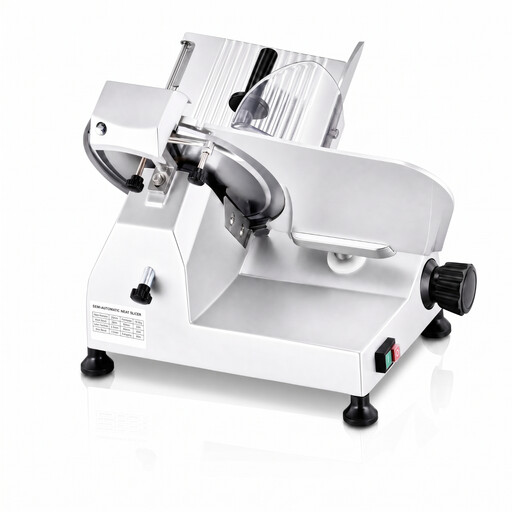
Hard cheese is listed as a food it can slice. The title specifies a 25.4 cm carbon steel blade and an adjustable slice thickness of 0–12 mm.
 No image available
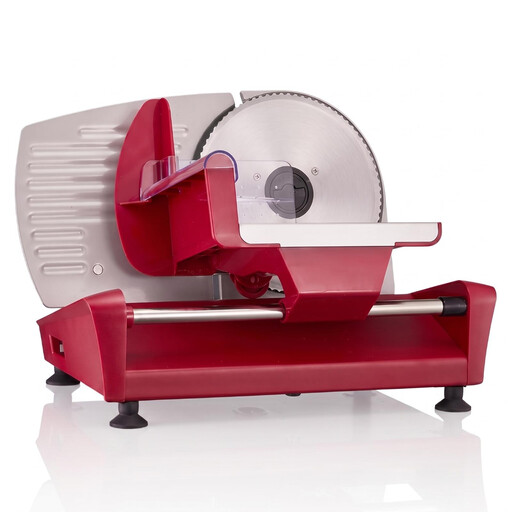
The description lists cheese, including hard cheese, as a food it can slice. Specifications include a slice thickness of 0–15 mm, a 17 cm stainless steel blade and a foldable design.
 No image available
The package includes three blades, one of which is a smooth blade for cheese. According to the product specifications, the slice thickness is adjustable from 0–15 mm.
 No image available
The description lists a removable carriage and collection tray. It also specifies adjustable slice thicknesses of up to around 23 mm, as well as a serrated blade and a smooth blade.
No. A wattage rating alone doesn’t prove how well it will slice your cheese. First check whether the manufacturer lists cheese for the exact model, then consider the blade, food guide and adjustable slice thickness.
No, the foldable models described here are designed to stand freely. ritter and GRAEF describe models you can fold away after use; built-in slicers are a different type and have their own installation requirements.
The German Federal Institute for Risk Assessment recommends thoroughly washing kitchen utensils with warm water after they have come into contact with raw animal products. Follow the instructions for your specific appliance when removing and cleaning the blade and carriage.
No. GRAEF lists an additional smooth blade for the MYtiny TWIN and G52 TWIN; for other models and variants, check what’s included with the specific product. A compatible replacement blade isn’t automatically included.