Cheese portioners
If you regularly slice harder cheeses, first check whether the manufacturer specifies this use for the exact appliance and blade, and what slice thickness you can set.


If you mainly slice hard cheese, the obvious choice is a model whose manufacturer specifically confirms that both the appliance and blade are suitable. For the GRAEF SKS100, GRAEF says its standard serrated blade can be used for harder cheeses. Then consider your preferred slice thickness, safe food guidance, cleaning options and storage space. A separate smooth blade is intended more for very thin slices of softer foods, rather than being a general upgrade for hard cheese.
If you regularly slice harder cheeses, first check whether the manufacturer specifies this use for the exact appliance and blade, and what slice thickness you can set.
If you portion ingredients in one go, safe food guidance, easy-to-reach contact surfaces and chilled storage afterwards are all important to your routine.
If space is tight in your kitchen, compare the folding feature with the worktop space the appliance needs when in use.
First, check whether the specific blade is recommended for hard cheese. Then compare how the food is guided and the appliance cleaned, the slice thickness you want and the space available.
| Buying criterion | What to check | Who should pay particular attention |
|---|---|---|
| Blade for hard cheese | Compare the exact model, the blade supplied, the manufacturer's guidance on what it can slice and the adjustable slice thickness. | If you mainly slice hard cheese, look for explicit guidance covering the specific appliance and blade. Around 40% of consumers prioritise this suitability. |
| Food guidance and cleaning | Check that the food holder is suitable, that the blade and support are easy to access, and read the cleaning instructions; store cheese according to the guidance on the packaging. | If you prepare several ingredients, safe food guidance, accessible contact surfaces and storage afterwards all matter. Around 33% of consumers prioritise preparation and hygiene. |
| Worktop and storage space | Compare the appliance's dimensions when set up and stored, as well as the clearance needed for the carriage, with your available worktop space. | If you need to put the appliance away after each use, its folding feature and the worktop space it needs are both important. Around 17% of consumers prioritise storage space. |
| Blades for other ingredients | Check the variant name, what is included and whether a replacement or additional blade is compatible. | If you want to slice other ingredients as well as cheese, such as very thin slices of other foods, check which blade version is suitable. Around 10% of consumers prioritise this additional use. |
A claim that an appliance is “for cheese” does not automatically mean it is suitable for harder cheeses or that the claim applies to the blade supplied with the specific model.
Check the manufacturer's guidance for the exact model and the blade supplied. GRAEF specifically names harder cheese for the SKS100.
A separate smooth blade is not automatically included with every version in a product range. Blade fittings can also vary between appliances.
Check the full variant name, what's included and compatibility before planning to use a particular blade.
If the compatible additional blade is not included, you may need to buy it separately.
The permitted operating time may affect your routine. ritter specifies a 5-minute short-time operating period for the E 18.
Check the operating time in the manual for your chosen model and take breaks if needed.
A folding appliance still needs space on the worktop when you use it. Pre-cut portions of cheese also need to be stored appropriately.
Measure your worktop with the appliance set up, clean contact surfaces according to the instructions and follow the storage guidance for the cheese.
GRAEF specifically says that the serrated blade on the SKS100 is suitable for harder cheeses too. The G52 TWIN is a version that also includes a smooth blade.
The E 18 may be an option if you prefer food to be fed in from the left. ritter's blade guidance distinguishes between serrated and smooth blades.
According to SEVERIN, the AS 3917 has removable parts, while the AS 3912 is a folding version for limited storage space.
This selection includes electric food slicers with information about cheese, blades or pre-prepared ingredients. If you're slicing hard cheese, pay particular attention to the guidance for the specific model and blade.
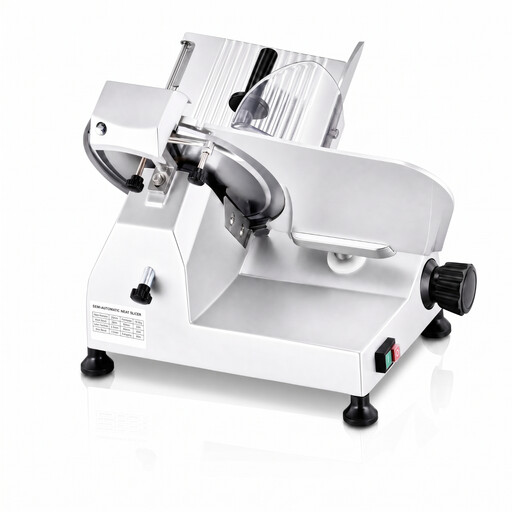 No image available
The product description specifically lists hard cheese as suitable for slicing.
Adjustable slice thickness: 0–12 mm. A removable blade, food holder and deflector are also listed.
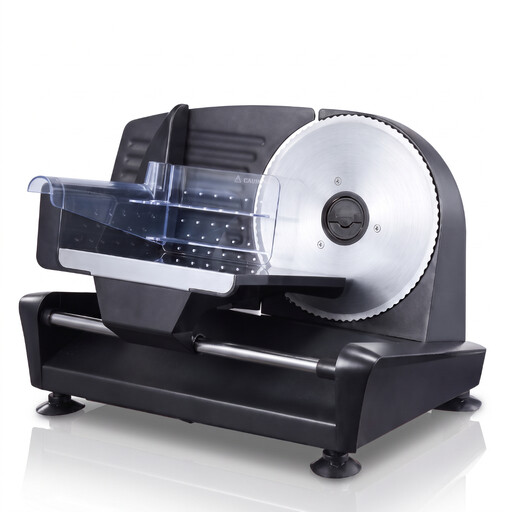 No image available
If you're preparing a range of ingredients, the two interchangeable blades and removable carriage may suit your needs.
Adjustable slice thickness: 0–15 mm. The description lists two interchangeable blades, a food holder and a removable carriage.
 No image available
If you want to slice hard cheese and then put the appliance away, this version combines the stated suitability for hard cheese with a folding design.
180 W; adjustable slice thickness: 0–15 mm. It also has a 17-cm stainless steel blade and a serrated blade.
 No image available
The removable carriage may be useful when preparing ingredients. For hard cheese, check the manufacturer's guidance for the exact model.
The product description lists a serrated blade, a slice thickness of up to around 20 mm and a removable carriage with an 18 cm cutting length.
No. GRAEF says a serrated blade can also be used for thicker slices of cheese, and specifically names harder cheese for the SKS100. ritter recommends its smooth blade primarily for soft foods and very thin slices. Check the guidance for the exact appliance and the cheese you want to slice.
Use a food holder that fits your appliance to guide small leftover pieces, rather than bringing your fingers close to the blade. Clean any parts that come into contact with food according to the appliance instructions. Germany's Federal Institute for Risk Assessment (BfR) highlights that germs can be transferred from raw to other foods via hands, kitchen utensils and work surfaces.
First, follow the storage instructions on the packaging and keep the cheese chilled. The Verbraucherzentrale recommends storing cheese at around 8 °C on the upper shelf of the fridge and advises against always wrapping it airtight. This does not mean there is a standard shelf life for slices cut at home.
No. If a product is faulty, your statutory rights are against the seller; a warranty is an additional voluntary promise subject to its own terms. For replacement blades and repairs, also check the support available for the exact model.
Electrical appliances covered by the relevant harmonised EU rules must carry the CE marking. This is based on the manufacturer's declaration of conformity; it is not an independent approval by a central EU body. Check the information provided for the specific appliance on offer.