Class instructor focused on thin slices
If you’re preparing roast beef for several participants, you’ll want to pay particular attention to a smooth slicing blade and how easily the joint can be guided.


For thin slices of cooked roast beef, choose a model that actually comes with a smooth slicing blade, and check that the joint fits the carriage. If you’ll also be slicing bread in your class, a model with a suitable serrated blade or two blades offers greater versatility. If different people will be using it, also consider the specified carriage, cleaning it according to the instructions, and keeping the meat chilled throughout.
If you’re preparing roast beef for several participants, you’ll want to pay particular attention to a smooth slicing blade and how easily the joint can be guided.
If you’d like to use the same appliance to slice bread and other foods, check which blades are designed for each task.
If you’ll only use the food slicer for occasional classes, weigh up storage space and cleaning against the features you need for finely sliced meat.
First, check which blade comes with the specific version and whether the joint can be guided safely. Then consider whether a second blade and space-saving storage are important for your cookery-class kitchen.
| Criteria | What to check before buying | Who it matters most to |
|---|---|---|
| Fine roast beef slices | Blade supplied, adjustable slice thickness, support and carriage for the specific version. | If I’m preparing cooked roast beef for several class participants, my main priority is a consistent, fine slice. Around 38% of consumers put thin roast beef slices first. |
| Safe handling | Sliding carriage, finger guard, food holder, stable base and the instructions for the particular model. | When different people are using it during a class, I want to be able to guide whole pieces and smaller leftovers as instructed. Around 25% of consumers prioritise safe use in a class setting. |
| Different slicing tasks | What’s included with the exact version and the foods the manufacturer says each blade is suitable for. | If bread or other class ingredients are on the menu as well as roast beef, I need a suitable blade for each food. Around 25% of consumers prioritise having versatile blades. |
| Storage and cleaning | Dimensions when set up and stored, accessible parts for cleaning and the size of the joint. | If I only use the food slicer occasionally, I want to be able to clean and store it easily after class. Around 12% of consumers prioritise space-saving storage and easy care. |
The blades supplied vary between models. The Severin AS 3915 is listed with ham and serrated blades, while Clatronic describes the MA 3585 as having a universal serrated blade.
Check what’s included and the blade description for the exact version instead of relying on the product category alone.
If the right blade isn’t included, you may need to buy an additional blade that’s explicitly compatible.
Individual technical specifications don’t prove that a particular joint will sit securely or produce a particular result. The carriage and safe handling of leftover pieces matter too.
Compare the dimensions of your joint with the usable support and carriage on the model.
A food slicer is no substitute for chilling perishable foods or using separate, hygienic utensils for raw and cooked foods. The German Federal Institute for Risk Assessment recommends using separate kitchen utensils for this purpose.
Plan how you’ll keep food chilled and change or clean utensils hygienically before the class begins.
The AS 3915 is worth considering if you want two types of blade for roast beef and other slicing tasks; the AS 3912 is designed for compact storage.
The tondo¹³ fine slicer is worth considering if a smooth blade for finely sliced meat is your main priority.
The Master M20 is a cantilevered, all-metal food slicer with a smooth blade.
The MA 3585 is worth considering if a universal serrated blade could suit a range of slicing tasks.
This range includes electric food slicers with adjustable slice thickness. Depending on the model, the focus is on compact storage or features for slicing roast beef and other foods.
 No image available
The product details mention roast beef and a foldable design. Check that the blade and carriage suit your joint.
Adjustable slice thickness: 0–15 mm. According to the product details, don’t use it to slice frozen foods or bones.
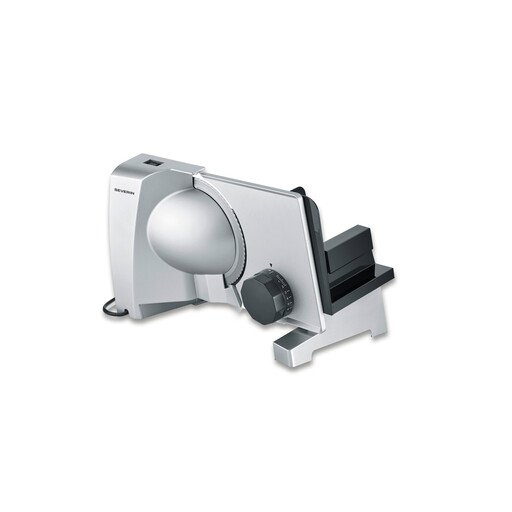 No image available
The product description lists bread and sliced meat as suitable uses. Check which blades are included for your roast beef class.
Adjustable slice thickness: 0–23 mm. Power: 130 W.
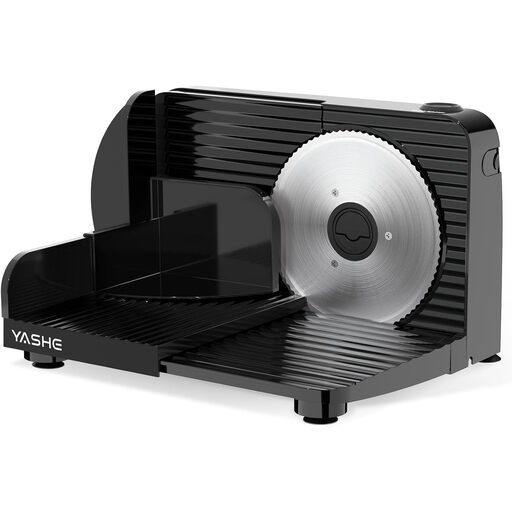 No image available
The product details mention meat and a foldable design. Check that the carriage and included blades meet your class requirements.
Adjustable slice thickness: 0–15 mm. Blade: stainless steel, 17 cm diameter.
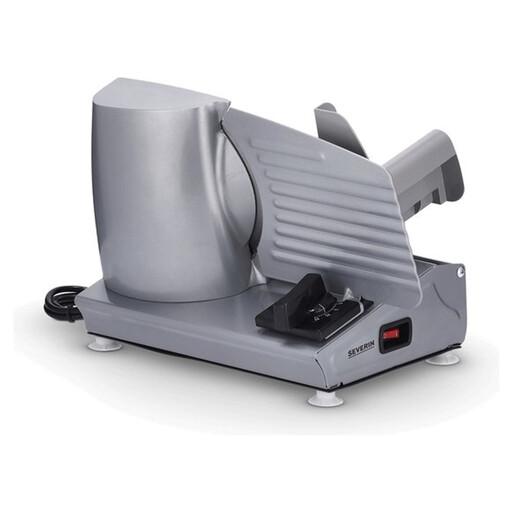 No image available
Severin lists ham and serrated blades for roast beef and other slicing tasks. Check which blade is intended for each food.
Adjustable slice thickness: 0–15 mm. Severin specifies a finger guard and food holder. According to the product details, clean removable parts by hand; unplug the appliance before cleaning or changing the blade.
According to ritter, a serrated blade can be used for soft foods. If you’re aiming for particularly thin, tender slices, ritter describes a smooth ham or slicing blade for this purpose. However, it doesn’t guarantee a particular result for your roast beef.
Position the food slicer to suit the available worktop space, and use the carriage, finger guard and food holder as instructed. Clean any parts that have come into contact with meat according to the appliance instructions. The German Federal Institute for Risk Assessment recommends using separate kitchen utensils for raw and cooked foods.
The German Federal Institute for Risk Assessment recommends keeping perishable foods as cold as possible until they’re eaten or prepared. Plan for chilling and hygienic handling separately from the slicing appliance; this doesn’t establish a universally safe time to leave food out during your class.
No. According to information from the European Union, the manufacturer uses the CE marking to declare that the product complies with relevant EU requirements. The German Federal Institute for Occupational Safety and Health describes the GS mark as a separate mark for tested safety, not as proof of service life or slicing performance. Requirements for materials that come into contact with food are regulated separately.