Fans of finely sliced roast beef
If you want to serve finely sliced cooked roast beef to several people, check the blade type and what’s included with the exact model variant.


For finely sliced roast beef, first check whether a smooth blade is included with the exact model variant. If you often slice bread, a serrated blade or a machine supplied with several suitable blades may be more practical. For preparing multiple portions, also consider how easy the food carriage is to guide, the stated operating time and how easily food-contact surfaces can be cleaned. Blade details can help you narrow down your options, but they are not the result of a comparative roast beef slicing test; cooked meat must be kept properly chilled, whatever machine you use.
If you want to serve finely sliced cooked roast beef to several people, check the blade type and what’s included with the exact model variant.
When slicing in several batches, important things to consider include a suitable food carriage, the machine’s stated operating time and food-contact surfaces that are easy to clean.
If you want to slice bread or other foods as well as roast beef, compare the blades supplied with the space you have for storage and the worktop space you’ll need.
Start with the type of slice you want. Then check whether the machine suits the way you prepare portions, how you’ll clean it and the space you have available.
Details about blades and operating times come from the manufacturers of the respective models. The German Federal Institute for Risk Assessment (BfR) recommends using separate kitchen utensils for raw and cooked foods, and keeping perishable foods properly chilled.
The percentages below relate to consumers choosing an electric food slicer to prepare several portions of cooked roast beef.
| Priority | What to check when buying | Who considers this important? |
|---|---|---|
| Finely sliced meat | Check the blade type, what’s included with the exact variant and whether the slice thickness is adjustable. GRAEF recommends its smooth blade for wafer-thin slices; this is a recommendation, not the result of a roast beef slicing test. | If I want to slice roast beef as finely as possible, I first check the blade type and what’s included; around 36% of consumers put this ability to slice finely at the top of their list. |
| Several portions | Compare the carriage travel, food holder, collection area and operating time stated for the specific model. | When slicing several batches, I look for a carriage that’s easy to guide and suitable breaks between batches; around 29% of consumers prioritise the process of slicing portions. |
| Cleaning and storage | Follow the cleaning instructions for the blade, carriage and food-contact surfaces. Plan to use separate utensils for raw and cooked meat, and to keep food chilled during storage and transport, as recommended by the BfR. | If I’m preparing cooked meat to eat later, I factor in cleaning and chilling; around 21% of consumers put these points at the top of their list. |
| Versatility and space | Compare the dimensions for use and storage, as well as the blades supplied with the exact variant. A folding design doesn’t automatically mean you’ll need less worktop space. | If you want to use the machine for other foods or store it in a small space, weigh up the space needed against the blades supplied; around 14% of consumers prioritise these factors. |
GRAEF specifically lists an additional smooth blade for the G52 TWIN. You can’t assume that this variant’s features apply to every G52 model.
Before relying on a particular blade being included, check the full model name and the contents of the specific offer.
ritter lists a latching switch for the E 16, as well as a short-time operating limit of 5 minutes. The type of switch doesn’t override the stated operating time.
Plan your slicing and breaks according to the instructions for the specific machine.
For the ritter icaro 7, the manufacturer gives a width of 10,0 cm when folded, and a width of 24,0 cm and depth of 34,0 cm when in use.
Measure your worktop, the carriage’s range of movement and the space needed to collect slices separately from your storage space.
The BfR recommends using separate utensils for raw and cooked foods, and keeping perishable foods chilled. A food slicer is no substitute for cleaning or chilling.
Plan for cleaning and chilled storage as well as slicing, and use separate utensils for raw and cooked meat.
The G52 TWIN could be a good fit if you’re looking for a smooth slicing blade supplied alongside the universal blade.
The E 16 is a model for a dedicated space on your worktop and has a collection tray. The icaro 7 may suit you if a folding design is a priority.
The AS 3915 is an option if you’re looking for two removable blades, including a ham blade, and a food holder, as listed in the manufacturer’s data sheet.
The MS171/N is an example of a universal slicer for anyone who also wants to slice bread, vegetables or cheese.
This selection at Joybuy includes food slicers whose product details mention roast beef or meat, adjustable slice thickness or space-saving use.
 No image available
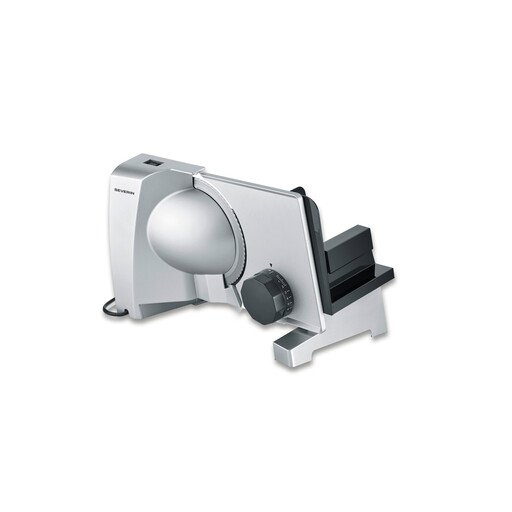
For roast beef and limited storage space, if a folding machine suits your worktop.
The product details list a stainless steel blade and adjustable slice thickness from 0 to 15 mm. The description says the machine isn’t designed for frozen foods or bones.
 No image available
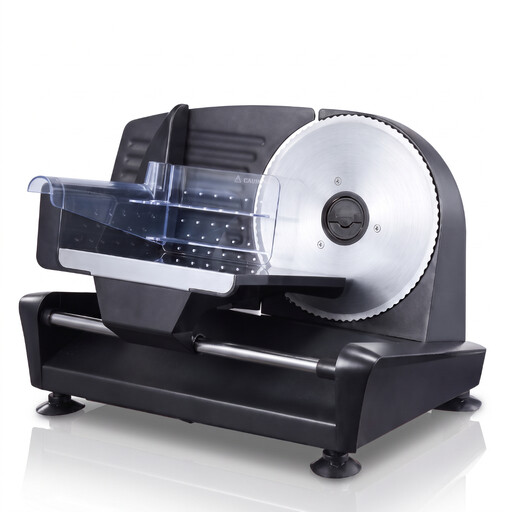
For a range of slicing tasks, if you want to adjust the slice thickness and remove parts for cleaning.
The product details list adjustable slice thickness from 0 to 23 mm, a removable blade and a removable food carriage. The model is AS 3917 and is listed as 130 W.
 No image available
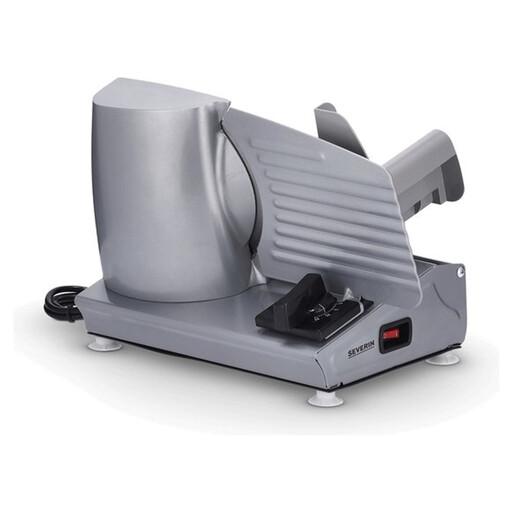
For meat and other slicing tasks, if a smooth blade and adjustable slice thickness suit your needs.
The product details list two 19 cm stainless steel blades and an adjustment range of 0 to 15 mm; one of the blades is smooth, according to the description. A food holder and removable carriage guide are also listed.
 No image available
For slicing meat into portions, if a ham blade and a guided food carriage are important to you.
For the AS 3915, the manufacturer’s data sheet lists two removable blades, including a ham blade, an adjustment range of 0 to 15 mm and a tilting carriage. The product name gives the power rating as 180 W.
 No image available
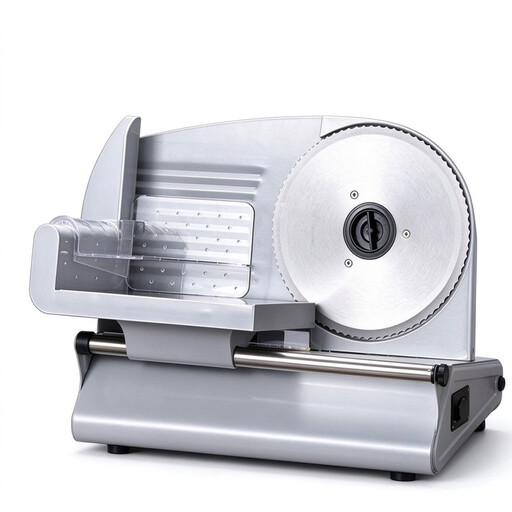
For beef and other foods, if a household model described as compact suits the space you have available.
The product name lists a power rating of 220 W and thin slices as an intended use; bread, fruit and vegetables are also listed.
You can’t determine a particular result for finely sliced roast beef from the blade type alone. GRAEF recommends its smooth blade for wafer-thin slices and its universal serrated blade for crusty bread. Check the blade, model variant and what’s included with the specific machine.
Set up the machine according to its instructions and unplug it before taking it apart or cleaning it, if the instructions specify this. Use separate utensils for raw and cooked or ready-to-eat meat. Check the instructions for the specific model to see how to remove and clean the blade and carriage.
The BfR recommends keeping perishable foods as cold as possible until they’re eaten or prepared, and keeping them chilled during transport too. Hot food that’s going to be stored for longer should be cooled quickly to below 7 °C. A food slicer won’t extend its shelf life.
No. When you buy as a consumer, your statutory rights are a legal entitlement against the seller; a guarantee is an additional voluntary service with its own terms and conditions. The Verbraucherzentrale explains the difference. Also check whether replacement blades and servicing are available for the specific model.
Electrical devices covered by relevant harmonised EU rules must carry the CE marking where required. According to information from the European Union, this isn’t independent proof of the machine’s slicing performance. Check that the specific variant on offer complies with the relevant requirements.