Hosts who want fine slices
If you want to slice salami as thinly as possible for a platter, check the blade type and what’s actually included rather than focusing on wattage alone. (ritterwerk; GRAEF)


For the thinnest possible salami slices, a food slicer that actually comes with a smooth slicing blade is an obvious choice. If you regularly slice bread, a serrated blade may be more suitable for your needs. For several portions, also consider the food holder, cleaning and the right way to operate the machine – and plan how you’ll keep everything chilled during transport. Manufacturers’ claims don’t provide a comparative test of salami-slicing performance, and you’ll need to check CE compliance for the specific product listing.
If you want to slice salami as thinly as possible for a platter, check the blade type and what’s actually included rather than focusing on wattage alone. (ritterwerk; GRAEF)
If you’re preparing several portions before the get-together, plan for safe handling, cleaning and chilled transport. The German Federal Institute for Risk Assessment and the consumer advice centre offer guidance on keeping and storing food and sliced meats chilled.
If you only need a food slicer occasionally, folding features and storage space are important things to consider – without losing sight of whether the blade is suitable for the foods you want to slice. (SEVERIN)
First, check that the blade type and what’s included suit the food you’ll be slicing most often. If you’re preparing several portions, also plan for handling, cleaning and chilled transport.
| What matters | What to check | Who it matters most to |
|---|---|---|
| Thin salami slices | Check the exact model variant, whether a smooth blade is included or confirmed as compatible, and whether the slice thickness is adjustable. | If I want fine slices for a platter, I focus on the blade and its settings rather than wattage alone. This is the top priority for around 36% of consumers, whose main concern is fine slicing. |
| Hygiene and transport | Consider how easy it is to reach food-contact parts, the cleaning instructions, packaging and an insulated cool bag. | Anyone preparing sliced meats for a get-together needs to think about cleaning and keeping food chilled. Around 29% of consumers put hygiene and transport first. |
| Safe portioning | Check the food holder, finger guard, switch, stability and any stated operating time. | If I’m slicing several portions or handling small end pieces, controlled operation and suitable safety features are important. Around 21% of consumers focus primarily on safe handling. |
| Storage and other uses | Check the machine’s operating and storage dimensions, whether it folds, and whether the blade is suitable for any bread you also plan to slice. | If you want to put the machine away after the meal and use it for other slicing tasks, check that you have enough worktop and storage space. Around 14% of consumers make this their main priority. |
GRAEF specifically says that an additional smooth blade is included with the TWIN package. This doesn’t mean that every G52 variant comes with the same blade.
Before buying, check the full model name and which blades are included with that particular variant.
Power or slice-thickness specifications don’t show how thinly or evenly different models slice salami in a direct comparison.
Compare blade type, what’s included and how the machine operates. Don’t treat an unsupported performance claim as a test result.
The European Union describes CE marking as the manufacturer’s declaration that a product complies with the relevant product rules, not as a general independent product test.
Check the marking, manufacturer’s identity and the relevant usage and safety information for the specific product listing.
Slicing doesn’t replace proper storage of sausages and sliced meats. The German Federal Institute for Risk Assessment highlights the importance of keeping food sufficiently chilled during transport and storage.
The consumer advice centre recommends keeping sausages and sliced meats in the fridge and using an insulated cool bag for transport.
The G52 TWIN is a variant for which GRAEF specifies an additional smooth blade.
The E 18 is a metal food slicer with left-hand feed and a serrated blade.
The AS 3915 and AS 3912 differ in several documented features.
The MS171/N is a food slicer with a slightly serrated blade measuring 17 cm in diameter.
The Home Line 200 Plus is a domestic food slicer.
These food slicers have been selected for salami and other slicing tasks. Before buying, check the marking and the related product information on the specific product listing.
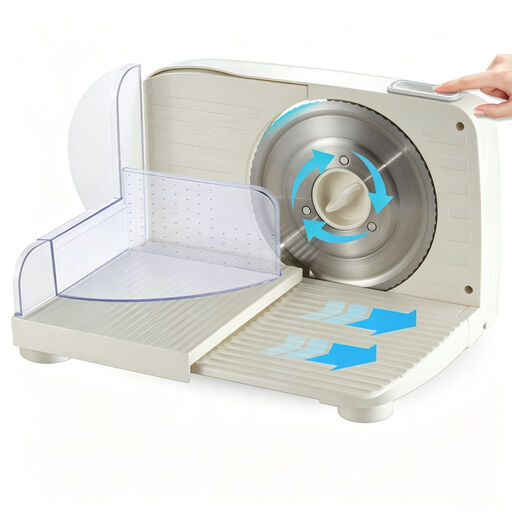 No image available
The listed smooth and serrated blades are useful for different slicing tasks.
The slice thickness is adjustable from 0 to 15 mm. The description says the machine is designed for home use.
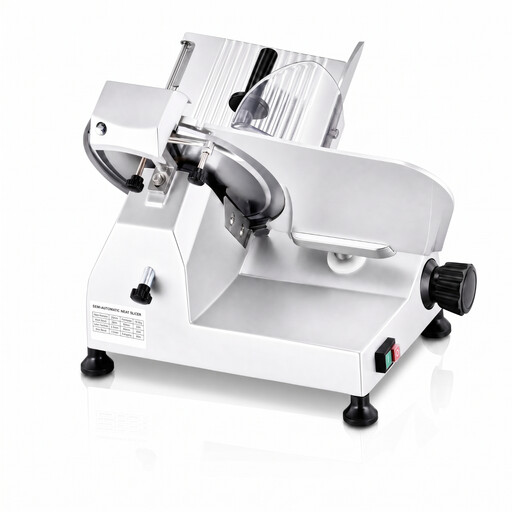 No image available
The adjustable slice thickness may be useful if you want to prepare slices in different thicknesses.
The product title specifies a 25.4 cm carbon steel blade and an adjustment range of 0 to 12 mm. The description lists removable parts and a hand guard.
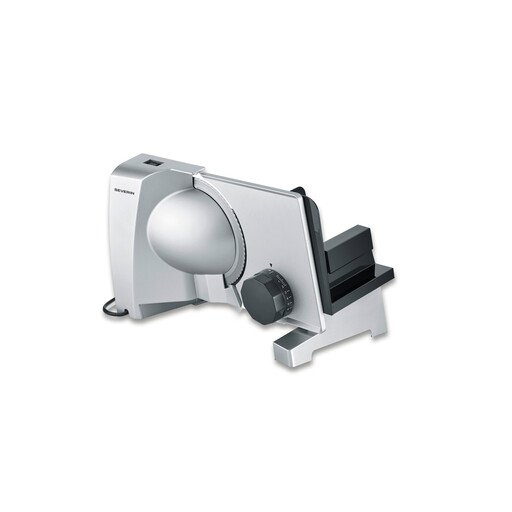 No image available
The model is described as suitable for sausages and cold sliced meats; you can adjust the slice thickness to suit what you’re preparing.
The setting ranges from 0 to 23 mm. The blade and food carriage can be removed for cleaning, according to the description. The title specifies 130 W and a metal housing.
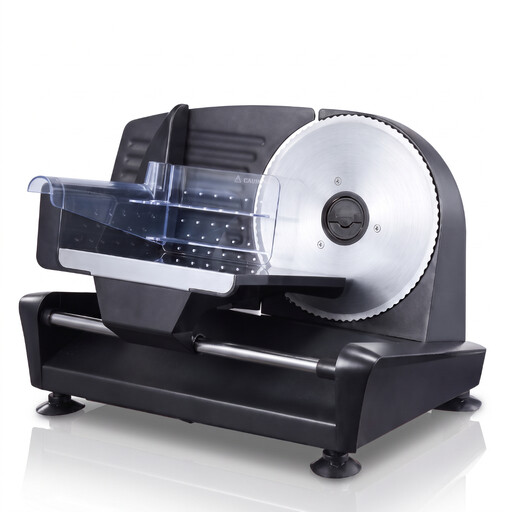 No image available
The description lists a smooth blade for sausages and meat, as well as stepless slice-thickness adjustment.
According to the description, two stainless steel blades measuring 19 cm in diameter are included, with an adjustment range of 0 to 15 mm. Removable parts should be washed by hand.
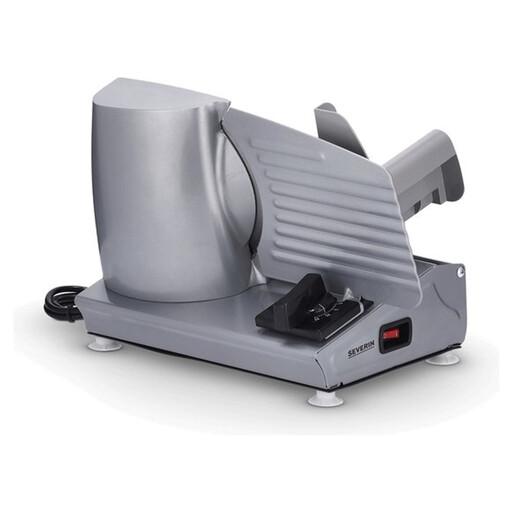 No image available
The listing specifies a ham blade; the description also mentions a smooth blade for fine meat slices and stepless slice-thickness adjustment.
The setting ranges from 0 to 15 mm. The blade and other parts are removable, according to the description; unplug the machine before cleaning.
No. ritter recommends smooth slicing blades for soft foods, but this doesn’t guarantee a particular result or salami thickness. A serrated blade may be useful if you also slice bread regularly.
Check the full model variant and the listed contents for the specific product listing. For example, GRAEF specifically lists an additional smooth blade for the G52 TWIN package; don’t assume it’s included with another variant.
Use the carriage, finger guard and food holder in line with the instructions for your model. For the ritter E 18, the manufacturer says to disconnect the machine from the mains before dismantling or cleaning it, and whenever it’s left unattended. Check the instructions separately for other models.
Keep sausages and sliced meats in the fridge until you’re ready to travel, and use an insulated cool bag for the journey, as recommended by the consumer advice centre. Its guidance on certain types of sliced meat isn’t a general guarantee of how long every salami will keep.
No. According to information from the European Union, CE marking is the manufacturer’s declaration that a product complies with the relevant EU rules; it isn’t a general independent test mark. Check the marking, manufacturer’s identity and usage and safety information for the specific product listing.
The German Federal Institute for Risk Assessment advises particularly vulnerable people to eat raw animal products only when they have been thoroughly cooked. If you’re serving uncooked salami, arrange a suitable alternative; a food slicer doesn’t remove this food safety risk.