For finely sliced cold meats
If you want to slice chilled, cooked pork as thinly as possible, check the blade type and what’s included with the exact model. Graef says the G52 TWIN comes with an additional smooth blade for thin slices of ham.


For thin slices of chilled roast pork, first check whether the specific model comes with a smooth blade or whether one is available for it; a serrated blade is a different feature. If you’ll only use the slicer occasionally in your holiday kitchen, a folding model can make it easier to store, while a freestanding model needs a suitable permanent spot. Also check how easy the parts that come into contact with meat are to clean, and make sure you keep the meat chilled.
If you want to slice chilled, cooked pork as thinly as possible, check the blade type and what’s included with the exact model. Graef says the G52 TWIN comes with an additional smooth blade for thin slices of ham.
If you’ll only use the slicer occasionally or want to take it with you, its folded dimensions and the space it needs to operate safely are important things to consider. Severin describes the AS 3912 as having a foldable base plate.
If you’re slicing ready-to-eat meat in a shared kitchen, look for parts that are easy to access and clean, and use separate utensils for raw and cooked foods. The German Federal Institute for Risk Assessment (BfR) recommends keeping them separate.
Consider the blade and what’s included, the space required, cleaning and safe operation together. No single feature will determine whether a slicer is right for your holiday kitchen.
| Consideration | What to check before buying | Who it matters most to |
|---|---|---|
| Thin slices and blades | Check whether a smooth blade is included or compatible with the exact model, and look at the adjustable thickness range. | If I want thin slices, I check the blade and what’s included, because an adjustable thickness setting alone doesn’t tell me what the result will be like. Around 31% of consumers prioritise thinly sliced cold meats. |
| Worktop space and storage | Measure the space needed to use and store the slicer; if relevant, compare its folded dimensions with its ready-to-use size. | If I’m only using the slicer occasionally in holiday accommodation, I need to be able to store it away and set it up securely when slicing. Around 25% of consumers prioritise space or portability. |
| Cleaning and chilling | Check which parts the instructions say can be removed and accessed easily; plan to use separate utensils and keep the meat chilled. | If I’m preparing cooked meat in a shared kitchen, I want to be able to clean the parts that come into contact with the meat and keep it chilled. Around 25% of consumers prioritise cleaning and keeping food chilled. |
| Safe operation | Check the food holder, carriage, switch, stable work surface and operating instructions for the specific model. | If controlled operation close to the blade matters to me, I check how the specific model is set up and operated. Around 19% of consumers prioritise safe operation and stability. |
Graef describes the G52 TWIN as coming with an additional smooth blade, while the SKS100 comes with a serrated blade as standard. Their specifications aren’t interchangeable.
Compare the full model name and what’s included rather than searching only for ‘G52’ or ‘Graef food slicer’. Also check whether a blade sold separately is compatible with the model.
Even a space-saving slicer that’s easy to store needs a suitable, stable place to stand while you’re using it.
In your holiday kitchen, check the worktop space and storage space separately. Follow the instructions for the specific appliance.
The BfR recommends keeping leftovers chilled; slicing doesn’t extend how long the meat will keep.
Slice only what you need, then return the remaining meat and any leftovers to the fridge.
Worth considering if you want to compare the blades supplied with specific models.
Worth considering if you’re looking for a model with a removable carriage and want to check which blade comes with the specific model.
Worth considering if you want to compare a folding model with one designed for a permanent spot on the worktop.
The MS171 is another specific model you could include in your comparison.
This selection includes electric food slicers for meat, including folding models and options with adjustable slicing thickness. Compare the blade type, what’s included and the space needed for each model.
 No image available
The folding design and stated slicing range may suit meat preparation and limited storage space in a holiday kitchen.
The product name specifies an adjustable slicing thickness of 0–15 mm and a stainless steel blade; the description also mentions a holder and safety guard. The description advises against using it for frozen food or bones.
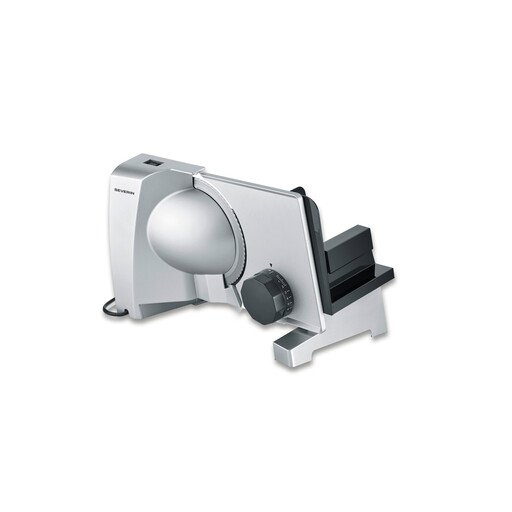 No image available
This model may suit consumers who slice cold meats and want to remove parts for cleaning as instructed.
The product name specifies a continuously adjustable slicing thickness of 0–23 mm and 130 W. The product description mentions a removable blade and support table.
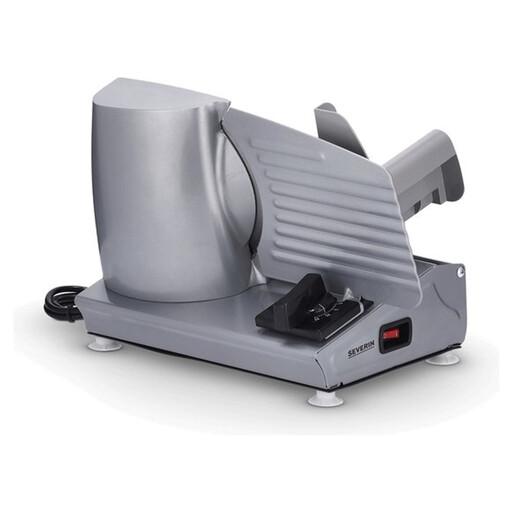 No image available
The included smooth ham blade and adjustable slicing thickness may be useful for slicing meat.
The product name specifies 180 W and stainless steel blades. The product description gives a setting range of 0–15 mm and mentions suction feet. Use a flat, stable work surface and unplug the appliance before cleaning or changing the blade.
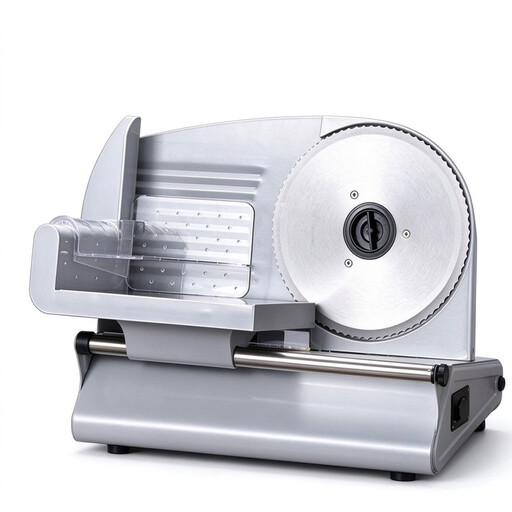 No image available
The description mentions meat and adjustable slicing thickness. Before buying, check that the specific model suits the food you want to slice and the space you have available.
The product name specifies 220 W.
 No image available
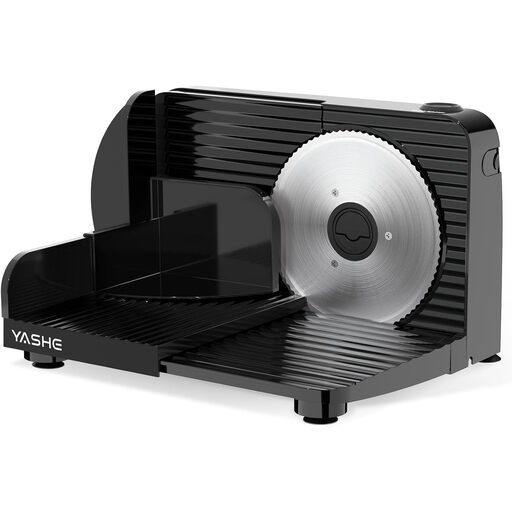
This folding model may appeal to consumers who want to put their slicer away after use.
The product name specifies 180 W, an adjustable slicing thickness of 0–15 mm and a 17 cm serrated stainless steel blade. Check which blade is included if you want a smooth blade for thin slices.
Store leftovers in the fridge, as recommended by the German Federal Institute for Risk Assessment, and eat them within two to three days. Before refrigerating, cool them to below 7 °C within a few hours. Using a food slicer doesn’t extend how long the meat will keep.
Use separate utensils for raw and cooked foods, and for food that will be eaten without further heating. Unplug the appliance before taking it apart or cleaning it, and follow the instructions for the blade and carriage for your specific model. Ritter explicitly gives this instruction for the E 16.
The GS mark is not the same as CE marking. The German Federal Institute for Occupational Safety and Health points out that the GS mark does not certify a product’s lifespan or slicing performance. Electrical products covered by Germany’s Electrical Equipment Ordinance must have CE marking before they are made available; whether a product is covered depends, among other things, on its rated voltage.
If you buy from a retailer in the EU, your statutory consumer rights apply to the seller. Any additional manufacturer’s guarantee is separate, as Your Europe explains. Whether a replacement blade is available and what it costs depends on the exact model and offer. So check that the blade is compatible before buying.