For thinly sliced ham
If you mainly want thin, even slices, start by checking the blade type and what’s included. GRAEF recommends smooth blades for thinly sliced ham.


For the thinnest possible slices of cooked ham, a smooth blade is a good choice; check whether it’s actually included with the version you choose. If you also slice crusty bread, a serrated blade may be more versatile. Factor in ease of cleaning, storage space and the details of the specific product listing when making your decision.
If you mainly want thin, even slices, start by checking the blade type and what’s included. GRAEF recommends smooth blades for thinly sliced ham.
If you regularly slice ready-to-eat cooked ham, look for easily accessible food-contact surfaces and follow the cleaning instructions. The German Federal Institute for Risk Assessment (BfR) also highlights the importance of keeping food properly chilled and preventing the spread of germs.
If you want to use one appliance for bread as well, weigh up a smooth blade and a serrated blade based on what you slice most often. GRAEF says serrated blades are suitable for bread with a hard crust.
| Buying priority | What to check | Who is it important to? |
|---|---|---|
| Thin, even slices of cooked ham | Blade type and what’s included with the exact version; slice thickness adjustment. | If I want the thinnest possible slices after a trip to the market, blade type and included accessories come first. Around 36% of consumers prioritise fine slicing. |
| Cleaning and hygiene | Access to the carriage, blade and food holder; disassembly in line with the model instructions. | If I regularly slice ready-to-eat ham, I look for easily accessible food-contact surfaces and cleaning instructions. Hygiene is the main priority for around 29% of consumers. |
| Counter space and storage | Dimensions when in use and in storage, plus a carriage travel length that suits the piece of ham. | If the slicer needs to be put away between weekly uses, I first check how much space I have and the carriage travel length. Around 14% of consumers put storage space first. |
| Versatility for bread and cold cuts | A serrated blade for bread with a hard crust; compatibility and included accessories for a smooth replacement blade. | If I want to slice bread as well as ham, I weigh up the blade types based on what I use most often. Around 21% of consumers prioritise slicing a range of foods. |
GRAEF specifically lists an additional smooth blade as part of the TWIN package. So don’t rely on the G52 name alone.
Before buying, compare the full model name and check which blades are included.
If you regularly slice ready-to-eat ham, cleaning food-contact surfaces and keeping the ham properly chilled are important practical considerations too.
Check how easy the machine is to clean and read the model instructions. Follow the chilling guidance from the seller or on the packaging.
GRAEF recommends smooth blades for thinly sliced ham and serrated blades for bread with a hard crust. The two blade types are designed for different tasks.
Decide which foods you slice most often, then check the manufacturer’s recommendations for the model and what’s included if replacement blades are available.
For shoppers who want especially thin slices of cooked ham and prefer to choose their blade type carefully.
The solida⁴ and E 18 models described here cater to different needs in terms of design and feed direction.
The Home Line 200 PLUS is a food slicer for households with room to keep it permanently on the worktop.
According to the manufacturer, the MS171/N is a food slicer for a range of foods.
This selection is for anyone who wants to slice cooked ham finely and weigh up a smooth blade, a serrated blade and compact storage to suit their needs.
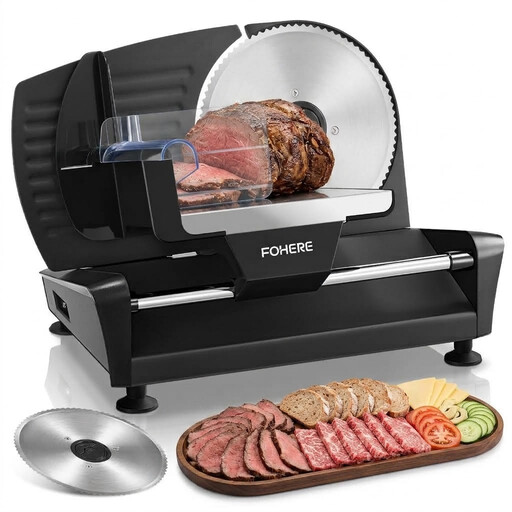 No image available
An option for thinly sliced cooked ham if a smooth blade and adjustable slice thickness are important to you.
Two removable 19 cm stainless steel blades; smooth blade for meat; adjustable slice thickness from 0 to 15 mm; tool-free disassembly. According to the description, it’s intended for domestic indoor use.
 No image available
A folding option if storage space is limited and you want to slice bread as well as meat.
17 cm serrated blade; adjustable slice thickness from 0 to 15 mm; foldable design and removable parts.
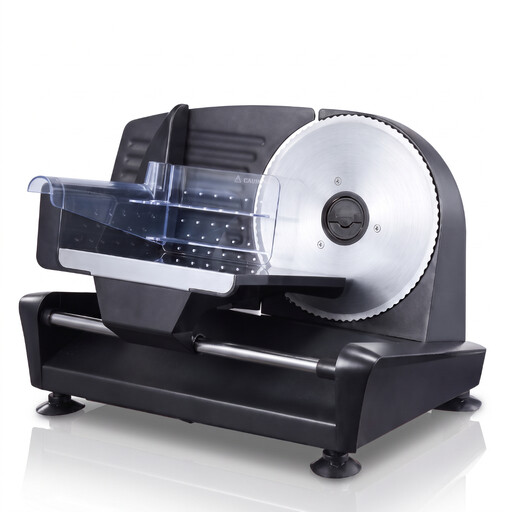 No image available
An option for finely sliced ham if a smooth blade and regular cleaning are important to you.
Two 19 cm stainless steel blades; smooth blade for meat; continuously adjustable slice thickness from 0 to 15 mm; removable carriage and blades.
 No image available
An option for fine slicing and varying slice thickness if you want a smooth blade and parts that are easy to access for cleaning.
Smooth blade; adjustable slice thickness from wafer-thin to 23 mm; 24 cm cutting travel; adjustable motor speed; removable carriage and blades.
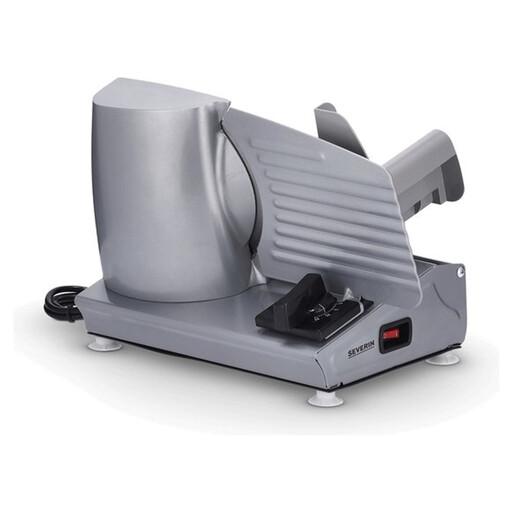 No image available
An option for finely sliced meat and cold cuts if you want to tilt the carriage when changing the blade or cleaning.
Smooth blade for finely sliced meat; two stainless steel blades; adjustable slice thickness from 0 to 15 mm; tilting carriage.
GRAEF recommends a smooth blade for wafer-thin ham and says a serrated blade is more suitable for bread with a hard crust. This is the manufacturer’s guidance, not a guarantee of the results you’ll get with every appliance.
Unplug the appliance before taking it apart and cleaning it, and follow the model instructions. Check that the carriage, blade and food holder are easy to access safely. The BfR highlights the importance of preventing germs from spreading between foods.
No. The BfR recommends keeping perishable foods properly chilled during transport and storage. Follow the guidance from the seller or on the packaging; you can’t assume a standard shelf life just because you shop weekly.
No. Your statutory rights are against the seller, while a guarantee is an additional voluntary promise subject to its own terms and conditions. Verbraucherzentrale (the German consumer advice centre) clearly distinguishes between the two.
CE marking is required for electrical appliances covered by the relevant harmonised EU legislation. Check whether it applies and look at the marking on the specific product listing; CE isn’t an independent quality mark. A GS mark isn’t generally required as an additional compulsory mark. The EU’s information on CE marking explains where it applies.