What should you look for when buying?
For homemade bread, slice thickness isn’t the only consideration. You’ll also want to think about how well the loaf fits, how much space you have in the kitchen and what happens after you’ve finished slicing.
| Consideration |
What to check when buying |
Who is it particularly important to? |
| Even slices |
Blade type and slice thickness range; check whether your loaf fits securely on the carriage. |
If my homemade loaf is irregularly shaped, I want to check that it sits securely and can be sliced evenly; around 33% of consumers prioritise slicing results and loaf guidance. |
| Cleaning |
Read the instructions for removing and refitting the blade; unplug the appliance before cleaning. |
After regular slicing, I want to be able to remove crumbs and residue easily without feeling unsure about handling the blade during cleaning; around 27% of consumers consider cleaning effort a priority when buying. |
| Storage space |
Check the dimensions when set up and folded, and make sure you have a safe place for the appliance and cable. |
If there’s no permanent space on the worktop, I need an appliance that’s easy to store; around 20% of consumers prioritise storage space. |
| Handling and safety |
Check the guide, food holder and switch on the specific model; follow the instruction manual. |
I want to guide the loaf in a controlled way and keep my hands away from the blade while slicing; around 20% of consumers focus mainly on handling and safety. |
Joybuy models for bread and packed lunches
The Joybuy models below are electric food slicers for bread, including foldable appliances and models with different stated slice thickness ranges.
 No image available
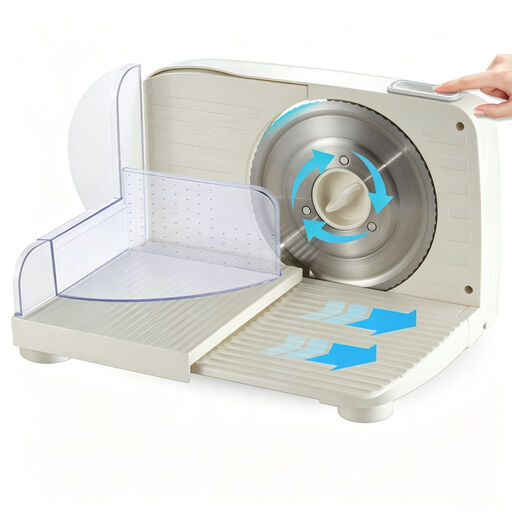
Electric food slicer, 0–15 mm, foldable
A foldable option if you want to slice bread and then put the appliance away.
Slice thickness: 0–15 mm.
Stainless steel blade.
View at Joybuy
 No image available
Electric food slicer, 250 W, two blades
For slicing bread to your preferred thickness; its stated foldable design may be useful for storage.
Power: 250 W.
Slice thickness: 0–15 mm.
Two blades.
View at Joybuy
 No image available
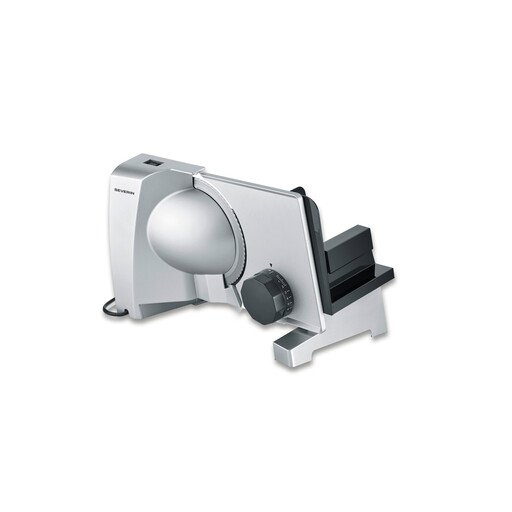
Severin AS 3917, 0–23 mm
An option for bread if the stated slice thickness range suits the slices you want.
Slice thickness: 0–23 mm.
Power: 130 W.
Metal housing; colour: grey.
View at Joybuy
 No image available
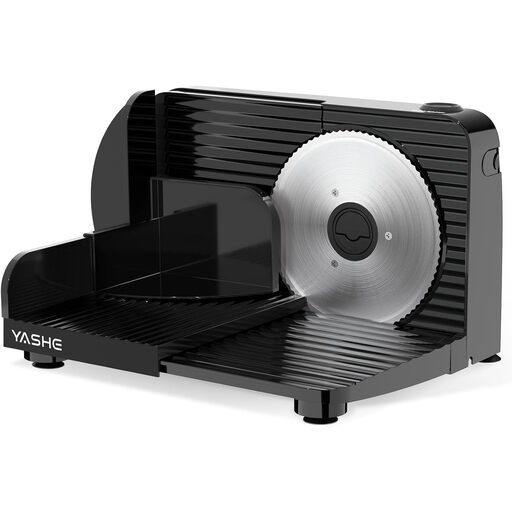
YASHE SL-5801D23B3, foldable, 0–15 mm
A foldable option for bread if you’re looking for an appliance that’s easy to store and has the stated slice thickness range.
Power: 180 W.
Slice thickness: 0–15 mm.
17-cm stainless steel blade.
View at Joybuy
 No image available
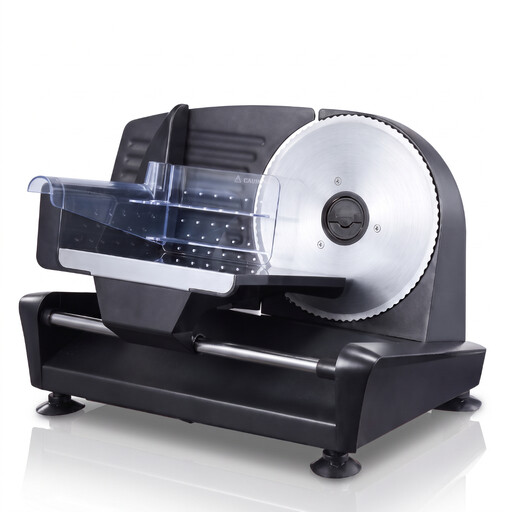
FOHERE food slicer, 200 W, 0–15 mm
For bread with adjustable slice thickness; check whether the stated blade size suits your needs.
Power: 200 W.
Slice thickness: 0–15 mm.
Two stainless steel blades, each 19 cm.
View at Joybuy
Frequently asked questions
What type of blade should I look for when slicing bread with a firm crust?
A serrated blade is a good place to start: Graef specifically says the SKS100 is suitable for hard bread crusts, too. Also check that your loaf fits on the carriage; the manufacturer’s claim doesn’t guarantee the same slicing results with every type of bread.
What should I bear in mind when cleaning after slicing?
Unplug the appliance before taking it apart or cleaning it, as the Graef instructions, for example, require. Then follow the cleaning and assembly instructions for the model you’ve bought. If you also slice ham or cheese, clean all food-contact surfaces hygienically.
Does a packed lunch with fillings need to be kept chilled?
This depends in particular on the filling and the conditions during transport. The German Federal Institute for Risk Assessment recommends storing perishable foods at 2 °C to no more than 7 °C, and keeping them chilled while travelling, too. The German Federal Office of Consumer Protection and Food Safety lists ham and dairy products among foods that need particular care. A food slicer won’t keep them chilled.
Are a guarantee and statutory warranty the same thing?
No. The German Consumer Advice Centre distinguishes between your statutory rights against the seller and an additional, voluntary guarantee, which is subject to its own terms and conditions (as at 28 September 2026). If you need replacement blades or repairs, also check the exact model number.
Is CE marking enough as independent proof of safety?
No. The European Commission explains that CE marking is required only for products where the relevant EU rules expressly require it. It indicates the manufacturer’s declaration that the product meets the applicable requirements; it is not approval by a central EU body.


