Preparing finely sliced cold cuts
If you want to slice chilled roast as thinly as possible for guests, check the blade type and what’s included with the version you’ve chosen. GRAEF recommends a smooth blade for wafer-thin cold cuts.


For particularly thin slices, check the blade type and what’s included with the specific version. GRAEF recommends a smooth blade for wafer-thin cold cuts, but does not promise a particular result when slicing chilled roast pork. If you’re taking the food to share, you’ll also need easy-to-access parts that can be cleaned as instructed, along with an uninterrupted cold chain. If space is tight or you’re preparing larger quantities, check the operating and set-up dimensions as well as the permitted running time.
If you want to slice chilled roast as thinly as possible for guests, check the blade type and what’s included with the version you’ve chosen. GRAEF recommends a smooth blade for wafer-thin cold cuts.
If you’re preparing ready-to-eat meat, factor in cleaning, separate utensils for raw and cooked food, and chilled transport. The German Federal Institute for Risk Assessment (BfR) recommends keeping perishable food chilled while travelling, too.
If you’re slicing a large number of pieces or need to store the appliance away, compare the carriage travel, operating time, and working and folded dimensions. ritter lists different widths for the icaro 7 when in use and folded.
A good fit if: Fine slicing is your priority. GRAEF lists an additional smooth blade for the G52 TWIN, while SEVERIN lists a ham blade for the AS 3915.
Bear in mind: Allow for changing and cleaning the blade, and check what’s included with the exact version.
A good fit if: You’ll also use the same appliance regularly for bread, and wafer-thin meat slices aren’t your main requirement. ritter describes the E 16 and GRAEF the Classic C20 as having serrated blades.
Bear in mind: The blade specification alone doesn’t show how well it will slice chilled, cooked roast to your preferred thickness.
A good fit if: Storage is important. The manufacturer lists the ritter icaro 7 as 10,0 cm wide when folded and 24,0 cm when ready for use.
Bear in mind: The standard model is described as having a serrated blade; check the folded dimensions, worktop space and blade type separately.
| Buying priority | What should you check? | Who is this important for? |
|---|---|---|
| Slice thickness and blade type | Compare the version, included blade and slice-thickness settings. GRAEF recommends a smooth blade for wafer-thin cold cuts. | If I want to slice roast as thinly as possible for guests, I want to choose a blade and model that are right for the job. Around 34% of consumers put fine slicing first. |
| Cleaning and hygiene | Check access to the blade, carriage and contact surfaces, along with the cleaning instructions; plan chilling and transport separately. | If I’m preparing ready-to-eat meat, I want to plan for cleaning and keeping it chilled until it’s time to eat. The BfR recommends keeping perishable food chilled while travelling, too. Around 33% of consumers put cleaning and hygiene first. |
| Slicing larger quantities | Check that the size of the joint is compatible with the carriage travel and follow the operating instructions. ritter lists a 5-minute short-time operating period for both the E 16 and icaro 7. | If I’m preparing lots of slices, I want to take account of work sessions and carriage travel. Around 17% of consumers prioritise the process for larger quantities. |
| Worktop and storage space | Compare the operating and folded dimensions separately with your worktop and storage space. | If space is limited, I want to be able to set the appliance up securely while slicing and put it away afterwards. Around 16% of consumers put available storage space first. |
An adjustable thickness setting doesn’t prove that a particular appliance can slice chilled, cooked roast pork cleanly into very thin pieces. GRAEF distinguishes between serrated blades for bread and its recommendation of a smooth blade for wafer-thin cold cuts.
Compare the exact model version, blade type and what’s included before choosing an appliance.
Depending on the model, a suitable additional blade may be part of the process.
The folded dimensions don’t tell you how much worktop space the appliance needs when slicing. Some appliances also have a limited short-time operating period.
Check the working and storage dimensions, carriage travel and operating instructions for the specific model separately.
A food slicer is no substitute for keeping ready-to-eat meat chilled or for using separate kitchen utensils for raw and cooked food. The BfR recommends storing perishable food at 2 °C to a maximum of 7 °C and keeping it chilled while travelling, too.
Prepare the meat while chilled, clean the contact surfaces according to the appliance instructions, and plan for chilled transport and storage until it’s ready to eat.
The versions mentioned differ in blade type and features: the G52 TWIN is described as including an additional smooth blade, while the Classic C20 has a serrated blade.
The E 16 is described as an all-rounder with a serrated blade. The icaro 7 is a foldable version with a removable blade and carriage.
The AS 3915 specification lists a ham blade, removable blades and a continuously adjustable slice thickness of 0–15 mm.
For the MS171/N, DOMO lists a lightly serrated stainless steel blade with a 17 cm diameter and a slice-thickness setting of 0–15 mm.
The Joybuy products below include electric food slicers and meat-cutting appliances with stated features for meat, adjustable slice thickness or space-saving storage. Check each model to make sure its design and blade are suitable for cooked roast and your preferred slice thickness.
 No image available
The description lists meat as a food you can slice; check the blade type and preferred slice shape for chilled, cooked roast.
Adjustable slice thickness: 0–15 mm.
Foldable design and stainless steel blade.
According to the description, not suitable for slicing frozen food or bones.
 No image available
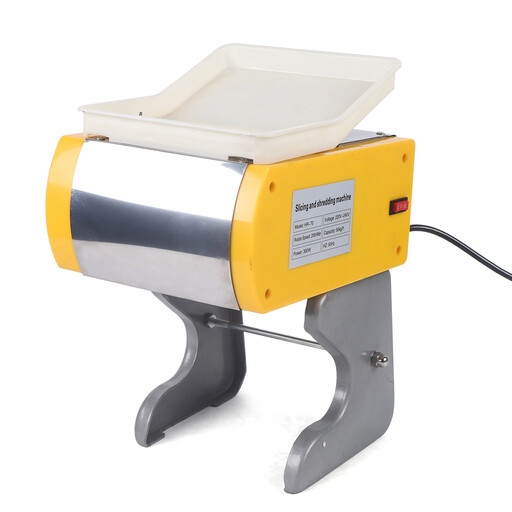
The description says it slices and minces meat; before buying, check whether its design is suitable for cooked roast and your preferred slice shape.
Specifications: 300 W, 200 RPM and 110 lbs/h.
Forward and reverse functions and a large feed tray, according to the product description.
 No image available
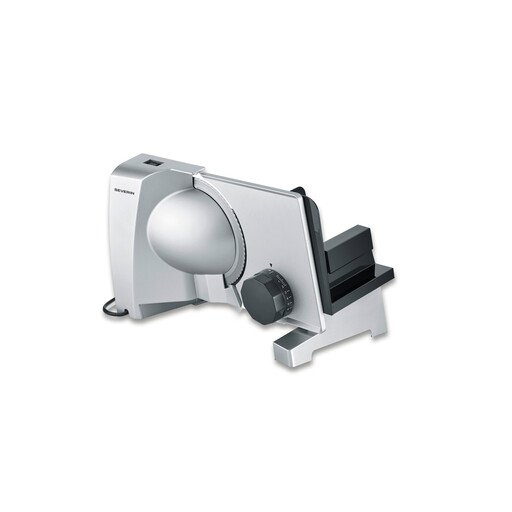
The product description lists roast and cold cuts as suitable uses; check the blade type to see if it meets your fine-slicing needs.
Adjustable slice thickness: 0–23 mm.
130 W; the blade and support table are described as removable.
 No image available
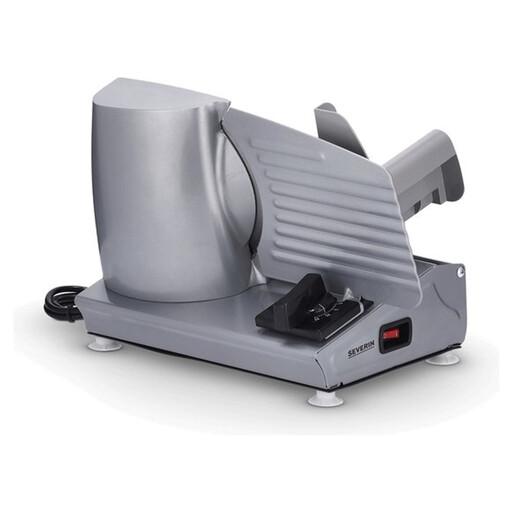
This model is an option if you’re looking for a ham blade and easy access for changing the blade and cleaning.
180 W; includes a ham blade and stainless steel blades.
Adjustable slice thickness: 0–15 mm; tilting carriage, according to the product specifications.
 No image available
The description lists meat as a suitable food and says the appliance has a foldable design. For particularly thin cold cuts, bear in mind that its serrated blade differs from GRAEF’s recommendation of a smooth blade.
180 W; adjustable slice thickness: 0–15 mm.
17 cm serrated stainless steel blade.
No, that isn’t a general requirement. GRAEF recommends a smooth blade for wafer-thin ham and cold cuts; according to the manufacturer, it’s included as an additional blade with the G52 TWIN. Check what’s included with the exact version, and don’t take the recommendation as a tested result for your roast.
The BfR recommends storing perishable food in the fridge at 2 °C to a maximum of 7 °C and keeping it chilled while travelling, too. It recommends using separate kitchen utensils for raw and cooked food. Clean the contact surfaces after slicing, following the appliance instructions; a food slicer isn’t a substitute for chilling.
Check the operating limit for your chosen model: ritter lists a 5-minute short-time operating period for both the E 16 and icaro 7. This doesn’t establish a general operating time for other food slicers.
Before buying, check whether the blade you want is included or needs to be purchased separately. SEVERIN says the AS 3915 comes with a ham blade; an additional smooth blade is listed for the GRAEF G52 TWIN. For spare parts and servicing, refer to the information for the model you actually buy.
New electrical equipment that falls within the scope of the 1. ProdSV in Germany and is designed for 50 to 1,000 volts AC must meet the requirements set out there. These include the prescribed conformity assessment procedure, an EU Declaration of Conformity from the manufacturer and CE marking. CE marking is a manufacturer’s declaration, not a test certificate issued by a central EU body; the regulations cited don’t create a general requirement to buy a product with a GS mark.