
Lieferung heute & morgen

Qualitätsgarantie

Willkommens-Angebote freischalten: KOSTENLOSE Lieferung | Bis zu 80 % RABATT | Kostenlose 30-Tage-JoyPlus-Testphase
App herunterladen
A steamer is ideal for cooking vegetables, fish, seafood, dumplings, bao and much more. Before you buy, it’s worth taking a closer look at what’s available. A simple steamer insert, a multi-tier steamer pot and an electric steamer all differ considerably in the space they take up, how they work and how easy they are to clean.
A five-tier steamer may seem particularly versatile at first glance. In practice, though, it needs enough clearance beneath your cooker hood and a stable base. You’ll also need to be able to reach each tier easily. For smaller kitchens, a single steamer insert or a compact electric steamer may be a better choice.
Not every steamer pot is suitable for induction. The base of the bottom pot is what matters. Check the product details carefully for statements such as “suitable for induction”, as well as compatibility with gas, electric and ceramic hobs. An induction steamer needs a magnetic, flat-bottomed base.
The term “stainless steel” alone doesn’t tell you much about the construction or care requirements. For a stainless steel steamer, material details such as 304 stainless steel or 18/10 stainless steel are more useful. Smooth surfaces, removable tiers and clear information about dishwasher suitability are also important. Bamboo steamers need different care: let them dry completely after use, and don’t leave them sitting in water.
A steamer insert with a diameter of around 15 to 20 cm is often enough for one or two people. Families and frequent users may prefer a diameter of 26 to 32 cm or a multi-tier model. A large steamer lets you cook different ingredients at the same time, but it needs more storage space.
Consider these questions:
A steamer with a glass lid makes it easier to keep an eye on your food without constantly lifting the lid. With electric models, you should also consider the usable cooking area and water tank capacity.
18/10 stainless steel is commonly used for kitchen utensils. It’s flavour-neutral and easy to care for. 304 stainless steel is another widely used term for corrosion-resistant stainless steel. The specific product description is still important, as the material thickness, handles and base construction can vary from one model to another.
For a bamboo steamer, a well-fitting lid and neatly woven construction are important. Baking paper or perforated liners can help stop delicate foods sticking to the base. Bamboo is particularly well suited to dim sum, bao and smaller portions, but it isn’t dishwasher-safe.
A hob-top steamer needs a suitable pot and a separate heat source. The water mustn’t touch the food. An electric steamer generates steam itself, and features such as a timer, water level indicator and automatic shut-off can make everyday use easier.
Whichever model you choose:
A pressure cooker works under pressure and isn’t the same as a traditional steamer. If you want to cook without pressure, look for a steamer insert, a steamer pot or an electric model.
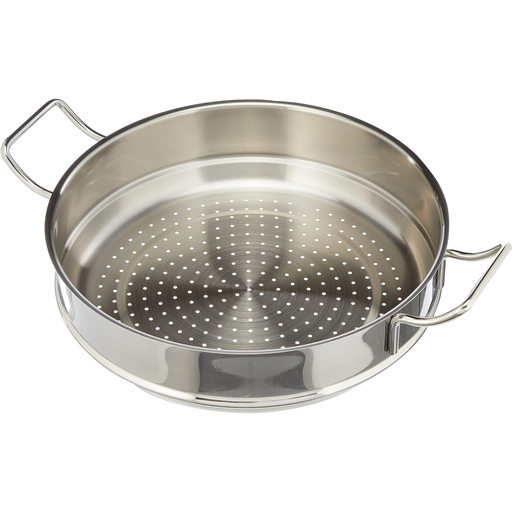
Why it suits this household: The 24 cm steamer insert is a space-saving option for existing ZWILLING pots of the right size, making it well suited to smaller households.
The compatible pot diameter is clearly specified. Side handles and a smooth surface make it easier to use and clean.
18/10 stainless steel, dishwasher-safe according to the product details, and a compact 24 cm design.
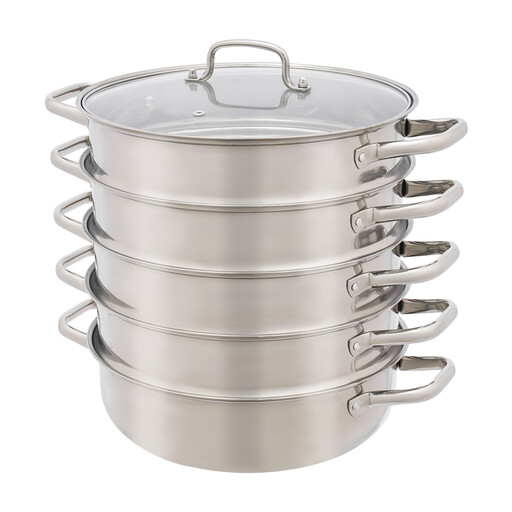
Why it suits this household: Four steamer inserts and a separate base pot offer plenty of flexibility for family meals, vegetables, fish, dumplings and soups.
The stackable design can be adjusted to suit the portion size. The product details specify compatibility with induction, gas, electric and ceramic hobs.
304 stainless steel, a glass lid and a base pot that can be used on its own, according to the product description.
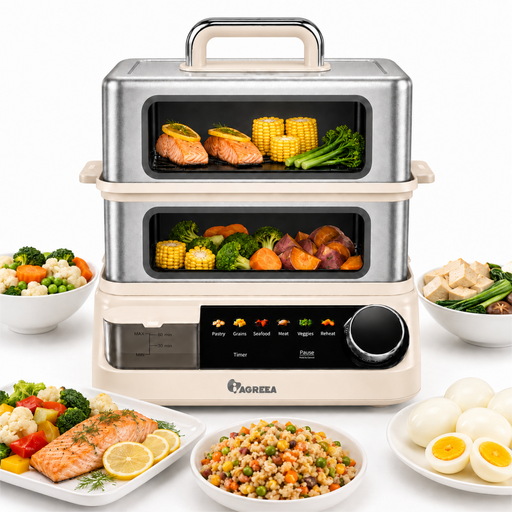
Why it suits this household: This electric model is designed for households that want to steam food independently of the hob and cook several ingredients across two tiers.
An external 2.5-litre water tank, timer and six pre-set programmes mean you don’t need to find a suitable cooking pot.
14-litre capacity, 2,000 watts and two removable stainless steel trays, according to the product details.
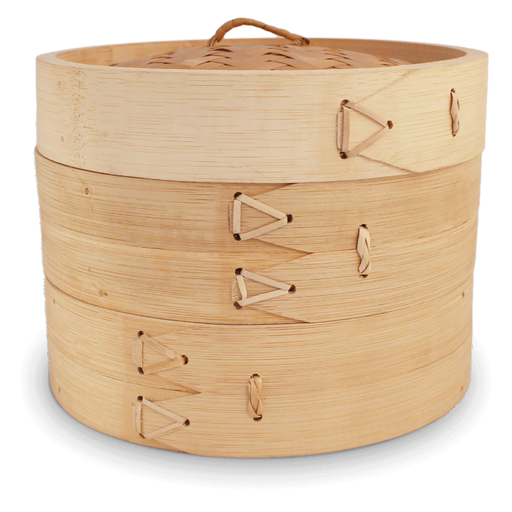
Why it suits this household: The two bamboo tiers are designed for dim sum, bao, rice and smaller portions, and fit many woks.
Its compact size takes up less space. Care is straightforward: after washing, the bamboo must be allowed to dry completely.
Two tiers, a matching lid and a weight of 0.605 kg, according to the product description.
We’ve put together a complete, regularly updated list of products that meet these strict selection criteria and fully comply with the safety regulations in force in the EU.
For induction, you need a steamer with a magnetic, flat base. If you’re buying a set, check that the product description specifically mentions induction compatibility. A bamboo steamer, on the other hand, needs a suitable wok or pot as its heat source and isn’t induction-compatible itself.
The amount of water depends on the pot height, cooking time and model. The water shouldn’t touch the food in the insert. For electric appliances, follow the marking on the water tank. During longer cooking times, check the water level without opening the hot steamer without protection.
A steamer’s lifespan depends on its materials, build quality and care. Stainless steel models with smooth surfaces can last a long time if cleaned properly. Avoid metal utensils and abrasive cleaners on coated parts. Bamboo steamers need particularly careful drying to stop the material staying damp.