
Lieferung heute & morgen

Qualitätsgarantie

Willkommens-Angebote freischalten: KOSTENLOSE Lieferung | Bis zu 80 % RABATT | Kostenlose 30-Tage-JoyPlus-Testphase
App herunterladen
As a Joybuy product recommendation specialist, I see just how many options are on the market every day. Finding the right food storage container can be a challenge. A soggy sandwich at lunchtime, wilted salad in the fridge, or disorganised chaos in the pantry are common problems that the right container can solve.
This article serves as a practical guide. It's designed to help you understand the features that make a good food storage container and to introduce a selection of models for various uses. The goal is to keep food fresh for longer, simplify meal prep, and reduce food waste.
Choosing the right container depends on your individual needs. However, three criteria are crucial for most users.
Most modern plastic food containers are lightweight, break-resistant, and durable. A key feature to look for is the BPA-free label. BPA (Bisphenol A) is a chemical found in some plastics that can leach into food when heated. BPA-free containers are therefore a safe choice, especially if you plan to use them in the microwave. Look for the microwave-safe label to ensure the material is designed for this purpose. Such freezer-safe containers that are BPA-free are also safe for freezing food.
An airtight food container protects its contents from air and moisture. This slows down spoilage and preserves flavours. Systems with a four-sided locking mechanism and a silicone seal in the lid are particularly effective. This design not only keeps food fresh for longer but also makes the containers leak-proof—an important feature for transporting soups or sauces in a lunch box.
Everyday usability is determined by the design. Stackable containers save valuable space in the fridge, freezer, or pantry. For taking meals on the go, a lunch box with compartments is ideal for keeping different components separate. A food storage container set with various sizes offers flexibility for different quantities, from small snacks to large family portions. A storage box with a lid and handles can also make transporting larger quantities easier.
Based on the criteria above, we've put together a selection of food storage containers suitable for a range of needs.
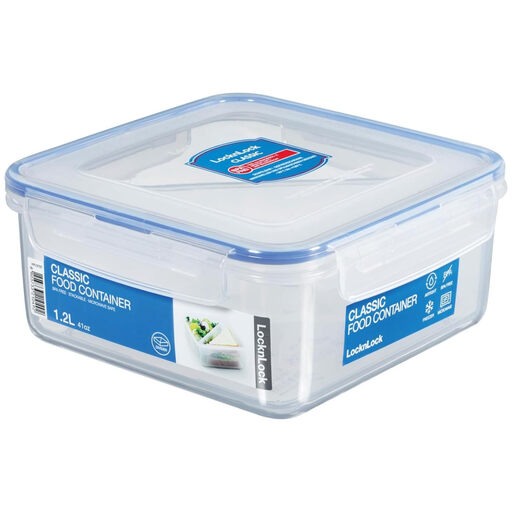
Why it stands out: The integrated divider is a simple yet effective solution to prevent sandwich ingredients from making the bread soggy.
Pros:
Best for: Working professionals, students, and anyone looking for a practical lunch box with compartments for their daily lunch.

Why it stands out: These containers use a special ethylene-absorbing technology that, according to the manufacturer, can extend the freshness of fruits and vegetables.
Pros:
Best for: Health-conscious individuals and small households who want to store fruits and vegetables, optimise their shelf life, and reduce food waste.
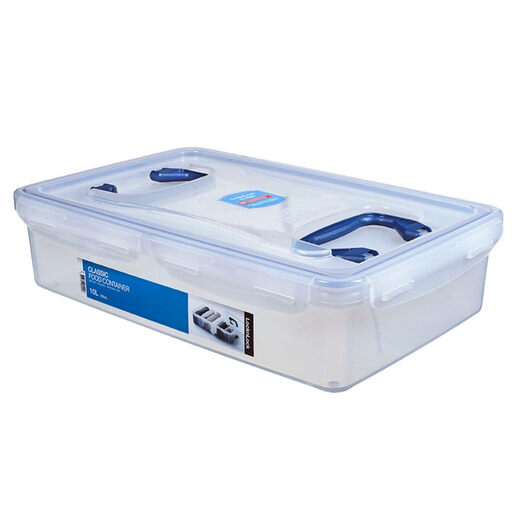
Why it stands out: With a 10-litre capacity and integrated carrying handles, this box is designed for storing and transporting large quantities.
Pros:
Best for: Families, home cooks, and anyone who regularly cooks or freezes large quantities or wants to organise their pantry with a large storage box with a lid.
The models featured here cover common use cases. However, if you're looking for different sizes, materials, or a comprehensive food storage container set, many other alternatives are available.
Explore our full range of sealable plastic storage containers to find the perfect solution for your kitchen.
Yes, as long as they are explicitly labelled as microwave-safe and BPA-free. It's important to follow the manufacturer's instructions. Typically, the lid must be removed or at least vented before heating to prevent pressure build-up and ensure even heating.
Most high-quality LocknLock food storage containers are dishwasher-safe, which makes cleaning easy. For stubborn odours or stains (e.g., from tomato sauce), it can help to scrub the container with a paste made of baking soda and water and let it sit for a few hours. It's also important to let all parts dry completely after cleaning before reassembling and storing them.
An airtight food container has a sealing mechanism that prevents air from getting in. This is usually achieved with a flexible silicone seal in the lid that presses against the rim of the container. This protection from oxygen slows down oxidation and the growth of microorganisms, which is proven to keep food fresher for longer and better preserve flavours. Additionally, a tight seal prevents liquids from leaking.