
Lieferung heute & morgen

Qualitätsgarantie

Willkommens-Angebote freischalten: KOSTENLOSE Lieferung | Bis zu 80 % RABATT | Kostenlose 30-Tage-JoyPlus-Testphase
App herunterladen
A good food storage container is an unsung hero of the everyday kitchen. It keeps food fresh for longer, organises your kitchen, and simplifies meal prep. However, the market is flooded with products whose promises don't hold up in daily use. Many buyers soon discover that lids warp, containers start to leak, or they are impractical to stack in the cupboard.
This guide shows you what really matters. We'll highlight the three most common weaknesses in food storage containers and explain which features define a durable and functional kitchen storage container.
Before you invest in a new food storage container set, you should be aware of the typical flaws that often only become apparent after a few weeks of use.
To avoid the problems mentioned above, you should pay attention to three crucial technical parameters during your selection. These define the quality and everyday practicality of a food storage container.
The material is the foundation for durability and safety. High-quality Polypropylene (PP) is a common and reliable choice here. It is naturally robust, retains its shape, and is suitable for food contact.
The locking mechanism determines whether a container is truly airtight and leak-proof. Simple snap-on lids often do not provide sufficient protection.
A well-thought-out design makes the difference between chaos and order in the cupboard.
Based on the criteria above, we have put together some products for different user profiles.
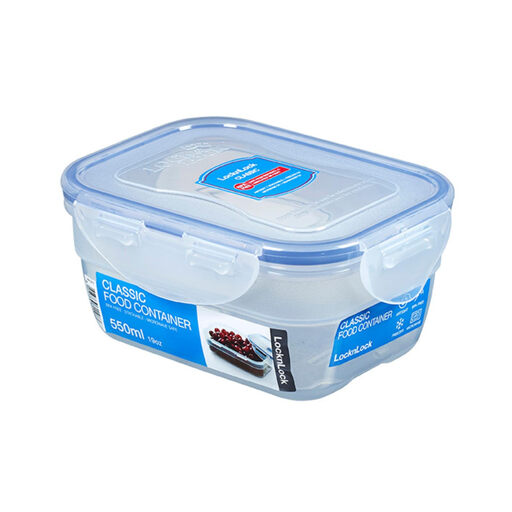
Why it's a great fit: Ideal for daily lunches. The compact 550 ml size is perfect for a single portion and fits into any bag without taking up much space. Its superior seal is crucial for transporting soups or salads with dressing.
The patented 4-sided locking system with a silicone seal reliably prevents leaks and lid warping, a major problem with cheaper containers.
Proven to be airtight and leak-proof, even with liquid contents. The material is microwave-safe (without the lid) and freezer-safe.
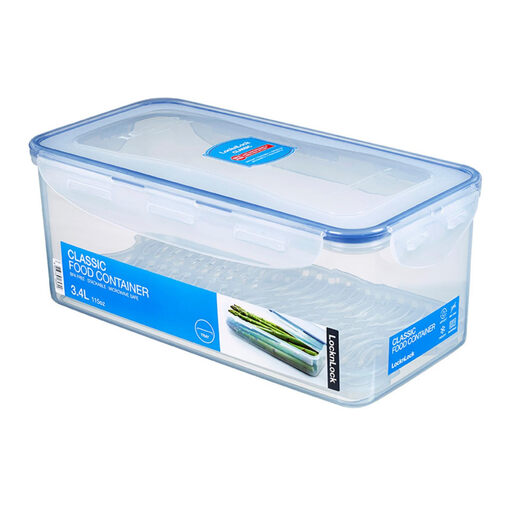
Why it's a great fit: With a 3.4-litre capacity, this container is excellent for prepping large batches, storing salads for the whole family, or keeping an entire loaf of bread fresh. The rectangular design makes optimal use of fridge space.
The design is consistently focused on efficiency. The container is stably stackable, preventing the "Tetris game" in the fridge that occurs with poorly designed, round, or bulky containers.
Large volume for family meal prep or storing bulky foods. The transparent material allows for a quick overview of the contents.
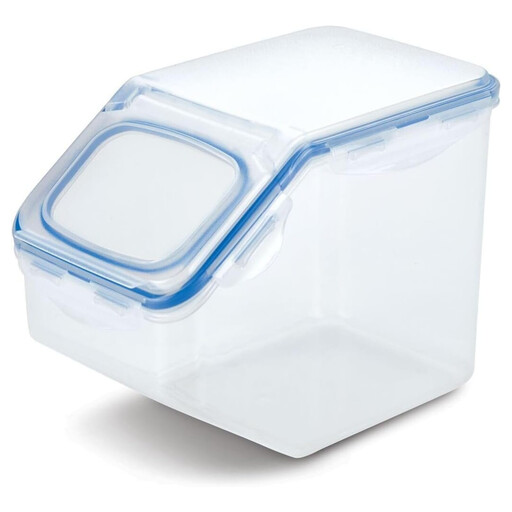
Why it's a great fit: This pantry container is specifically designed for dry foods like flour, sugar, cereal, or pet food. The large 5-litre volume holds the contents of entire standard packages and protects them from moisture and pests.
Unlike universal containers, this caddy features a convenient flip-top pouring lid. This eliminates the cumbersome task of opening four clips just for your morning cereal.
Specialised design for dry goods with a large capacity and a user-friendly lid for daily use.
We have compiled a complete, up-to-date list of products that fully meet these strict selection criteria and safety standards.
No, not all plastics are suitable for the microwave. Look explicitly for the "microwave-safe" symbol or manufacturer's statement. It is always necessary to remove the lid or at least open all the locks before heating to allow steam to escape. Avoid heating foods high in fat or sugar, as they can reach temperatures above 120°C and damage the plastic.
The most effective method is to clean it immediately after use, especially after storing foods that stain or have strong odours. Most high-quality containers are dishwasher-safe (usually on the top rack). For stubborn stains, a paste made from baking soda and water, left to sit for a few hours, can help.
Airtight means that the seal prevents the exchange of air between the inside and the outside. This slows down oxidation and protects dry foods from moisture, thereby preserving flavour and freshness for longer. A reliably airtight seal is typically achieved through a combination of a precisely fitting silicone gasket and a firm, multi-sided locking mechanism.