
Lieferung heute & morgen

Qualitätsgarantie

Willkommens-Angebote freischalten: KOSTENLOSE Lieferung | Bis zu 80 % RABATT | Kostenlose 30-Tage-JoyPlus-Testphase
App herunterladen
Welcome, I'm your Joybuy Product Recommendation Officer. My mission is to sift through market information and provide you with objective, practical advice to help you make an informed purchasing decision—free of marketing hype.
The search for the right food storage containers can be frustrating. You invest in a set, only to find a few weeks later that the lids no longer seal properly, the containers are permanently stained by tomato sauce, or the promised leak-proof design fails during your commute to work. These issues are not just annoying; they lead to food waste and unnecessary expenses. Before you make a decision, you should know the three most common pitfalls that lead to a bad purchase.
To avoid these pitfalls, you should focus on a few crucial technical features. These determine whether a storage container will truly perform in your daily routine.
Most high-quality food containers are made of polypropylene (PP), a robust and food-grade plastic. Always look for the BPA-free label. BPA (Bisphenol A) is a chemical compound found in some plastics that can potentially leach into food upon contact. BPA-free containers offer a safer foundation for storing your meals. This material is also often more resistant to staining and odour absorption.
A reliable seal is the core feature of any good food storage container. There are significant quality differences here:
For maximum flexibility, the containers should be both freezer-safe and microwave-safe. Pay close attention to the manufacturer's instructions: often, the containers should only be heated in the microwave without the lid to prevent damage from pressure build-up. A stackable design, where containers of the same size can be securely stacked and smaller ones can be nested inside larger ones to save space, is essential for a tidy kitchen.
Based on these objective criteria, we have identified a few products that are particularly well-suited for specific use cases.
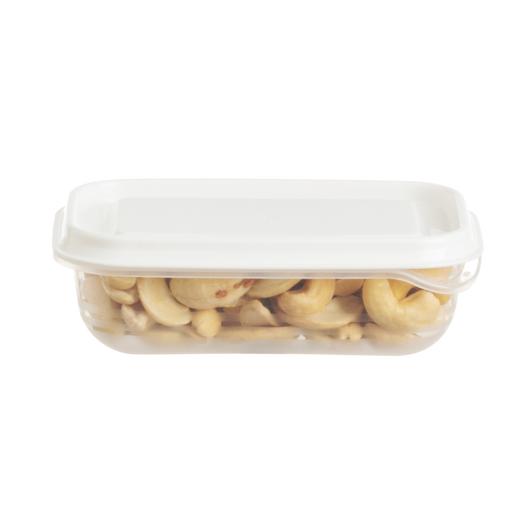
Why This Fits Their Persona: Ideal for starting out with meal prepping, this set offers multiple containers in practical sizes for weekly planning. It's a straightforward and functional solution for professionals and students.
The set provides a unified solution, avoiding the problem of mismatched lids and containers from different brands. The lids are designed to fit the containers perfectly, ensuring a reliable seal.
Versatile 6-piece set for various meals; stackable design for space-saving storage.
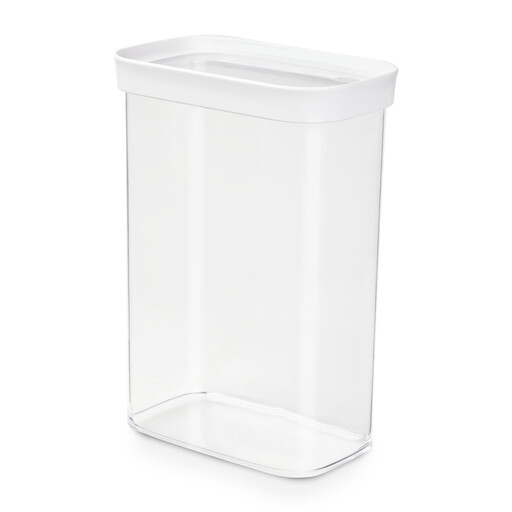
Why This Fits Their Persona: Perfect for anyone who values a tidy and uniform pantry. According to the manufacturer, the design is tailored to standard kitchen cabinets to make optimal use of space.
The design is explicitly focused on stackability and space efficiency, preventing wasted space and clutter. The audible click-lock provides assurance that the container is truly sealed.
Optimal space utilization due to coordinated dimensions; audible snap-lock for guaranteed freshness for dry goods.
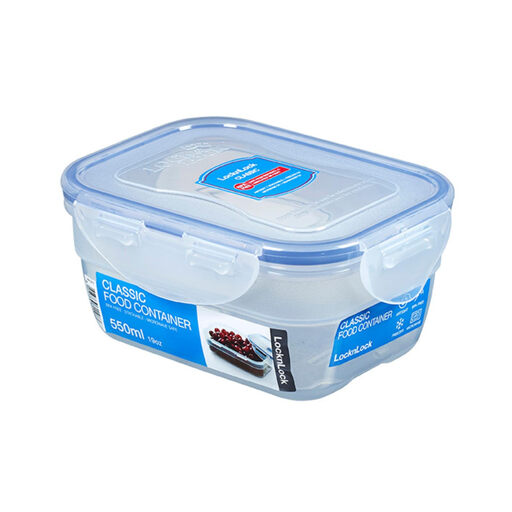
Why This Fits Their Persona: For users whose top priority is an absolutely leak-proof seal and aroma protection, such as for transporting soups or storing strong-smelling cheese.
According to the manufacturer, the patented 4-sided locking system with a silicone gasket goes beyond simple snap-on lids, providing a proven air and watertight barrier that avoids false promises of being sealed.
Patented locking system for a superior seal; suitable for securely transporting liquids.
We have compiled a complete, up-to-date list of products that fully meet these strict selection criteria and safety standards.
Rinse the containers with cold water immediately after use before cleaning them with warm water and dish soap. This helps minimize the absorption of pigments (e.g., from tomatoes or carrots) into the plastic. For stubborn odours, letting the container sit overnight filled with a mixture of water and baking soda can help. Most of the containers mentioned here are also dishwasher-safe, which simplifies cleaning.
No, not all of them. Always check the manufacturer's specifications on the product or packaging. If a container is marked as microwave-safe, this usually applies only to the container itself. The lid should almost always be removed, or at least placed on loosely, to prevent pressure build-up and potential warping. Heat foods high in fat or sugar with caution, as they can reach very high temperatures and damage the plastic.
BPA-free means the plastic was manufactured without the chemical Bisphenol A. This substance is used in some plastics but can, under certain conditions (like heat), leach into food. Although legal limits in the EU are strict, many consumers prefer BPA-free products as a precaution, especially when it comes to storing food for children or heating meals. Choosing BPA-free storage containers is therefore a common practice for health-conscious households.