
Lieferung heute & morgen

Qualitätsgarantie

Willkommens-Angebote freischalten: KOSTENLOSE Lieferung | Bis zu 80 % RABATT | Kostenlose 30-Tage-JoyPlus-Testphase
App herunterladen
Whether for dinner leftovers, a prepped lunch for the office, or neatly storing dry goods, food storage containers are a staple in modern kitchens. But the selection is vast, and not every product lives up to its promise. A leaky container in your bag or a box that's stained after its first use is frustrating and a waste of money.
This guide will show you which critical features to look for and help you sidestep the common pitfalls of buying food storage containers.
Many buyers share similar negative experiences. These often stem from exaggerated marketing claims or poorly designed product details that only become apparent with daily use.
To avoid the problems mentioned above, you should check three key properties before buying. These are crucial in determining the durability, safety, and functionality of your containers.
Most plastic food containers are made of polypropylene (PP), a robust and food-grade material. The key feature to look for here is BPA-free. Bisphenol A (BPA) is an industrial chemical found in some plastics that can potentially leach into food when heated. BPA-free containers offer greater safety, especially if you plan to heat meals directly in the container. Therefore, always look for the corresponding label from the manufacturer.
A reliable closure is the core of a good food storage container. Simple, press-on lids are unsuitable for transporting liquids. Systems with locking clips on all four sides are significantly more secure.
The tightest seal is achieved with lids that have a firmly integrated or injected silicone gasket. Models like the Emsa Clip and Close series use a patented freshness seal that is seamlessly bonded to the lid. This not only prevents leaks but also stops germs and dishwashing residue from getting trapped between the seal and the lid. Making a leak-proof lunch box like this requires precise engineering.
For an organised kitchen and a tidy refrigerator, the shape of the containers is crucial. Stackable models, ideally in various but coordinated sizes, make the most of available space.
Also, check the manufacturer's specifications for temperature resistance:
Instead of presenting an overwhelming list, we have selected products for specific user profiles that reflect typical everyday needs.
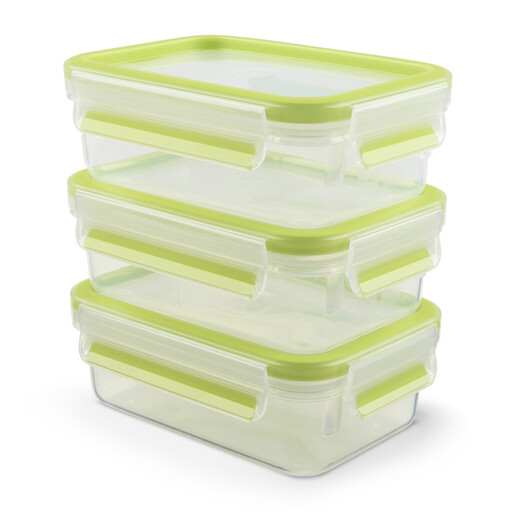
Why This Fits Their Persona: This food storage container set is ideal for households looking for a reliable and versatile solution for the daily storage of leftovers, cold cuts, or vegetables in the fridge. The uniform size makes organisation easy.
According to the manufacturer, the seal is firmly bonded to the lid, preventing gaps where germs can settle and ensuring a high level of tightness. This addresses the problem of the "false leak-proof promise."
According to the manufacturer, it's 100% leak-proof, hygienic, and BPA-free. The product is freezer, microwave, and dishwasher safe.
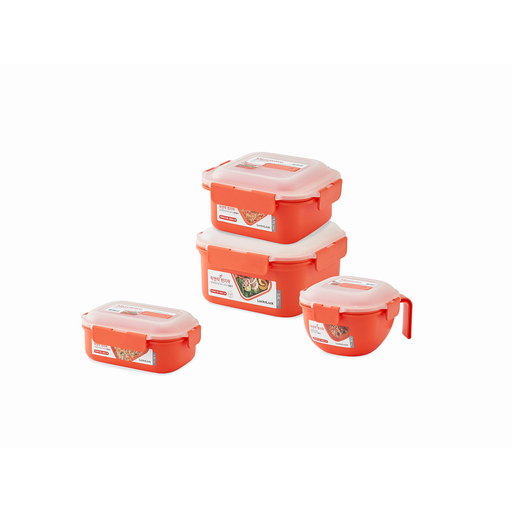
Why This Fits Their Persona: This set is designed for people who regularly prep meals (meal prep boxes) and reheat them at the office or at home. The different sizes are suitable for main courses and side dishes.
The integrated steam valve in the lid solves the problem of warping. Steam can escape in a controlled manner during heating, which reduces pressure inside the container and prevents splatters in the microwave.
Specially designed for the microwave (heat-resistant up to 140°C, according to the manufacturer). The set is BPA-free and dishwasher-safe.
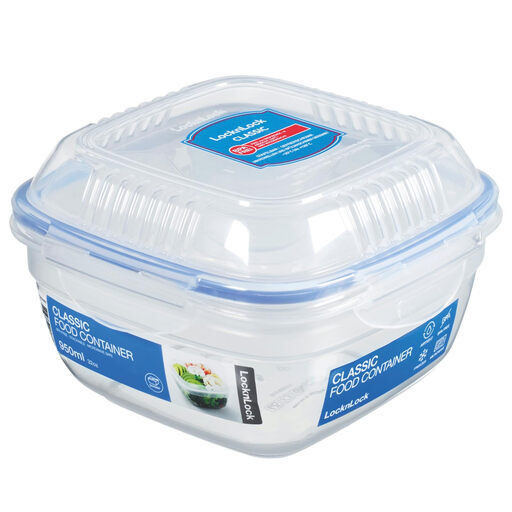
Why This Fits Their Persona: Perfect for professionals and students who need a dedicated, leak-proof lunch box for fresh salads. The separate compartments keep ingredients crisp until it's time to eat.
The separate tray for toppings and the dressing container prevent ingredients from mixing and becoming soggy. This also counteracts the absorption of odours and stains from the dressing into the main bowl.
A well-thought-out system with separate compartments for maximum freshness. LocknLock containers are known for their robust and tight-sealing closures.
We have compiled a complete, up-to-date list of products that fully meet these strict selection criteria and safety regulations.
Rinse the containers with cold water immediately after use before putting them in the dishwasher. For stubborn stains, such as from tomato sauce, it can help to rub the container with a paste of baking soda and water, let it sit for a few hours, and then rinse. Storing the empty, clean container in sunlight can also help reduce discolouration.
No. Only use containers that are explicitly marked as microwave-safe. Follow the manufacturer's instructions: in most cases, the lid must be removed, or at least the valve opened, to allow the resulting steam to escape. Otherwise, the container can warp or the lid can pop off.
BPA-free means that the plastic was manufactured without the chemical Bisphenol A. This is an important factor for food safety, as there are concerns that BPA could leach into food upon heating or when in contact with acidic foods. For products that come into contact with food, especially meal prep boxes that will be heated, choosing a BPA-free product is a sensible precaution.