
Lieferung heute & morgen

Qualitätsgarantie

Willkommens-Angebote freischalten: KOSTENLOSE Lieferung | Bis zu 80 % RABATT | Kostenlose 30-Tage-JoyPlus-Testphase
App herunterladen
A well-organised kitchen and fresh ingredients are the foundation of a healthy diet. But too often, leftovers end up in the bin, the fridge is a mess, and packing lunch for work becomes a logistical challenge. The right food storage containers can solve these problems by keeping food fresh for longer, simplifying organisation, and making it easy to transport meals.
This guide is here to help you navigate the options. As a Joybuy Product Recommendation Officer, I've made it my mission to provide you with objective information and practical criteria so you can make an informed decision that suits your needs.
The variety of containers is vast. To find the perfect solution, three aspects are particularly important: the material, the functionality, and the intended use.
The material is a critical factor, especially since the containers come into direct contact with food. Look for the BPA-free food storage containers label. BPA (Bisphenol A) is a chemical compound found in some plastics, and its use in food containers is a concern for many consumers. High-quality plastics like polypropylene (PP) are a common and safe choice, as they are durable, lightweight, and often suitable for a wide range of temperatures. Always check the manufacturer's instructions to see if a container is safe for the microwave, freezer, or dishwasher.
Practical features make daily life significantly easier. A reliable, leak-proof seal is essential for safely transporting liquids and containing odours in the fridge. For an organised pantry, stackable storage containers are a space-saving solution. Depending on your needs, other features can be useful:
Consider what you will primarily use the containers for. Do you need a compact solution for your morning cereal? A yogurt cup to-go with separate compartments might be the right choice. Are you looking for containers to store large quantities of cooked food or fresh vegetables? Then larger containers or a food storage container set would be more practical. For a classic packed sandwich, there are special sandwich boxes that protect your bread from being squashed.
Based on the criteria above, we have curated a selection of products that stand out for their specific features and are suited for various applications.
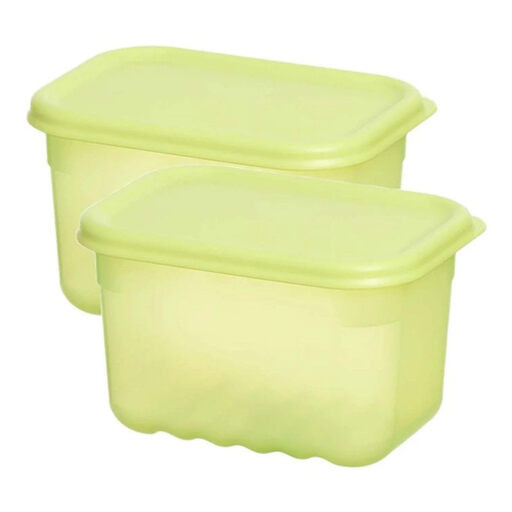
Why it stands out: This container is specifically designed for the long-term storage of fruits and vegetables. According to the manufacturer, the "Breath Care Fresh Solution" with ethylene absorption keeps food fresh for up to 31 days longer.
Benefits:
Who it's for: Ideal for individuals who want to keep fresh produce like salads, berries, or vegetables crisp for as long as possible and reduce food waste.
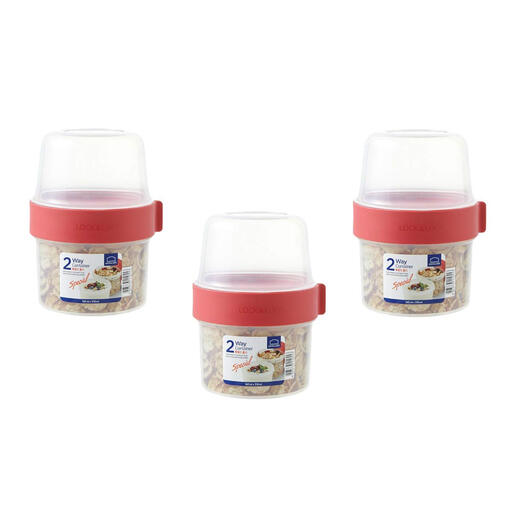
Why it stands out: The smart 2-in-1 design with two separate chambers per container makes this set extremely versatile for on-the-go snacks.
Benefits:
Who it's for: Perfect for professionals, students, and anyone looking for a practical yogurt cup to-go or a snack box to keep ingredients separate and fresh until it's time to eat.
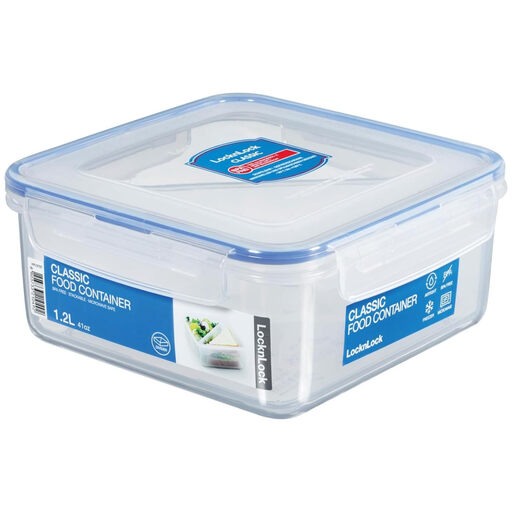
Why it stands out: This lunch box with compartments solves a classic problem: soggy sandwiches. The integrated divider keeps wet and dry ingredients separate.
Benefits:
Who it's for: An excellent choice for school children, students, and professionals who want a fresh, intact lunch and need to transport different components of their meal separately.
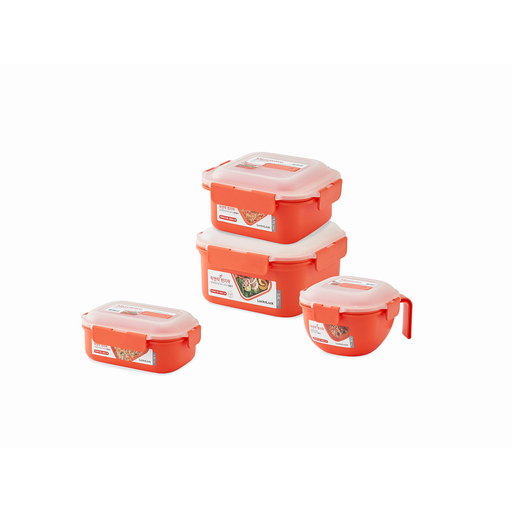
Why it stands out: This set is designed as a specialised microwave-safe container with a lid. The integrated steam vent in the lid makes heating food exceptionally convenient and clean.
Benefits:
Who it's for: Ideal for anyone who regularly reheats meals in the microwave, whether at the office or at home. A practical solution for meal prep boxes that can go straight from the fridge to the microwave.
The products featured here cover many common use cases. However, if you are looking for different sizes, shapes, or specific sets, there is a wider selection to explore.
For more solutions to organise your kitchen and pantry, take a look at our category for Plastic Storage Bins with Lids.
1. Are all plastic food storage containers microwave-safe? No, not all plastic containers are suitable for the microwave. It is important to check the manufacturer's label. Materials like polypropylene (PP) are often heat-resistant. Additionally, the lid should either be removed or, if available, the steam vent should be opened during heating to prevent pressure build-up.
2. What does "BPA-free" mean and why is it important? "BPA-free" means that the product was manufactured without the chemical compound Bisphenol A. This substance is used in the production of certain plastics. Due to concerns that BPA can leach from the material into food, many consumers prefer products for food storage that are explicitly declared as BPA-free.
3. How can I organise my storage containers to save space? Efficient organisation is best achieved with systems that are designed to work together. Stackable storage containers make optimal use of vertical space in cupboards and the fridge. Modular sets, where different sizes share the same footprint, are particularly easy and stable to stack. When empty, containers can often be nested inside one another to save additional space.