
Lieferung heute & morgen

Qualitätsgarantie

Willkommens-Angebote freischalten: KOSTENLOSE Lieferung | Bis zu 80 % RABATT | Kostenlose 30-Tage-JoyPlus-Testphase
App herunterladen
Keeping food fresh, storing leftovers effectively, and prepping meals are central tasks in any kitchen. But the wrong containers often lead to a cluttered fridge, freezer burn, or food that spoils too quickly. The selection of food storage containers is vast, and the differences in material, lids, and functionality are crucial for practical use.
This article serves as your guide. It highlights the most important criteria to consider when selecting food storage containers and presents a curated selection of models to help you decide. The goal is to find a durable solution that fits your needs, helping to reduce food waste and improve your kitchen organisation.
Before you decide on a specific model or a food storage container set, you should consider three fundamental aspects. These will help you match the container's functionality to your daily routine.
The material is one of the most important decisions, influencing durability, versatility, and care.
A good seal is crucial for keeping food fresh longer and for transporting liquid foods like soups.
The shape of the containers affects how efficiently you can use your storage space. Rectangular or square containers are generally more space-efficient than round ones, as they can be placed side-by-side and on top of each other without gaps. A good stackable design ensures order in your cupboards and fridge. Also, check if the containers are suitable for your needs—do you require containers that are both freezer-safe and microwave-safe, or are you looking for simple pantry containers for dry foods?
Here is a selection of containers that stand out for their different materials and features, covering various use cases.
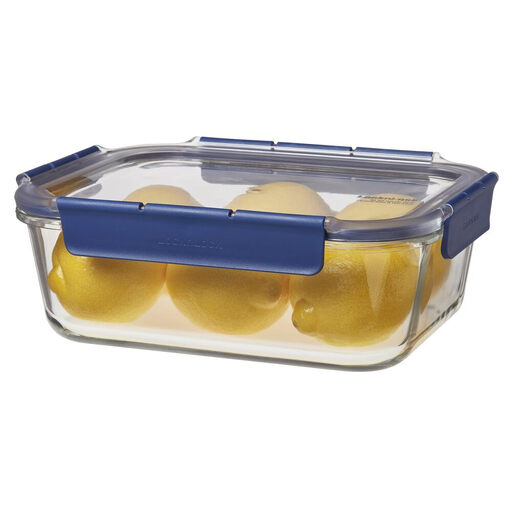
Why it stands out: This rectangular glass container from LocknLock combines a large 2-litre capacity with high-quality material. It is designed for use in the oven, microwave, freezer, and dishwasher, making it a true all-rounder in the kitchen.
Advantages:
Who it's for: Households that regularly cook, bake, or prep large quantities and are looking for a versatile container for various temperature ranges.
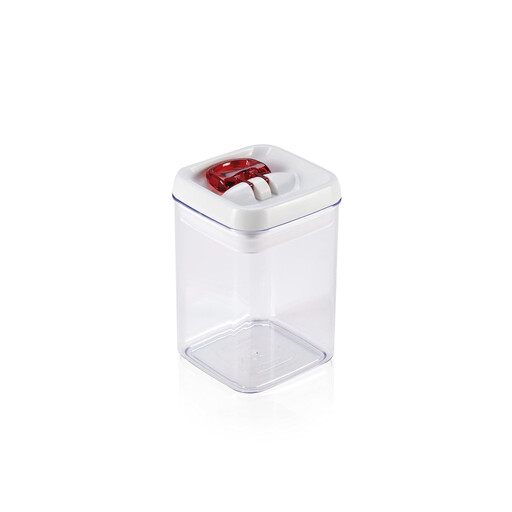
Why it stands out: The Leifheit Fresh & Easy canister is distinguished by its patented one-handed mechanism. It was specially designed for storing dry foods and combines functionality with a space-saving design.
Advantages:
Who it's for: Anyone looking to optimise their pantry storage and keep dry foods in well-organised, easily accessible pantry containers.
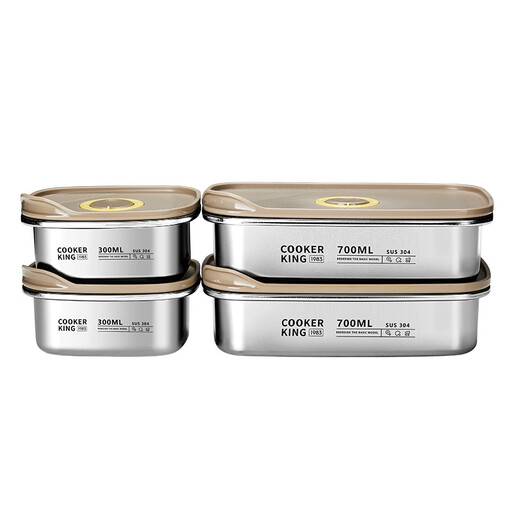
Why it stands out: This food storage container set from COOKER KING is made of food-grade 304 stainless steel. It offers a robust, rust-resistant, and durable alternative to glass and plastic containers, ideal for everyday storage.
Advantages:
Who it's for: Users looking for a durable, shatterproof, and plastic-free solution for storing leftovers, snacks, or transporting cold meals. Not suitable for the microwave.
The products featured here cover specific use cases. However, if you are looking for containers with different sizes, shapes, or specific features, there is a wider selection to explore.
For anyone who needs a solution that is suitable for both the freezer and the microwave, it's worth taking a look at our more comprehensive collection.
? Discover more Freezer and Microwave-Safe Food Storage Containers here.
There is no single "best" material, as suitability depends on the intended use. Glass is versatile (oven and microwave-safe) and hygienic, but heavy. Stainless steel is extremely durable and lightweight, but not microwave-safe. Plastic is lightweight and shatterproof, but you should always look for the BPA-free label. Weigh which properties are most important for your daily routine.
Glass containers offer clear advantages: they don't absorb odours or stains, are easy to clean, and can often be used at high temperatures in the oven or microwave. This makes them very hygienic and versatile. The disadvantages are their heavier weight and risk of breakage. For transport or for households with small children, shatterproof stainless steel or lightweight plastic can be a more practical alternative.
"BPA-free" means that the product was manufactured without Bisphenol A. BPA is a chemical compound used in the production of certain plastics (like polycarbonate) and resins. There is concern that BPA can leach from containers into food. The BPA-free label is therefore an important quality mark on plastic containers or on the lids of glass and stainless steel containers, indicating that this specific chemical was avoided during production.