
Lieferung heute & morgen

Qualitätsgarantie

Willkommens-Angebote freischalten: KOSTENLOSE Lieferung | Bis zu 80 % RABATT | Kostenlose 30-Tage-JoyPlus-Testphase
App herunterladen
Food storage containers for the kitchen should keep food dry, make sensible use of cupboard space and be easy to clean every day. In practice, however, some food storage containers disappoint after only a short time: the lid does not close securely, the shape wastes space or cleaning becomes a chore because of grooves and hard-to-reach corners.
This buying guide from the Joybuy Product Recommendation Officer helps you assess products according to clear, practical criteria – without relying solely on design promises or sweeping advertising claims.
The term airtight food storage containers is only useful when the design of the seal is clearly explained. Look for a continuous seal, a firmly fitting lid or an audible click-lock mechanism. A loose-fitting lid may keep out dust, but it does not provide the same type of closure as a sealing ring with a locking mechanism.
Metal, glass and plastic all have different properties. A decorative coffee tin may look good on the worktop, but it may not be dishwasher-safe. Glass is transparent and less prone to retaining odours, but it can break if dropped. Plastic is lightweight and often stackable, but should not automatically be used in the microwave, freezer or with hot food.
A large capacity may initially sound practical. However, a container that is too tall can be awkward in a kitchen cupboard when used for frequently needed spices, tea or coffee. So check the height, width and depth of the available space, as well as the actual quantity of food. Larger grain containers or food storage containers may be suitable for flour, rice, pasta or pet food; compact sizes are often sufficient for sugar, tea and spices.
Dry foods are sensitive to moisture and odours from their surroundings. A closure with a silicone seal or continuous sealing lip can reduce air exchange. With products featuring a click-lock mechanism, the lid should engage fully. An audible click is a useful practical check, but it does not replace checking that the seal is clean and undamaged.
Only fill containers with dry food and remove crumbs from the sealing area. For coffee, tea, muesli and snacks, it is also sensible to close the container again promptly after each use.
Dishwasher-safe food storage containers save time in everyday use. Nevertheless, check whether this applies equally to the container, lid and seal. Some containers may only be cleaned in the top rack.
Rectangular containers generally make different use of cupboard space than round tins: they can be placed closely side by side and, where suitably designed, stacked. Stackable food storage containers should have sturdy, non-slip edges. Transparent food storage containers make it easier to monitor your supplies, while labelled sugar containers, muesli containers, tea tins or coffee tins make it easier to identify contents on open shelving.
Before buying, it is worth taking a quick inventory:
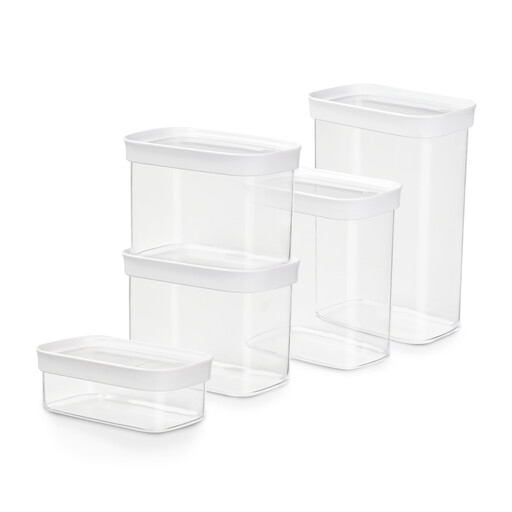
Why this product suits this profile: The set combines five sizes from 0.45 to 2.2 litres, making it suitable for a range of dry goods such as rice, muesli, pasta and snacks.
The coordinated sizes reduce the risk of buying unsuitable containers. According to the product description, the containers feature an audible click-lock closure and stackable, non-slip edges.
Transparent plastic, several capacities and materials that the manufacturer states are dishwasher-safe.
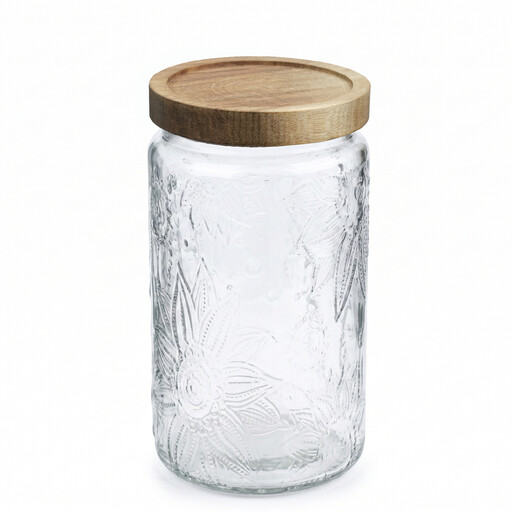
Why this product suits this profile: The transparent glass container with its begonia pattern combines visible storage with decorative styling for the worktop or open shelving.
The product details state a capacity of 700 ml and explicitly highlight the risk of breakage. This makes it easier to choose a suitable location before buying.
Food-safe transparent glass, a sealing lid and clear visibility of the contents; hand washing is recommended to protect the pattern.
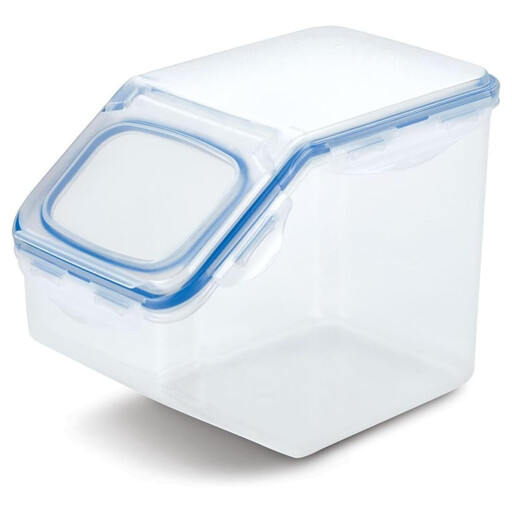
Why this product suits this profile: Its large capacity is designed for families, frequently used basic ingredients or larger quantities of muesli, flour, sugar and pet food.
The dimensions of 25,7 × 15,7 × 19,1 cm should be checked against the cupboard compartment in advance. The hinged lid with safety locks prevents the lid from sitting loosely.
5-litre capacity, transparent polypropylene body, double-chamber seal and, according to the product details, dishwasher-safe; not intended for use in the microwave.
We have compiled a complete, regularly updated list of products that fully meet these strict selection criteria and the safety regulations applicable in the EU.
Label not only the contents but, where necessary, the date transferred. This helps you keep track of your supplies and prevents older food from disappearing behind newer packets. A clean, dry container is essential before filling. Seals should be checked regularly for cracks, deformation and attached residue.
Use food storage containers only in accordance with the manufacturer’s instructions. Containers for dry foods are not automatically suitable for use on the hob, in the oven or in the microwave. Glass containers also require careful handling.
For these foods, transparent containers with sufficient capacity and a tightly closing lid are practical. For frequent access, rectangular shapes and an integrated handle make them easier to use. For muesli and rice, the capacity should match the usual pack size so that the contents can be transferred in full.
No. Airtightness describes the closure, not whether the container is suitable for cleaning in a dishwasher. Check whether the container, lid and seal are approved for dishwasher use. Glass containers or those with wooden components may require hand washing.
Their service life depends on the material, cleaning method, temperature and mechanical stress. Replace containers if they develop cracks, become deformed, retain a persistent odour or have a damaged seal. Scratches and harsh cleaning products can affect the surface. Proper use and dry storage help extend their practical service life.