
Lieferung heute & morgen

Qualitätsgarantie

Willkommens-Angebote freischalten: KOSTENLOSE Lieferung | Bis zu 80 % RABATT | Kostenlose 30-Tage-JoyPlus-Testphase
App herunterladen
By the Joybuy Product Recommendation Officer, 28 August 2026
A modern food waste disposer promises a clean, hygienic, and convenient kitchen. No more foul-smelling organic waste, no fruit flies, and fewer trips to the rubbish bin. But the market is flooded with models whose marketing promises often obscure more than they clarify. Many buyers invest in units that turn out to be noisy, inefficient, or complicated to install.
Before you make a decision, it's crucial to understand the typical pitfalls that can lead to a bad purchase. We'll show you the three most common problems and what you should look for instead.
To avoid these traps, focus on the technical facts. Three core parameters are decisive for the performance and longevity of your unit.
The motor power, specified in HP, should match your household's needs. For most families of up to four people, a 1/2 HP waste disposer is perfectly adequate and energy-efficient. Also, pay attention to the motor type:
The durability of a food waste disposer depends directly on the materials used.
A smooth installation saves time and stress.
Instead of presenting an overwhelming list, we have selected one model that exemplifies the above criteria for a specific user type.
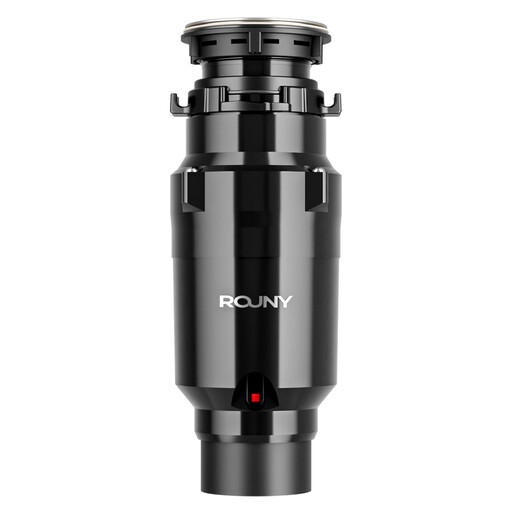
Why This Fits Their Persona: This model is ideal for DIY enthusiasts looking for a straightforward, cost-effective solution. It combines an energy-efficient 1/2 HP motor with a complete installation kit, eliminating the need for separate purchases or professional help.
The four-point quick-lock system and included accessories (like the air switch) bypass the complex installation pitfall. At ≤50 dB (per manufacturer specs), it's quiet, avoiding noise issues. The 1/2 HP motor is designed for everyday use, preventing unnecessary energy consumption.
Complete Installation Kit: All necessary parts, including a splash guard and a three-way pipe, are included. Stainless Steel Grinding System: The 3-in-1 grinding system is designed for durability and efficient pulverisation.
With modern units, installation is often straightforward. Models with quick-lock systems can typically be installed by DIYers with basic skills in under an hour. It's important to check beforehand that your sink has the necessary 90 mm drain opening and that there is sufficient space under the sink.
Avoid disposing of highly fibrous materials (e.g., celery stalks, corn husks), large bones, shellfish shells, as well as fats and oils, as these can clog the pipes. Likewise, non-food items like plastic, glass, or metal must not enter the unit. Always run cold water during operation.
The lifespan heavily depends on the quality of the unit and the frequency of use. A high-quality model with stainless steel grinding components can last 8 to 12 years with proper care and regular use. Cheaper models with inferior materials often need to be replaced after just a few years.