
Lieferung heute & morgen

Qualitätsgarantie

Willkommens-Angebote freischalten: KOSTENLOSE Lieferung | Bis zu 80 % RABATT | Kostenlose 30-Tage-JoyPlus-Testphase
App herunterladen
A food chopper can process vegetables, herbs, nuts or meat in next to no time. However, not every appliance suits every household. Small universal choppers are handy for onions and herbs, while a food processor with multiple discs can also slice, grate or knead dough.
Before buying, it is worth checking the technical specifications. Some marketing claims sound more comprehensive than the actual equipment suggests.
A high power rating alone does not indicate how well an appliance will perform in everyday use. The measurement method, operating time, blade geometry and permitted ingredients are also important. Some models may only run for a few seconds at a time and then require a cooling break.
So pay attention to:
A 300-watt electric chopper may be suitable for soft ingredients, while a more powerful kitchen chopper is not automatically approved for every hard ingredient.
The size of the bowl does not always correspond to the usable working quantity. Working capacity may differ for dry and liquid ingredients. The blade also needs enough room for the ingredients to move evenly.
For a single-person household or small portions, a mini chopper with a capacity of around 0.5 to 0.8 litres can be a sensible choice. Families and meal-prep users are more likely to benefit from 1.3 to 1.5 litres of working capacity or a larger food processor.
An appliance with numerous attachments is not automatically the right choice. Check which functions you actually need and whether the accessories are easy to store. A vegetable slicer, for example, needs suitable slicing or grating discs. Dough requires a dough hook; a simple universal chopper with a blade cannot replace this function.
Stainless steel blades are standard for chopping. They should be removable so that food residues can be cleaned away more easily. Discs for grating and slicing expand a food processor’s range of functions, but need to be handled more carefully during cleaning.
A chopper with a glass bowl provides a visible working chamber and, depending on the design, is less likely to retain odours or become discoloured than some plastic bowls. However, glass is heavier and can be damaged by sudden temperature changes. Always check whether the bowl is dishwasher-safe and whether it is unsuitable for hot ingredients.
Two speed settings are suitable for coarse or finer processing. A pulse function allows short bursts and gives you more control over the consistency. Many appliances have a locking mechanism that prevents them from starting if the lid or bowl is not fitted correctly.
Important in a UK household:
Measure the available worktop or cupboard space. A compact appliance is practical for small kitchens, while a food processor with accessories requires more storage space. Removable dishwasher-safe parts reduce the cleaning effort, but do not replace checking the seals, blade mount and lid.
The following selection groups various food choppers according to typical requirements. The information is based on the respective product descriptions and technical specifications.
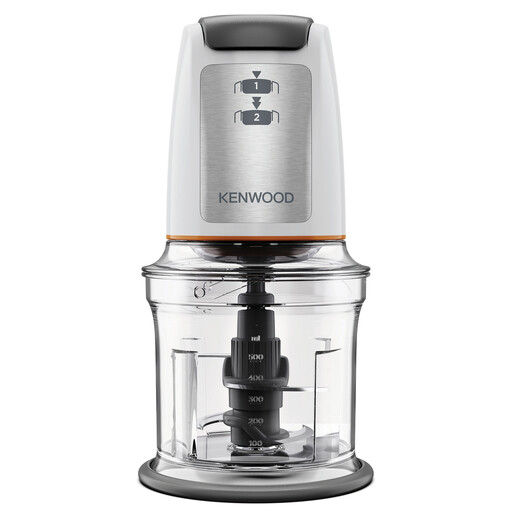
Why this product suits the profile: This compact universal chopper has a 0.5-litre working bowl, 500 watts and two speed settings. It is therefore suitable for smaller quantities of herbs, onions or vegetables.
The manageable bowl size makes it clear that this model is intended for small portions rather than extensive meal prep.
500-watt motor, two speed settings and a space-saving design for everyday chopping tasks.
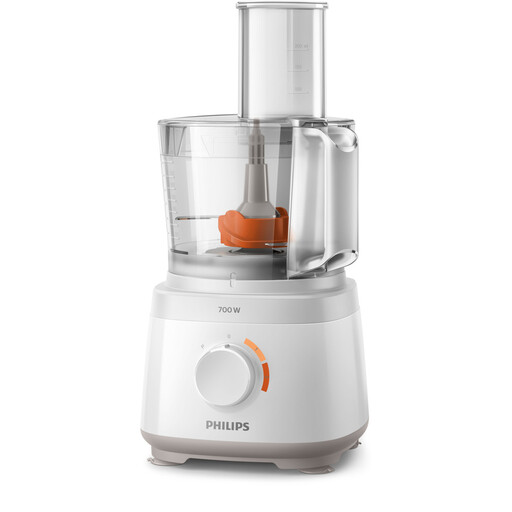
Why this product suits the profile: This food processor combines 700 watts, a 2.1-litre bowl, 1.5 litres of working capacity, two speeds and a pulse function.
The separate bowl and working-capacity figures make it easier to plan portions realistically.
Slicing, grating and kneading accessories, removable dishwasher-safe parts and a child lock according to the product specifications.
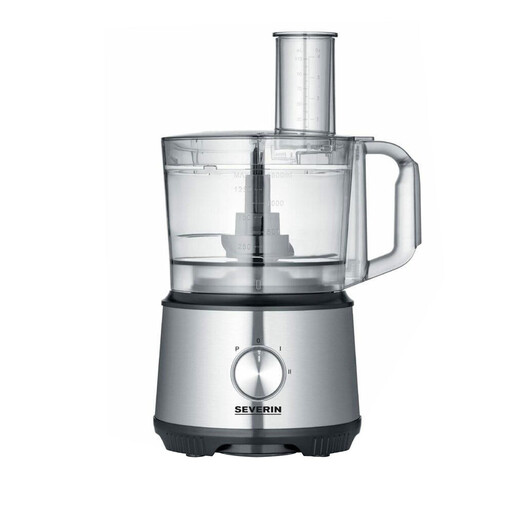
Why this product suits the profile: According to the product description, this food processor with accessories is designed for chopping, grinding, grating, slicing, kneading, mixing and emulsifying. Its 1.5-litre bowl and 1,200 watts are suited to a wide range of kitchen tasks.
The list of functions is backed up by specific attachments: three disc inserts, a grinder attachment, a dough hook and an emulsifying disc.
Wide range of functions and dishwasher-safe parts according to the manufacturer; make sure you allow for the additional storage space needed for the accessories.
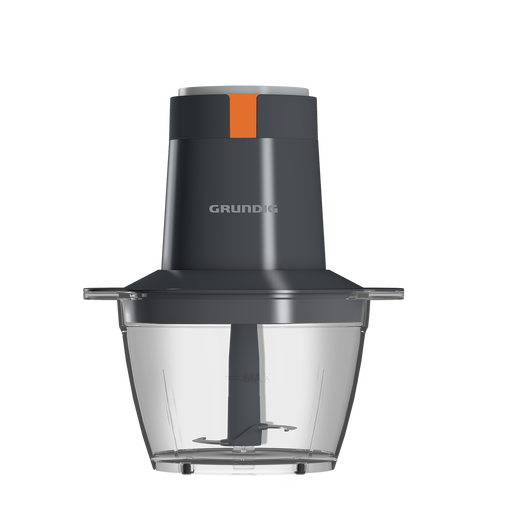
Why this product suits the profile: This compact chopper with a glass bowl offers a 0.5-litre capacity, 500 watts, two speed settings and a stainless steel dual blade.
The manufacturer’s guidance sets clear limits: according to the product description, coffee, spices, ice and very hard ingredients are not intended for use.
Glass bowl, non-slip base, safety lock and one-handed operation according to the product specifications.
We have put together a complete, regularly updated list of products that fully meet these strict selection criteria and the safety regulations applicable in the EU.
An electric chopper generally incurs modest electricity costs during use because the motor only runs for a short time. Other factors are often more important when considering the total cost:
An appliance is more likely to remain reliable in everyday use if it is not overfilled and the specified breaks are observed. Hard ingredients should only be processed if the manufacturer expressly approves them. A meat mincer is designed differently for regularly mincing meat than a small kitchen chopper.
A food chopper often works with a blade in a compact bowl. A food processor usually offers additional discs and attachments for slicing, grating, kneading or emulsifying. A mini chopper is sufficient for individual small tasks, while a food processor with accessories may be more suitable for versatile family kitchens.
Around 0.5 to 0.8 litres is often enough for herbs, onions and small portions. For several portions of vegetables or meal prep, 1.3 to 1.5 litres of working capacity is more practical. The key factor is the usable fill quantity, not just the total capacity printed on the appliance.
This depends on the specific model. Soft and medium-firm foods such as vegetables, herbs or nuts are often listed as suitable. Meat, ice, frozen ingredients, coffee beans and bones are not permitted in every appliance. The operating instructions, maximum fill level and the manufacturer’s safety information remain decisive.