
Lieferung heute & morgen

Qualitätsgarantie

Willkommens-Angebote freischalten: KOSTENLOSE Lieferung | Bis zu 80 % RABATT | Kostenlose 30-Tage-JoyPlus-Testphase
App herunterladen
A food processor can slice vegetables, chop ingredients, process nuts, knead dough and purée soups. However, appliances differ considerably in capacity, accessories, motor control and cleaning requirements. Anyone who focuses solely on a high wattage or a long list of attachments may end up with a machine that is too small, too complicated or unsuitable for certain foods in everyday use.
This buying guide from the Joybuy Product Recommendation Officer provides an objective overview of the most important features and shows which appliances are suitable for different households and usage scenarios.
A motor’s wattage initially describes only its electrical power consumption. It does not, by itself, indicate how evenly the appliance operates, how effectively power is transmitted or how long it can run under load. A compact 300- or 400-watt chopper may be perfectly suitable for onions, herbs and vegetables, while an appliance intended for regular dough kneading requires greater power reserves and a suitable transmission design.
A 2.1-litre bowl does not automatically accommodate 2.1 litres of food for processing. Liquids, dough and ingredients that rise require sufficient clearance. Families should therefore focus on the working capacity, rather than just the bowl capacity printed on the packaging. In smaller kitchens, a mini food processor with a capacity of around 0.5 to 1 litre may be the more practical choice.
A multifunctional kitchen machine with numerous attachments requires more storage space and creates additional cleaning work. If you mainly want to grate carrots, you may not need a countertop blender. For keen bakers, a bowl, dough hook, whisk and robust drive system are more important than an extensive vegetable-processing attachment set.
Also consider the appliance’s footprint. A machine with a large bowl can become a permanent nuisance on the worktop. Removable parts, dishwasher-safe components and an easily accessible motor base make everyday cleaning easier.
A pulse function enables short bursts of operation. This is useful when you want to coarsely chop onions or process ice and harder ingredients gradually. Multiple speed settings make it easier to adjust the appliance to soft and firm foods. When using an electric meat mincer or chopper, follow the manufacturer’s specifications for suitable ingredients and maximum operating times.
Stainless-steel blades are designed for many common tasks, including chopping, slicing and puréeing. They nevertheless remain sharp and must be handled carefully when inserting and cleaning them. Glass containers provide a clear view of the contents, but they are heavier and may be damaged by sudden changes in temperature. Plastic bowls are lighter, but should be used in accordance with the manufacturer’s instructions.
Other important features include:
Not every appliance is suitable for ice, frozen foods, hard nuts, coffee beans or bones. The relevant product specifications always take precedence.
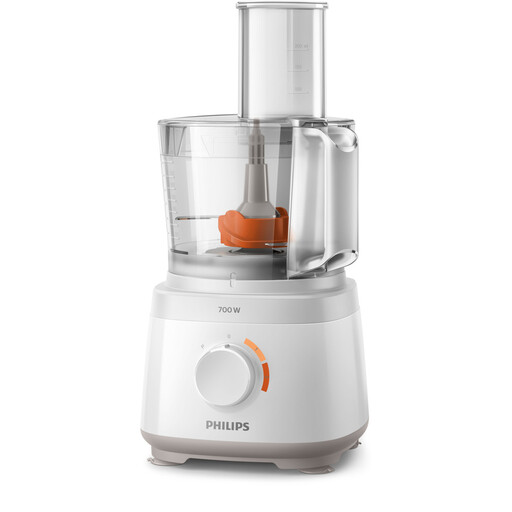
Why it’s a good fit: With 700 watts, a 2.1-litre bowl, two speed settings and a pulse function, this model covers typical food preparation tasks in smaller and medium-sized households.
The functions focus on everyday tasks such as chopping, slicing, grating and kneading, rather than simply highlighting an extensive list of accessories.
The stated features include a 1.5-litre working bowl, an ice-crushing function, a child lock and removable dishwasher-safe parts.

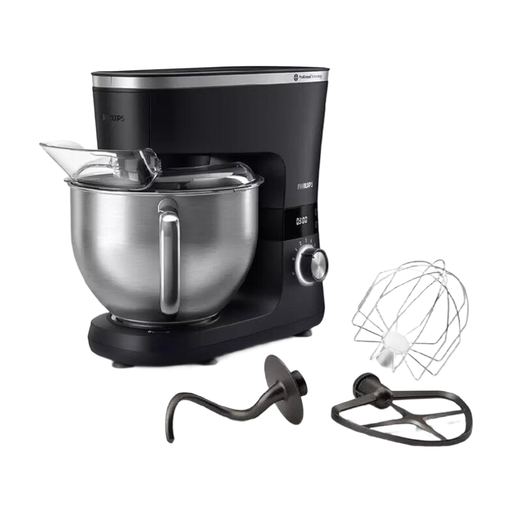
Why it’s a good fit: The 7-litre stainless-steel bowl, 1,200 watts and baking accessories are designed for users who regularly prepare larger quantities of dough and mixtures.
The bowl capacity and included tools are clearly specified, making it easier to assess whether optional accessories are actually needed.
The stated equipment includes an integrated EasyWeigh scale, continuously variable speed control, a K-beater, whisk and dough hook.
Why it’s a good fit: The combination of a 5.5-litre bowl, 1.5-litre blender attachment and 1,000 watts is designed for multiple kitchen tasks and larger portions.
The separate capacities for the bowl and blender make it clear what quantities each function is designed to handle.
The stated features include eight speed settings, as well as functions for emulsifying, chopping, slicing, kneading, grinding, blending and grating.
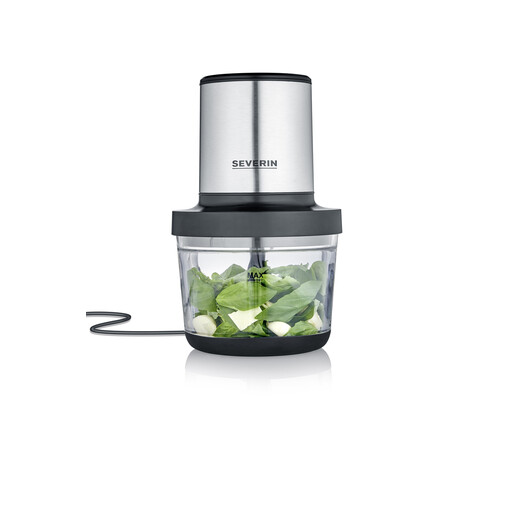
Why it’s a good fit: According to the product description, this compact multi-chopper is designed for coarse and fine chopping, as well as processing nuts, herbs, cheese and crushed ice.
The appliance is not positioned as a complete dough-making machine, but as a chopper for short, clearly defined preparation tasks.
The described equipment includes a multi-chopper for coarse and fine processing, finished in a combination of matt black and brushed stainless steel.
Our complete food processor category features a regularly updated selection of appliances with different capacities, functions and designs for UK households.
When processing meat, use only the quantities and operating times approved by the manufacturer. Especially with smaller appliances, taking breaks between operating cycles helps prevent unnecessary strain on the motor.
Depending on the attachment, it can chop, slice, grate, purée, emulsify or knead food. However, a chopper does not automatically replace a kitchen machine with a bowl or a powerful countertop blender. The decisive factors are the included tools and the foods the appliance is approved to process.
Its service life depends on the materials, maintenance, workload and correct use. Overfilling, continuous operation and unapproved hard ingredients can place additional strain on the blades and motor. Regular cleaning, correct assembly and adherence to recommended break intervals support reliable, gentle operation.
The actual cost depends on the motor’s power rating, operating time and electricity tariff. Since many preparation tasks take only a few seconds or minutes, operating time is usually more important than wattage alone. For a realistic estimate, multiply the stated power rating by the actual usage time and your current price per kilowatt-hour.