
Lieferung heute & morgen

Qualitätsgarantie

Willkommens-Angebote freischalten: KOSTENLOSE Lieferung | Bis zu 80 % RABATT | Kostenlose 30-Tage-JoyPlus-Testphase
App herunterladen
A food processor can slice vegetables, chop ingredients, knead dough or blend liquids. However, not every appliance is right for every household. If you only look at wattage or the number of programmes, you can easily overlook important details such as the actual working capacity, design, accessories and cleaning requirements.
This buying guide helps households, families, home cooks and baking enthusiasts compare a suitable multifunction food processor, food processor or compact chopper objectively.
Motor power is often used as a key selling point. However, a high wattage does not automatically indicate how well an appliance can handle dough, meat or hard vegetables. The drive construction, blade design, speed control and permitted operating time are equally important.
A small electric chopper with 300 to 500 watts may be sufficient for onions, herbs or small portions. For bread dough or larger quantities, however, a sturdy food processor with bowl and a suitable dough hook are more practical.
A 2.1-litre bowl does not necessarily hold 2.1 litres of ingredients that can be processed. Liquids, dry ingredients and dough require different safety clearances. For this reason, pay attention to the stated working capacity.
For individuals and small households, a mini chopper with a capacity of around 0.5 to 0.8 litres is often sufficient. Families benefit from 1.5 litres or more. If you regularly prepare larger quantities of dough, check not only the bowl capacity but also the maximum permitted quantity of flour or dough.
Slicing discs, dough hooks, blender attachments, mincers and emulsifying discs expand the range of uses. However, they also require storage space and need to be cleaned after every use. An appliance with an extensive range of accessories therefore only makes sense if you use the functions regularly.
Before buying, check:
A compact vegetable chopper or kitchen chopper is suitable for quick preparation tasks. A food processor with a feed chute and slicing discs is more practical if you regularly want to grate and slice carrots, cucumbers or cheese.
A classic food processor for kneading usually has a larger mixing bowl and dedicated attachments such as a whisk, beater and dough hook. Appliances with an additional blender attachment are often marketed as a food processor with blender. Before buying, measure the space available, particularly the height beneath wall units.
Two speed settings may be sufficient for chopping tasks. A Pulse function enables short, controlled operating intervals. This is useful when ingredients should be roughly chopped rather than completely puréed.
With blenders and multifunction appliances, you should also take the maximum operating time into account. If this is exceeded, the motor may overheat. The information in the instruction manual is binding.
Clear material specifications are important for surfaces that come into contact with food. Stainless steel blades should be securely attached and easy to clean carefully. Glass containers are transparent and allow you to check the contents, but they may be heavier than plastic bowls.
Look for:
With appliances featuring a mincer or chopping function, only process the foods specified by the manufacturer. Bones, ice and very hard frozen ingredients are not permitted in many electric choppers.
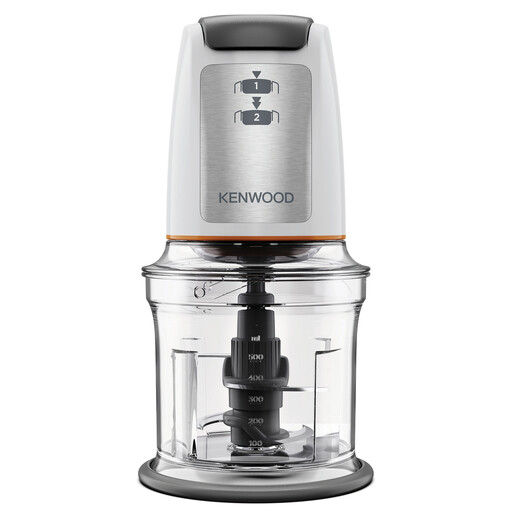
Why this product suits this profile: This compact mini chopper has a 0.5-litre bowl, 500 watts and two speed settings. It is suitable for small portions, herbs, onions and prepared ingredients.
The clearly defined capacity prevents unrealistic expectations about large quantities and makes the intended use transparent.
Compact dimensions, 500-watt motor and two speed settings.
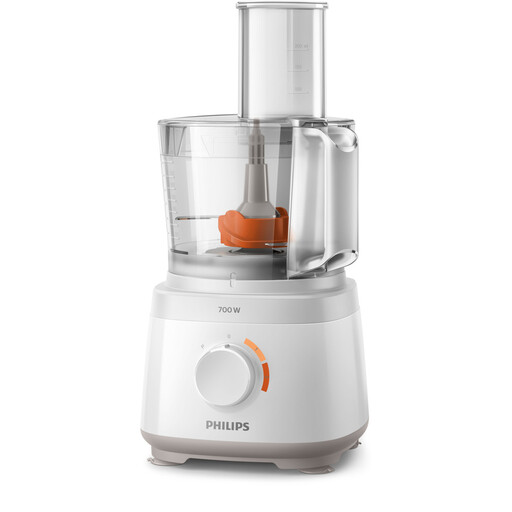
Why this product suits this profile: This food processor combines 700 watts, a 2.1-litre bowl with a 1.5-litre working capacity, slicing and grating discs, and a dough tool.
The separate bowl and working capacity specifications make it easier to plan quantities. A child lock and dishwasher-safe removable parts are also specified.
Blending, chopping, slicing, grating, kneading and emulsifying in one appliance.

Why this product suits this profile: This stand mixer is aimed at baking enthusiasts. It has a 6-litre stainless steel bowl, six speed settings plus a pulse function, as well as a dough hook, whisk and beater.
The accessories are clearly focused on mixing and kneading. This means buyers do not have to pay for slicing or blender attachments they do not need.
Large stainless steel bowl, six settings, pulse function and three standard attachments.

Why this product suits this profile: This appliance has a 1.3-litre bowl, a 650-watt motor and an Express Serve function for slicing or grating directly into a plate or pan.
The compact design and direct serving reduce storage and washing-up compared with more extensive systems.
650 watts, pulse function, 4-mm slicing/grating disc and dishwasher-safe accessories.
We have put together a complete, regularly updated list of products that fully meet these strict selection criteria and the safety regulations applicable in the EU.
For regular kneading, a large mixing bowl, a suitable dough hook and a sturdy stand are essential. You should also check the maximum dough quantity and recommended operating time. A small food processor is suitable for light doughs, but not automatically for large or particularly firm quantities of dough.
For several portions, around 1.5 litres of working capacity or more is practical. For a food processor with bowl used for baking recipes, the permitted dough quantity is also important. A 0.5-litre mini chopper, on the other hand, is mainly suitable for small preparation tasks.
Running costs depend on the power consumption and how long the appliance is used. Calculate them using the formula: Power in kilowatts × operating time in hours × electricity price per kilowatt-hour. As choppers usually run for only a few seconds or minutes, electricity consumption per use is often lower than the purchase price. Cleaning and replacement-part costs may also be relevant for long-term use.