
Lieferung heute & morgen

Qualitätsgarantie

Willkommens-Angebote freischalten: KOSTENLOSE Lieferung | Bis zu 80 % RABATT | Kostenlose 30-Tage-JoyPlus-Testphase
App herunterladen
Anyone looking to buy vitamin and mineral food supplements will quickly come across products featuring high percentage values, lengthy ingredient lists and claims relating to energy, the immune system, hair or muscle building. However, the key comparison does not start with the marketing slogan. It starts with dosage, composition and suitability for your intended use.
The nutrient reference values (NRVs) on the label show what percentage of the set reference value one serving provides. However, a high percentage is not automatically suitable for everyone. With multivitamin supplements in particular, individual ingredients may overlap with those in other products.
For example, anyone taking a multivitamin supplement alongside vitamin C, zinc and selenium or a vitamin B complex should compare their total intake. The relevant figures are those per daily serving, not just the amount per tablet.
These terms do not automatically describe quality or indicate whether a product meets your needs. With energy capsules, for example, it is important to check whether they contain caffeine and how much each capsule provides. According to the product information, sanotact EnergieKick contains 100 mg caffeine per capsule and is not recommended for children, pregnant women or breastfeeding women.
The full ingredient list should also be checked for products containing ginseng, creatine or plant extracts. A food supplement is not a substitute for a balanced diet and should not be treated as a medicinal product.
Effervescent tablets, direct granules, capsules and chewable tablets differ in how they are used. Effervescent tablets need water and may contain sweeteners or sodium compounds. Direct granules are convenient when you are out and about, while capsules and tablets are generally easier to portion. The key question is whether you can incorporate the recommended daily intake into your everyday routine over the long term.
Start by comparing:
With Magnesium 400, the stated 400 mg should actually refer to the magnesium content of the daily serving. The Doppelherz product “Magnesium 400 + B6 + B12 + Folic Acid DIRECT” specifies 400 mg of magnesium per sachet, equivalent to 107% NRV. It also contains vitamins B6 and B12, as well as folic acid. If you already use a vitamin B complex, you should take this overlap into account.
Clear information is important for people following particular diets. Look out for details such as:
One product may be labelled as a vegan food supplement, while another may use gelatine capsule shells. ORIHIRO Iron + Folic Acid, for example, states that it contains a source of phenylalanine from aspartame. This information is relevant to people with a corresponding intolerance.
The recommended daily dose should not be exceeded. If you are pregnant, breastfeeding, have a pre-existing medical condition, take medication or have impaired kidney function, it is advisable to consult a doctor or pharmacist. This applies particularly to supplements containing iron and folic acid, high-strength zinc, vitamin K, caffeine or several minerals.
With iron supplements, it is also important to establish whether there is a genuine need for iron. According to the product information, the Taxofit Iron + Vitamin C Direct-Action Granules contain 14 mg iron, 400 µg folic acid and 80 mg vitamin C per serving. The ORIHIRO product, by contrast, is a chewable tablet containing iron, folic acid, vitamin C and vitamins B6 and B12. The two products therefore differ considerably in both format and ingredients.
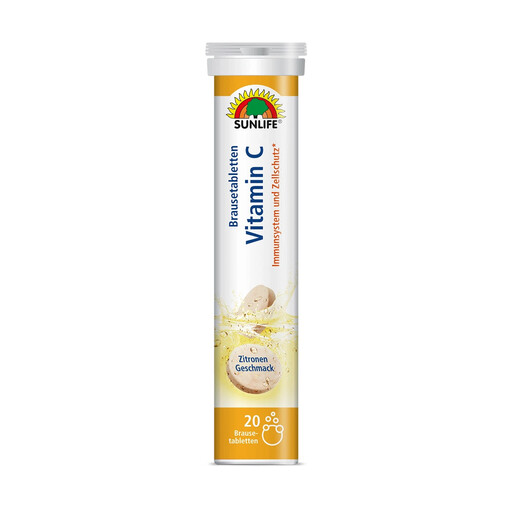
Why this product suits this profile: The effervescent tablet has a straightforward composition and provides a daily portion of vitamin C for people who prefer a ready-to-drink format.
The nutrient amount is clearly stated: 180 mg of vitamin C per tablet, equivalent to 225% NRV. This makes it easier to compare the serving with other products.
20 tablets, lemon flavour and a recommended intake of one tablet dissolved in 250 ml of water.

Why this product suits this profile: Anyone wanting to compare several micronutrients in a single daily serving gets a detailed list of 21 vitamins and minerals.
The amounts are stated per tablet, including 200 mg of vitamin C, 5 µg of vitamin D, 100 µg of iodine and 5 mg of zinc. This makes comparison with individual supplements easier.
15 effervescent tablets, orange and passion fruit flavour, with one serving per day in 200 ml of water.
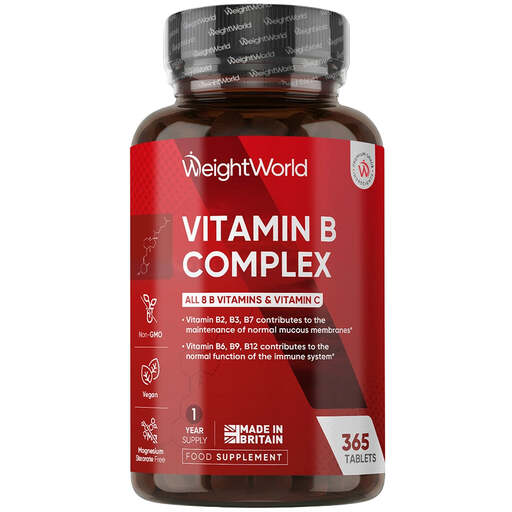
Why this product suits this profile: The pack is designed for a long-term daily routine and, according to the product information, contains all eight B vitamins in one tablet.
Instead of combining several individual B vitamins, the ingredient list includes B1, B2, B3, B5, B6, B12, biotin and folic acid.
365 tablets, described in the product information as vegan and free from gluten, lactose and soya.
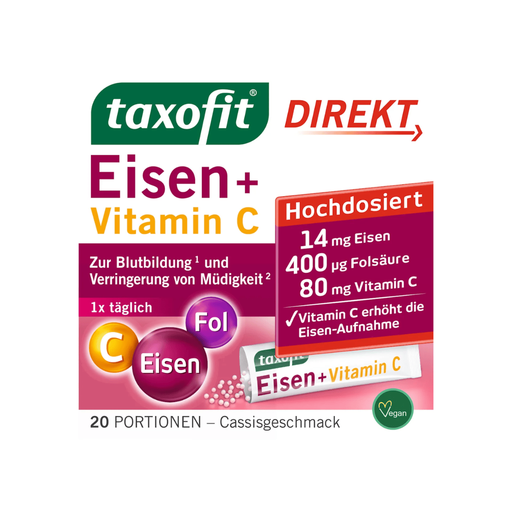
Why this product suits this profile: These direct granules are aimed at adults who want to combine iron and folic acid in a targeted way without needing liquid to take them.
The formula clearly states the three key amounts: 14 mg of iron, 400 µg of folic acid and 80 mg of vitamin C per serving.
20 individual servings, no-water intake and blackcurrant flavour. If you suspect an iron deficiency, your choice should be medically assessed.
We have put together a complete, regularly updated list of products that fully meet these strict selection criteria and the safety regulations applicable in the EU.
Before buying mineral supplements, vitamin B effervescent tablets or products for your skin, hair and nails, these questions can help:
When choosing biotin for hair and nails, you should look beyond the high biotin content. The Tetesept product, for example, lists 2,000 µg of biotin, as well as zinc, selenium, vitamin C and other micronutrients. If you already use several beauty or multivitamin products, you should check the overall composition.
The best-before date is shown on the packaging. Once opened, products should be stored in a cool, dry place and kept tightly closed, in line with the storage instructions. Effervescent tablets are sensitive to moisture, so the lid should be closed immediately after each use.
No. For an objective comparison, the most important factors are nutrient amounts, ingredients, daily cost, pack size, format and directions for use. A larger pack may reduce the cost per daily serving, but it only makes sense if the product is used regularly and suits your individual needs.
This depends on the ingredients and total dosage of each product. There may be overlaps particularly with vitamin C, B vitamins, zinc, selenium, magnesium and iron. Before combining products, compare the labels and ask a doctor or pharmacist if you are unsure.