
Lieferung heute & morgen

Qualitätsgarantie

Willkommens-Angebote freischalten: KOSTENLOSE Lieferung | Bis zu 80 % RABATT | Kostenlose 30-Tage-JoyPlus-Testphase
App herunterladen
A football for children needs to be more than just good-looking. Size, weight, material, intended use and how easy the ball is to care for are all important. Parents often buy models that are too large or too hard, while beginners can quickly lose interest when using a heavy match ball. Misleading claims such as “for every age” or “for all surfaces” also deserve a closer look.
A size 5 ball is the standard adult size. It can be difficult for younger children to control. A size 3 football for children is generally easier for small children to handle and is well suited to their first contact with the ball. A size 4 football for children is often suitable for primary-school-age children.
However, age recommendations are only a guide. Height, strength, playing ability and intended use should also be taken into account.
A soft football for children can be more comfortable for indoor play and reduce the risk of injury from hard impacts. However, soft foam or plastic surfaces may be more sensitive to sharp edges, rough ground and animal claws. Before buying, check the material, care instructions and recommended playing surfaces.
A football described as waterproof absorbs less water when wet. This does not mean it should be left under water for prolonged periods. Similarly, a durable football is not automatically suitable for asphalt, concrete or sharp objects. These surfaces can put considerably more strain on the outer surface and valve than grass or artificial grass.
The following dimensions provide a useful guide:
| Size | Approximate circumference | Typical use | |---|---:|---| | Size 3 | approximately 58.5–61 cm | younger children, first technical exercises | | Size 4 | approximately 63.5–66 cm | youth players, often around 8–12 years old | | Size 5 | approximately 68–71 cm | older teenagers and adults |
The specific requirements of a club or coach may differ from this general classification. For regular club training, you should therefore follow the relevant recommendation.
A seamless foam-rubber composite surface can make the ball more yielding on light impact and simplify cleaning. Models made from PU, TPU or plastic differ in terms of grip, rebound, weight and abrasion resistance. However, the material specification alone does not provide a reliable indication of how long the ball will last.
The valve is also important. A latex or butyl bladder with a multi-layer valve system can retain air pressure for longer. Even so, you should check before every game that the ball is sufficiently inflated.
A football for indoor and outdoor use should be explicitly designed for both environments. Indoor surfaces such as sports hall flooring require a clean, dry surface; depending on the model, outdoor balls are suitable for grass, artificial grass or damp surfaces.
Follow the manufacturer’s air-pressure specifications. For example, a size 4 Longsail ball is specified as requiring 7–9 PSI. According to its product details, the Derbystar Bundesliga Player Special v24 is designed for 0.6–0.8 bar. A ball that is too hard will bounce more strongly and may be more difficult for beginners to control. A ball that is too soft, on the other hand, changes its flight path and feel.
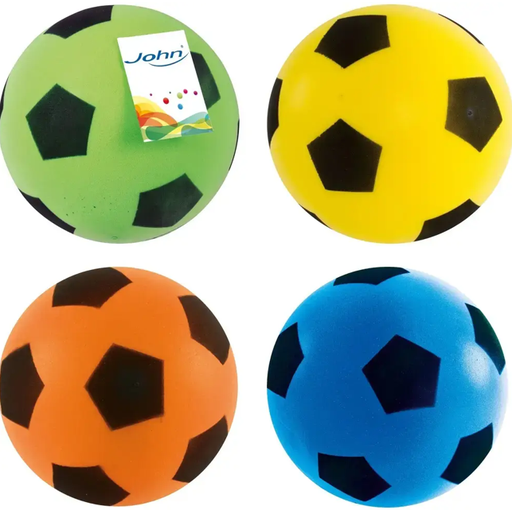
Why this product suits this profile: According to the product details, this lightweight ball with a 20 cm diameter is designed for children aged around 3 to 8 and for indoor and outdoor play.
The soft foam/plastic construction is designed to be lightweight, making it an alternative to a large, hard match ball for first practice sessions.
Weight of 165 g, 20 cm diameter and suitable for indoor and outdoor use; colour is selected at random.
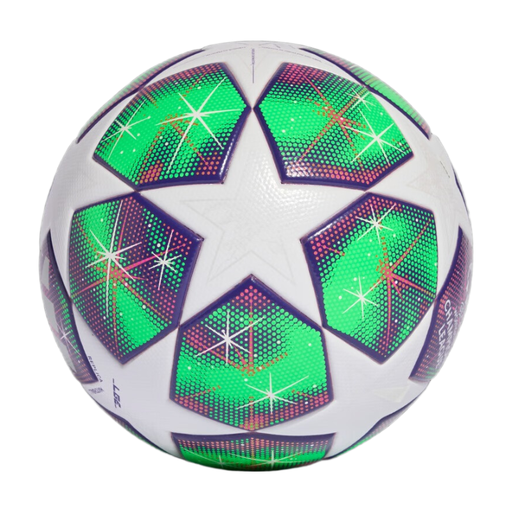
Why this product suits this profile: The size 5 ball is intended for users who prefer a classic match-ball format and clearly specified materials.
The product details specify TPU as the outer material and recommend checking the air pressure before every use, rather than promising unrestricted suitability for every surface.
Made from 100% recycled thermoplastic polyurethane according to the product description, with FIFA Quality designation in the product name.
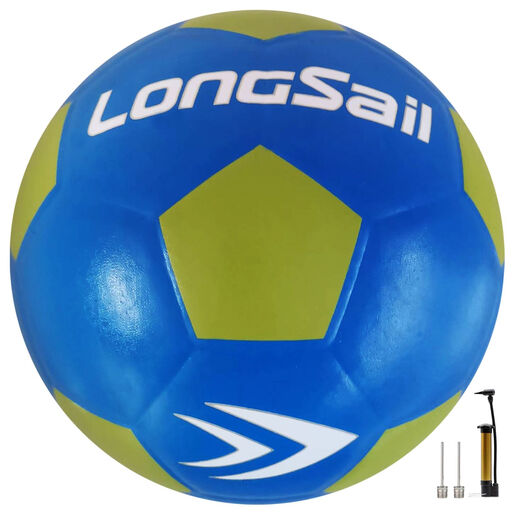
Why this product suits this profile: Size 4 is designed for youth players; the described waterproof surface and included accessories make it suitable for regular outdoor training.
According to the manufacturer’s description, the seamless, waterproof foam-rubber composite surface is designed for wet conditions and absorbs less water.
According to the product details, the package includes a ball, air pump, inflation needle and mesh storage bag; size specification of approximately 63.5–66 cm circumference.
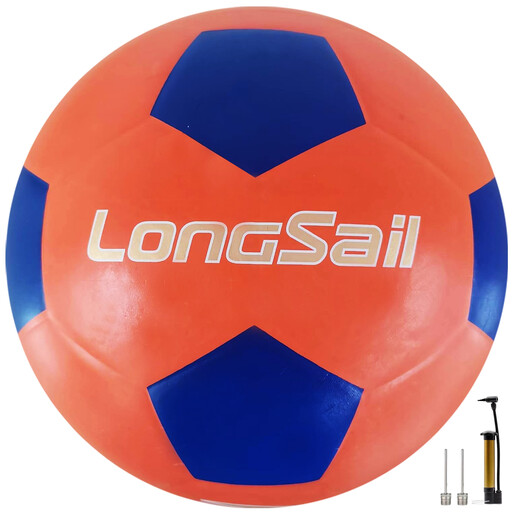
Why this product suits this profile: For younger children and beginners, this model combines a manageable size with accessories for getting started straight away.
Size 3 has a smaller circumference than an adult ball. This makes the model easier to control during initial passing, dribbling and shooting practice.
Seamless foam-rubber composite surface, waterproof construction according to the product details, plus an air pump, needle and storage bag included.
We have put together a complete, regularly updated list of products that fully meet these strict selection criteria and the safety regulations applicable in the EU.
To keep a training football usable for longer, follow a few simple rules:
A football with an air pump can be useful if you do not have separate accessories at home or when travelling. The needle should still be stored safely, as replacement needles are often not compatible with every pump set.
Size 3 is often used for children under around 8 years old. Children aged approximately 8 to 12 often play with size 4. The recommendation may vary depending on the club, physical build and training objective. For beginners, a manageable model is usually easier to control than a large match ball.
That depends on the specific material and the manufacturer’s instructions. A soft foam ball can be used on level grass or a suitable surface. It is not automatically designed for sharp, very rough or hard ground. Check the product description and care instructions before buying.
It is not possible to give a reliable fixed lifespan. This depends on how often the ball is used, the surface, air pressure, storage conditions and material. Cracks, a valve that remains persistently leaky or a noticeably misshapen surface are signs that the ball should be replaced.