
Lieferung heute & morgen

Qualitätsgarantie

Willkommens-Angebote freischalten: KOSTENLOSE Lieferung | Bis zu 80 % RABATT | Kostenlose 30-Tage-JoyPlus-Testphase
App herunterladen
A football for children should be easy to control, suitable for their height and appropriate for the intended place of play. For parents and family members, however, choosing the right one is not always straightforward: many listings use terms such as “children’s ball”, “soft ball” or “training” without clearly putting the weight, diameter and material into context.
Three common purchasing problems occur particularly often:
For children aged around 3 to 8, a lightweight football for indoor and outdoor use is often easier to roll, throw and kick than a heavy match ball. A diameter of 20 cm and a weight of 165 g are specific figures for a soft football for children, making it easier to compare with other products.
A size 5 football for children, on the other hand, is larger and may weigh around 400 to 420 g, depending on the version. This format is more suitable for children who are already confident handling larger balls, or for families deliberately choosing a ball for playing together.
A soft football made from foam and plastic may be more practical than a hard ball for gentle indoor games. Even so, parents should check whether the manufacturer provides an age recommendation, warnings and care information. Adult supervision is advisable for younger children.
A textured surface or grippy pattern can make holding and throwing easier. This is particularly relevant for an American football for children, as its elongated shape requires different handling from a round football.
Before buying, it should be clear whether the ball will mainly be used in a child’s bedroom, garden, playground or sports field. For indoor use, a low weight and soft construction are important. Outdoors, a suitable playing surface and protection from sharp objects are also key considerations.
After playing, the ball should be stored clean and dry. The relevant safety information on the packaging remains the authoritative guidance. For products intended for children under 3 years, pay particular attention to the stated age limit and any possible small parts.
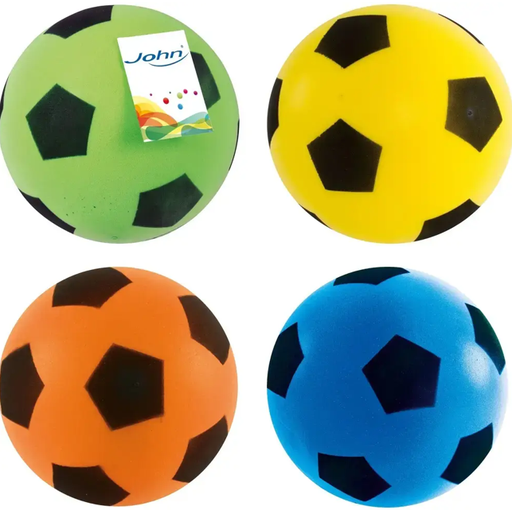
Why this product suits this profile: The 20 cm ball weighs 165 g and is specified for children aged 3 to 8. It can be used for gentle games, rolling and first ball exercises both indoors and outdoors.
The diameter and weight are clearly stated. This makes it easier to assess the ball than vague descriptions such as “extra light”. The colour is selected at random.
Soft foam and plastic material, a weight of 165 g, and suitable for use indoors and outdoors.
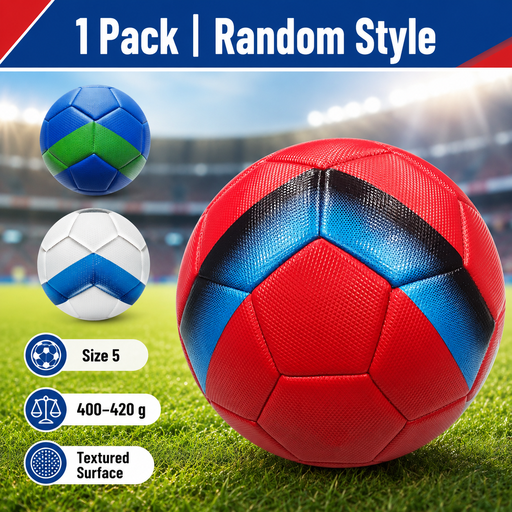
Why this product suits this profile: The larger size 5 format and stated weight of 400 to 420 g appeal to buyers who value clearly specified product details and a textured surface.
The size and weight are not described using marketing language alone. Before buying, check that this format suits the child’s age and strength.
Size 5, 400–420 g and a diamond pattern as the stated surface texture; the design is supplied at random.
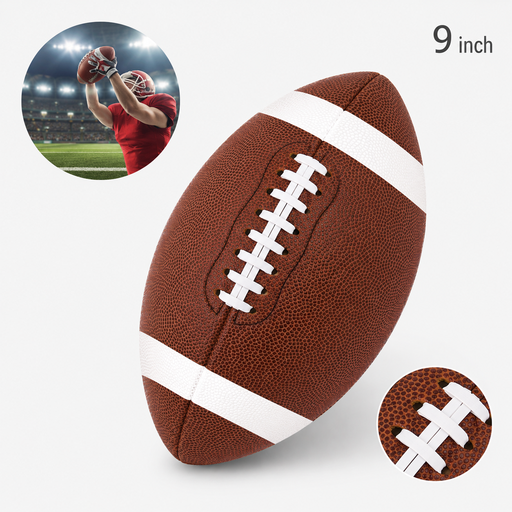
Why this product suits this profile: This 9-inch American football has an elongated shape with laces and is designed for throwing and catching games. It is a good choice for families looking for an alternative to a round football.
The product shape is clearly described as an American football. This prevents it from being mistakenly bought as a traditional children’s football for dribbling and shooting.
9-inch format, lacing and designed for throwing and catching; one piece per pack.
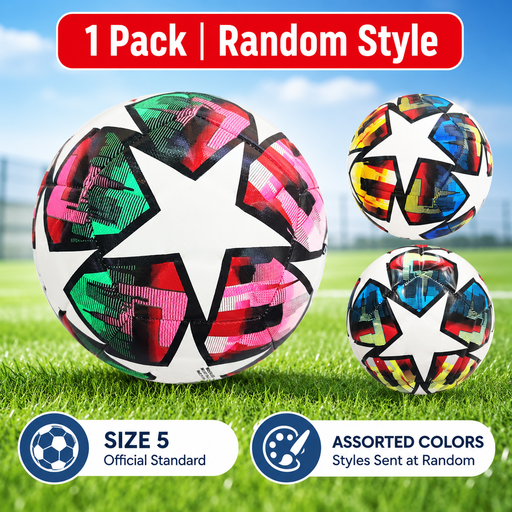
Why this product suits this profile: The size 5 format and weight of 400 to 420 g make it suitable as a gift for children who already play with a larger ball. The star design is selected at random.
The random selection notice makes it clear that no particular colour or star variant is guaranteed. The size and weight range are shown in advance.
Size 5, 400–420 g and a striking star motif; supplied as a single ball.
We have put together a complete, regularly updated list of products that fully meet these strict selection criteria and the safety regulations applicable in the EU.
It depends on the child’s height, strength and playing environment. For younger children, a lightweight ball with a 20 cm diameter and a weight of 165 g may be easier to handle. A size 5 ball is larger and heavier and should be chosen to suit the child’s coordination.
Many soft balls are intended for indoor and outdoor use. Even so, play should only take place on a clear, level surface. The ball should be kept away from sharp objects, and younger children should be supervised by an adult.
There is no reliable way to state a fixed service life. It depends on the material, frequency of use, playing surface and storage conditions. Keeping the ball in a clean, dry place and avoiding sharp or rough surfaces can help maintain its usability.