Cautious footstool owners
You want to clean the fabric without going against the care instructions for your particular footstool. The key is whether the cover is approved for water-based cleaning.


A spray-and-suction spot cleaner is only suitable for a fabric footstool if its care instructions allow water-based cleaning. For occasional small areas, a compact machine with a suitable upholstery tool can be handy. If you use it regularly, tank and nozzle care, as well as somewhere suitable to dry the footstool, also matter.
You want to clean the fabric without going against the care instructions for your particular footstool. The key is whether the cover is approved for water-based cleaning.
You occasionally clean a small upholstered area and need to store the machine, hose and accessories without taking up too much space.
You want to clean other suitable upholstery as well as your footstool, so you pay closer attention to the tools, tanks and care needed after use.
First, check whether the cover is approved for cleaning. Then make sure the machine’s size, your drying options and the effort involved in cleaning its parts suit your daily routine.
| Consideration | What to check when buying | Who it matters most to |
|---|---|---|
| Material suitability | Care label and furniture instructions for the specific footstool; wet cleaning is only suitable if expressly approved. | If you want to wet-clean your footstool, its care label must allow this method; otherwise, the machine is not suitable for that cover. Around 33% of consumers put material suitability first. |
| Storage space and handling | Storage dimensions and space for the machine, hose and supplied tools. | If you have limited storage space in a rented home, you’ll want to be able to put the machine and accessories away easily after use. Around 27% of consumers prioritise storage space. |
| Stains and residual dampness | Whether the tool can reach the area and whether the footstool can dry in line with its care instructions. | When treating stains, you’ll need enough time and a suitable place for the footstool to dry, as well as a machine that can extract the water. Around 20% of consumers focus on stain removal and drying. |
| Machine care and ongoing costs | Instructions on cleaning products, and access to the dirty-water tank and attachments. | If you use the machine occasionally, you’ll want to know how to clean the tanks and attachments, and which products the instructions recommend. Around 20% of consumers pay particular attention to maintenance and ongoing purchases. |
A general statement about where a machine can be used doesn’t replace the care instructions for the fabric on your particular footstool.
Check the care label and furniture instructions before buying. If it’s unclear whether wet cleaning is allowed, don’t simply treat the cover with water.
BISSELL states that the HydroSteam Pro takes around 30 minutes to dry in independent steam mode. This doesn’t confirm that your footstool will dry in the same time after wet cleaning.
Only consider a steam function if the care instructions for your specific cover allow the treatment you have in mind. Also check which operating mode the manufacturer’s claim refers to.
Even a compact machine needs to be maintained and stored according to its instructions after use.
Before buying, check how easy it is to access and remove the containers and attachments.
Emptying, rinsing and drying the machine’s parts takes time and requires a suitable space after use.
The SpotClean range caters for different cleaning needs, from the compact SpotClean Mini to the HydroSteam Pro, which offers steam, wash and suction modes.
The StainStriker PX200EUT is listed as a portable upholstery spot cleaner with several attachments.
The HS500 011 may appeal to buyers who want to use other manufacturer-approved attachments as well as cleaning upholstery.
The Series 3000 spot cleaner, model XW3192/11, is sold with a 3-in-1 nozzle for soft surfaces, including upholstery.
The machines below are intended for spot or upholstery cleaning where wet cleaning is suitable; individual models vary in design and features. Electric spot cleaners placed on the market in Germany must carry the required CE marking. The EU lists electrical and electronic equipment as a product group requiring this marking, and the Bundesnetzagentur identifies it as something to check. Check the specific machine, as a product description alone doesn’t prove that it carries the marking.
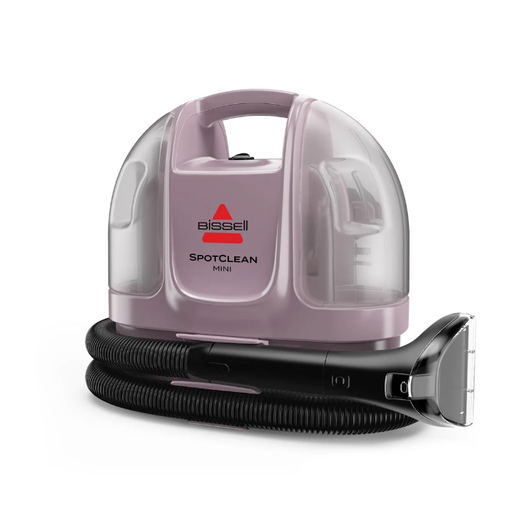 No image available
A compact option for occasional upholstery cleaning in a home with limited storage space; upholstery is listed as a suitable use.
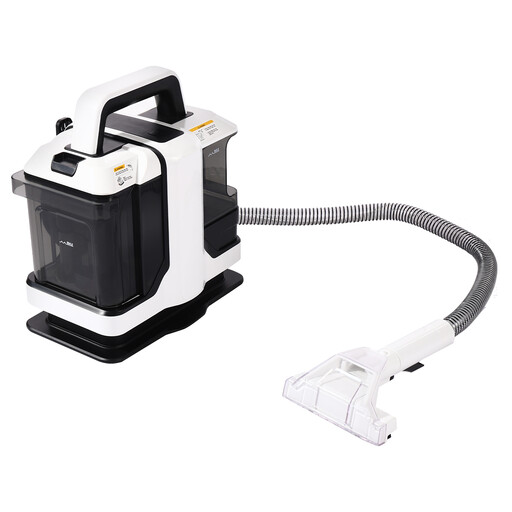 No image available
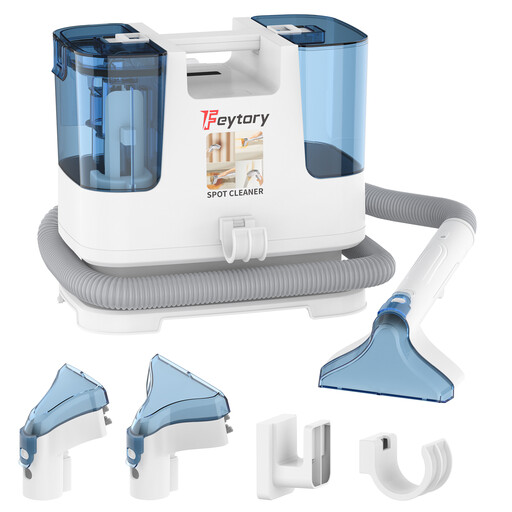
For targeted cleaning of suitable upholstery; the product description lists two brushes and separate water tanks.
450 W, 11 kPa suction power, 2 brushes, 38 oz clean-water tank, 29.92 oz dirty-water tank, IPX4.
According to the product description, wet cleaning is limited to the use of a neutral cleaning product.
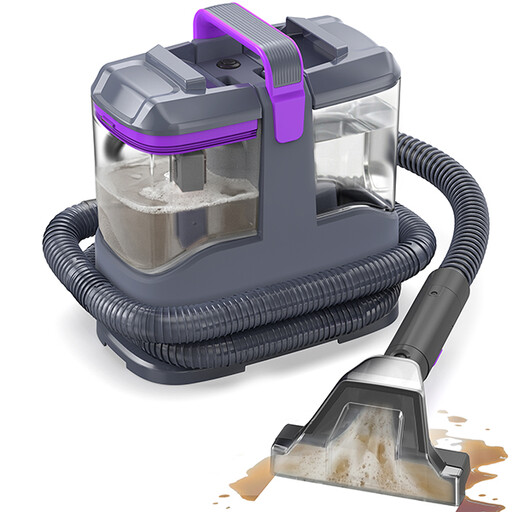 No image available
An option for suitable upholstery and sofas if you need several brushes for different surfaces.
450 W, 13 kPa, 3 brushes, 2.6 kg.
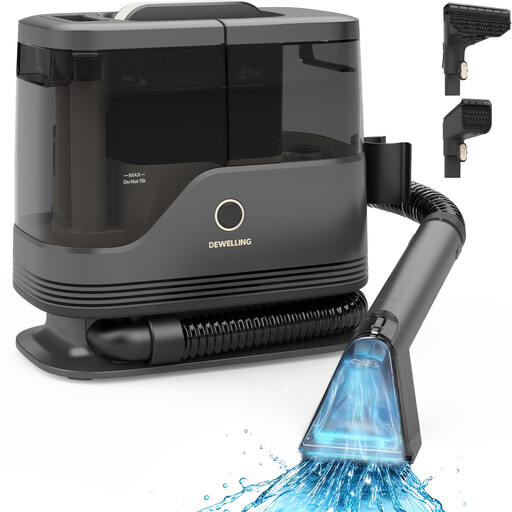 No image available
For suitable upholstery and sofas; the product description lists removable tanks and a self-cleaning function for the internal hoses.
400 W, 13 kPa.
 No image available
For suitable sofa and upholstery surfaces; separate tanks keep clean water apart from the water collected.
15 kPa, water tanks with capacities of 0.6 l and 1.5 l.
No, not simply because the footstool is upholstered in fabric. Hoover explains that the care codes W means water-based cleaning, S means solvents and X means no wet cleaning. Check the information for your specific footstool; without clear approval, its suitability can’t be confirmed.
Follow the instructions for your particular model. For the documented SpotClean ProHeat model, BISSELL recommends emptying and rinsing the dirty-water tank, and rinsing the detached attachment. These steps aren’t general instructions for every machine.
Check which cleaning products and replacement parts are recommended for your model. If there’s a fault, your statutory rights are against the seller and are separate from any voluntary guarantee; the Verbraucherzentrale states that these rights generally last for two years from delivery.
Where marking is required for an electrical device, the specific product must carry the CE marking. The EU lists electrical and electronic equipment as a product group requiring this marking; the Bundesnetzagentur lists product markings and manufacturer details among the things to check. A statement in the product description doesn’t prove that the individual machine carries the marking.