
Lieferung heute & morgen

Qualitätsgarantie

Willkommens-Angebote freischalten: KOSTENLOSE Lieferung | Bis zu 80 % RABATT | Kostenlose 30-Tage-JoyPlus-Testphase
App herunterladen
A sturdy and reliable knife is the cornerstone of any well-equipped kitchen. For demanding tasks like breaking down meat, chopping hard vegetables, or preparing large quantities, conventional chef's knives quickly reach their limits. A forged cleaver made from high-quality steel provides the necessary stability and sharpness.
This guide will help you understand the essential features of a high-quality cleaver. We will introduce a selection of models that are suited for different applications based on their materials and construction.
Choosing the right cleaver depends on your intended tasks. Three key criteria will help guide your decision: steel quality and construction, blade shape, and handle ergonomics.
The forging process is a critical factor in a cleaver's performance and durability. Forged blades are shaped from a single piece of steel under heat and pressure. This process densifies the steel's molecular structure, resulting in greater density and superior edge retention.
Look for a full-tang knife. In this design, the steel of the blade extends through the entire handle. This ensures excellent balance, stability, and power transfer when chopping. High-carbon steels, such as 7Cr17MoV stainless steel, offer a good balance of sharpness, edge retention, and corrosion resistance. The hardness, measured in HRC (Rockwell Hardness), is also an indicator of quality; values around 58 HRC are a sign of a durable edge.
The shape and weight of the blade determine its primary purpose:
A secure and comfortable grip is essential for control and safety, especially during powerful tasks. Materials like Pakkawood are an excellent choice, as they are made from wood veneers and resin compressed under high pressure. The result is a dense, water-resistant, and durable material that provides a good grip even when wet. An ergonomically shaped handle that fits well in the hand prevents fatigue and increases precision.
Based on the criteria above, we have compiled a selection of knives that are distinguished by their specific features, making them suitable for various kitchen needs.
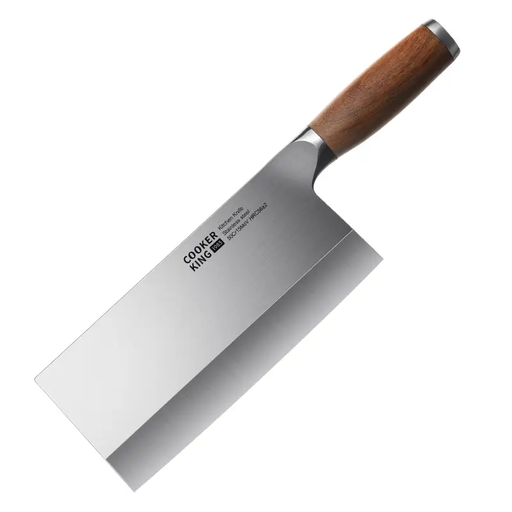
Why It Stands Out: This model from COOKER KING combines Japanese design with robust construction. The blade is hand-forged from high-carbon 7Cr17MoV stainless steel and achieves a hardness of 58±2 HRC. The full-tang, triple-rivet construction ensures maximum stability and balanced weight distribution.
Pros:
Who It's For: Ambitious home cooks looking for a versatile and durable Japanese cleaver that is equally suited for breaking down meat and precisely cutting vegetables.
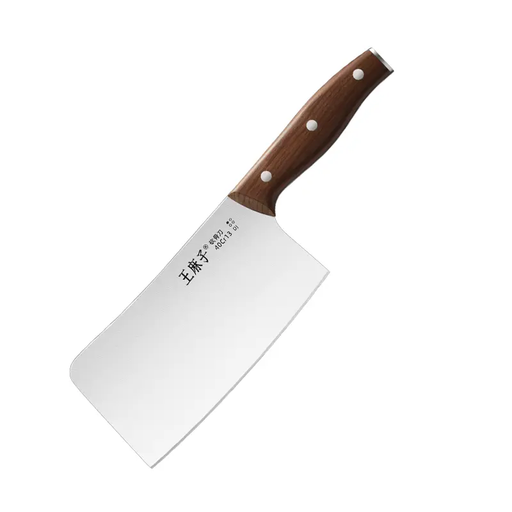
Why It Stands Out: This knife from Wangmazi is designed as a classic meat cleaver. It was developed specifically for heavy-duty tasks like cutting through bones and thick cuts of ribs. The construction is engineered for maximum impact force and resilience.
Pros:
Who It's For: Users who regularly process bone-in meats and need a specialised knife for chopping bones that offers uncompromising performance for heavy-duty work.
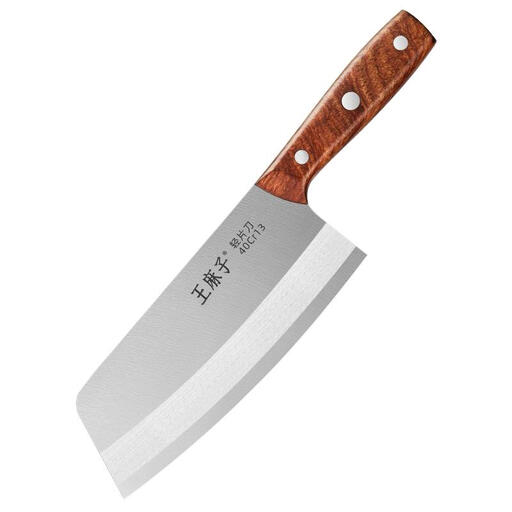
Why It Stands Out: This model from Wangmazi's Shenmu series represents the classic Chinese chef's knife. The "One Light" blade is designed for a balance of sharpness and stability, making it an agile all-rounder for vegetable prep.
Pros:
Who It's For: Chefs who want a versatile knife for daily preparation of vegetables and boneless meat and who appreciate the precision and handling of a traditional Chinese chef's knife.
A cleaver is designed for powerful cuts. However, if your kitchen tasks require finer, more precise cuts, such as slicing ham or roasts paper-thin, a different knife might be more suitable.
? Explore our selection of slicing knives for precise, clean cuts.
1. What is the difference between a forged and a stamped cleaver? A forged cleaver is heated and hammered into shape from a single piece of steel, which densifies the steel's structure and makes the blade more robust with better edge retention. Stamped knives are cut out from a sheet of steel. They are typically lighter and less expensive but often less durable and stable than their forged counterparts.
2. How do you care for a high-carbon steel cleaver? Knives made of carbon steel or high-carbon stainless steel should be cleaned by hand with warm water and mild soap immediately after use and then dried thoroughly. They are not dishwasher-safe. To protect the blade from corrosion, it can be occasionally coated with a thin layer of neutral food-grade oil (e.g., camellia oil).
3. Can you chop bones with any Chinese chef's knife? No, this is a common misconception. There are different types of Chinese chef's knives. Lighter models (slicing cleavers) are intended exclusively for cutting vegetables and boneless meat. Only heavy, thick models (chopping cleavers or bone choppers), often referred to as a meat cleaver or butcher's cleaver, are suitable for chopping bones. Using the wrong type of knife can damage the blade.