What should you look for when buying?
Window light and a white card may be enough to lift the shadows. A panel is most useful as an additional light when you want more control over the angle or the contribution from the LED.
The following percentages relate to consumers considering an LED light for fossil photography in window light.
| Priority |
What to check before buying |
Who is it most relevant to? |
| Relief through light direction |
Side positioning and dimming; test the angle on your own fossil. |
If I want to show fine structures, I need to be able to position the light to the side and adjust the shadows. This is a priority for around 36% of consumers whose main concern is capturing relief. |
| Consistent colours |
Check the colour temperature range and colour rendering information for the specific model; check the white balance under the actual lighting conditions. |
If I want to compare fossil colours over time, I look for consistent lighting conditions rather than relying on a Kelvin rating alone. Around 29% of consumers put colour comparison first. |
| Coverage and space |
Check the light’s dimensions and mount against the space available; only compare lux figures when the stated measuring distance is the same. |
If I’m photographing a larger fossil slab, the light needs to cover the surface and still fit on my table. Around 21% of consumers prioritise coverage and space. |
| Power supply and accessories |
Check whether the power adapter, battery, diffuser and stand are included with the exact variant. |
If I want to position the light to the side or use it on the move, I need a suitable mount and power supply. Around 14% of consumers prioritise having everything they need for the setup. |
Joybuy lights for compact photography setups
This selection includes compact additional lights for photography and close-ups, as well as a light wand alongside camera lights. Not all of these products are LED panels, so check that their design and mounting options suit the light angle you want.
 No image available
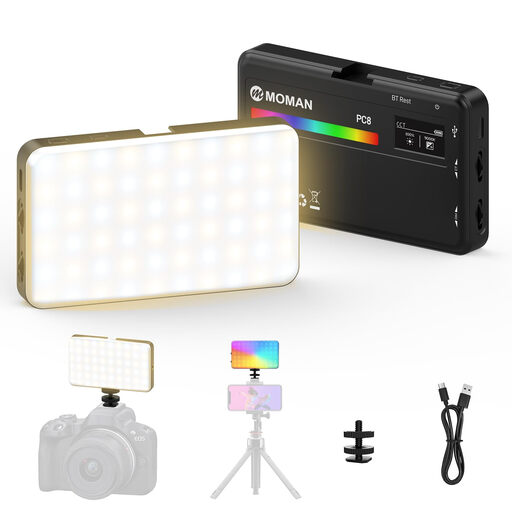
MOMAN PC8 RGB Camera Light
Described as a portable camera light for product photography; a good option if you want to reposition a compact light source.
Brightness: 0–100%; colour temperature: 2500–9000 K; built-in battery: 3100 mAh; weight: 125 g; mounting: 1/4-inch thread and cold shoe.
View at Joybuy
 No image available
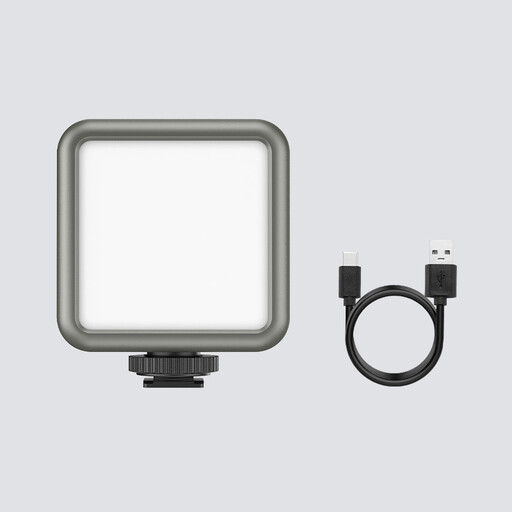
ULANZI VL49 RGB LED Video Light
The product title lists macro and product photography as uses; its compact design may suit a small setup.
Colour temperature: 2500–9500 K; battery: 2000 mAh; dimmable. Magnets on the back let you attach it to metal surfaces.
View at Joybuy
 No image available
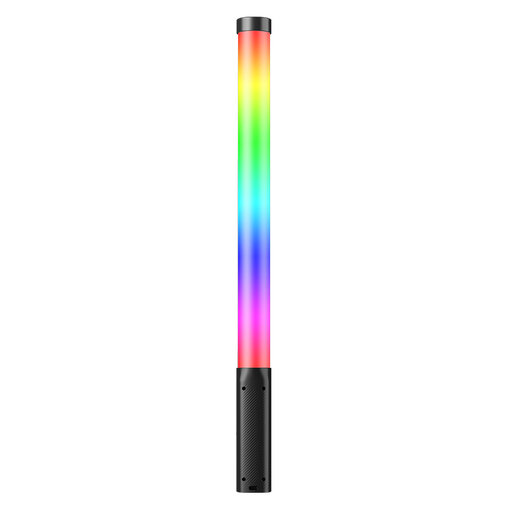
ULANZI VL119 Handheld Video Light 10W
A handheld light wand for photography and video if you’re looking for a different format from a panel.
RGB; battery: 3300 mAh; colour temperature: 2500–9000 K; stated brightness: 360 Lux at 0.5 m. Its wand shape isn’t a panel design.
View at Joybuy
Frequently asked questions
Do I need an LED light when using window light?
Not necessarily. First, try using a white card to lift the shadows; the Smithsonian National Museum of Natural History lists window light and a card as options for photographing specimens. A panel can be useful if you want more independent control over the light angle or brightness.
How can I photograph fine relief without lighting every indentation?
Start by positioning an adjustable light source to the side, then change the angle gradually. Look at the fossil to see which shadows reveal its structure and which obscure details. Softer light can serve a different purpose in an additional overall shot.
What should I bear in mind when setting up and cleaning the light?
Make sure the light is securely mounted, and route cables so no one can trip over them. For the light, amaran’s manual recommends disconnecting the power before cleaning and using a dry microfibre cloth; these are manufacturer recommendations for that model.
What extra costs and consumer rights should I check?
Check whether the stand and any batteries you need are included with the specific variant. The Verbraucherzentrale distinguishes the seller’s statutory liability for defects from a voluntary guarantee. In Germany, online purchases generally come with a 14-day right to cancel; statutory exceptions may apply.
What labelling and disposal rules apply in Germany?
CE marking is required for products covered by harmonised EU rules that explicitly require it. According to Your Europe, it is a declaration by the manufacturer, not a certificate from a central EU testing body. According to the German Federal Ministry for the Environment, end-of-life electrical appliances should be taken to an authorised collection or take-back point, not put in household waste; conditions may apply to take-back schemes.


