Who photographs fountain pens?

Photographers who focus on nib details

If you want to show the nib tip, grind or engraving in close-up, consider the magnification and working distance of the specific lens together. Sony specifies a distance of 2.4 cm between the front of the lens and the subject at minimum focus for the SEL30M35; Canon Academy explains that stopping down increases the depth of field.

Photographers with limited table space

If you want to photograph whole pens as well as the occasional close-up, you’ll need to position your camera so there’s still room for lighting. OM SYSTEM specifies focusing from 1 cm in the TG-7’s microscope mode; this figure doesn’t automatically tell you how much room you’ll have for lighting.

Collectors taking comparison photos

If you photograph several pens under similar conditions, set up your camera position, background and lighting so you can repeat them consistently. Canon Germany recommends using a tripod for product photography to keep the composition and background consistent. White balance under the lighting you use also affects colour reproduction.

What should you look for when buying?

Compact camera with a close-up mode

A good fit if: you want to photograph whole pens and details without changing lenses.

The trade-off: The lens is fixed, and a short focusing distance alone doesn’t tell you how much room you’ll have for lighting.

Interchangeable-lens camera with a standard zoom

A good fit if: you’re mainly interested in photographing whole fountain pens or arrangements to begin with, and might consider a macro lens later.

The trade-off: A kit zoom isn’t automatically a macro lens, so check the close-up performance of the lens actually included.

Interchangeable-lens camera with a macro lens

A good fit if: you want to feature the nib, grind or engraving prominently in the frame.

The trade-off: The lens and camera body need to be compatible. A short working distance can make lighting harder, and depth of field decreases as magnification increases.

What to consider What to look for Who is this important for?
Magnifying the nib and engraving Check the magnification ratio of the specific lens and the distance between the front of the lens and the subject. A standard zoom kit doesn’t establish that a separately sold lens has macro capability. If I want to fill the frame with nib details, I compare the lens’s magnification and working distance. Around 33% of consumers put nib details first.
Space on the table Check that there’s enough room for the camera, pen and lighting to fit alongside one another for the composition you want. The minimum focusing distance is not the same as the distance from the front of the lens to the subject. If my table is small, I need a composition that leaves room for lighting alongside the camera and subject. Around 27% of consumers prioritise the space available for their setup.
Shine and colour Check the position of the light with your own pen, and keep the lighting and white balance as consistent as possible when making comparisons. If I want to compare lacquer colours and shiny metal parts, I look for consistent lighting and suitable white balance. Around 20% of consumers put comparable colours and surfaces first.
Consistent focus Consider aperture, lighting and a stable camera position together. Stopping down can increase the depth of field, but may require a longer exposure. If I want several parts of a pen to appear sharp in comparison photos, I need a stable setup and enough depth of field. Around 20% of consumers prioritise consistent focus.

Common buying pitfalls

  • Assuming a camera kit is a macro set because of the camera body

    The interchangeable-lens camera kits described here come with standard zooms. Figures such as 1:1 or 1:2 refer to other, separately specified lenses, not automatically to the kit lens.

    Check the full lens description in the box contents and the magnification ratio of the lens you actually plan to use.

    You may need to buy a compatible macro lens separately for nib details.

  • Confusing minimum focusing distance with the space in front of the lens

    Sony specifies a minimum focusing distance of 9.5 cm for the SEL30M35, and a distance of 2.4 cm between the front of the lens and the subject at minimum focus. The second figure is directly relevant when positioning the light around your pen.

    Compare the working distance, the composition you want and the space available for lighting on your table, rather than choosing based only on the shortest focusing distance.

  • Focusing only on a wide maximum aperture for greater sharpness

    Depth of field is shallow at close range. Canon Academy says stopping down increases the depth of field, but may require longer exposure times and therefore increase the risk of camera shake.

    Plan your aperture, lighting and a stable camera position together.

  • Assuming different box contents are equivalent

    For the Z50II kit described here, Nikon explicitly states that no charger is included; Canon lists a charger with the EOS R50 kit described here.

    Read the box contents for the exact version you’ve chosen.

    Depending on the deal, you may need to budget for a charger or other accessories.

Relevant brands and product ranges

OM SYSTEM

The TG-7 is a compact camera with a fixed lens and a microscope mode for close-ups.

  • OM SYSTEM specifies focusing from 1 cm in microscope mode. This could be useful for close-up details.
  • The short focusing distance doesn’t prove a 1:1 magnification ratio. Check whether there’s still room for lighting from the angle you want.

Canon

The EOS R50 kit with RF-S 18–45mm is an interchangeable-lens camera option for photographing whole pens. The RF 35mm F1.8 Macro is a separate lens option for close-ups.

  • Canon specifies a magnification ratio of 1:2 for the RF 35mm F1.8 Macro and lists the EOS R50 as a compatible camera body.
  • The EOS R50 kit described here includes the RF-S 18–45mm, not this macro lens. The macro specification therefore doesn’t apply to the kit zoom.

Sony

The ZV-E10-II kit with 16–50mm zoom is an interchangeable-lens option for general photography; the APS-C E-mount macro SEL30M35 is a separate lens.

  • Sony specifies a magnification ratio of 1:1 for the SEL30M35.
  • At minimum focus, the distance between the front of the lens and the subject is 2.4 cm. This can make lighting more difficult on a small table; the figure doesn’t apply to the kit zoom.

Nikon

The Z50II kit with NIKKOR Z DX 16–50mm is an option for general compositions; the NIKKOR Z MC 50mm f/2.8 is a separate macro lens option.

  • Nikon specifies a magnification ratio of 1:1 for the NIKKOR Z MC 50mm f/2.8.
  • The macro lens isn’t included in the standard zoom kit described here. Nikon also notes that the Z50II kit doesn’t include a charger.

Camera deals on Joybuy

The Joybuy deals below are cameras for taking photos or videos. If you want to take close-ups of fountain pens, check before buying that the specific camera or included lens can achieve the composition and working distance you need.
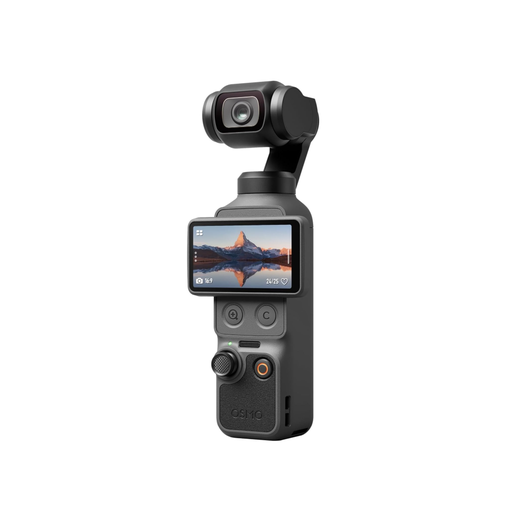
DJI Osmo Pocket 4 Standard Combo

DJI Osmo Pocket 4 Standard Combo

The product name describes this model as a camera for vlogging and photography. For nib details, check its close-focusing capability and the space available for lighting.

Features listed in the product name: 1″ CMOS, 4K/240fps, 3-axis stabilisation, 2× lossless zoom, 107 GB of built-in storage and a rotating 2″ screen.

Joybuy

KOMERY G7-A 4K digital camera, pink

KOMERY G7-A 4K digital camera, pink

The product name describes a digital camera for photography. If you want to fill the frame with a nib or engraving, check beforehand that it can focus at the distance you need.

Features listed in the product name: 4K, 80MP, 18× zoom and the Pink colour option.

Joybuy
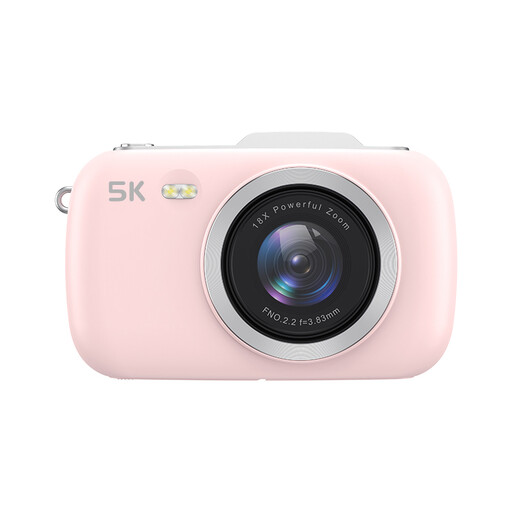
KOMERY G7 5K digital camera, pink

KOMERY G7 5K digital camera, pink

The product name describes a digital camera for photography. For close-ups of fountain pens, check the focusing distance of the specific model.

Features listed in the product name: 5K, 80MP, 18× zoom and the Pink colour option.

Joybuy
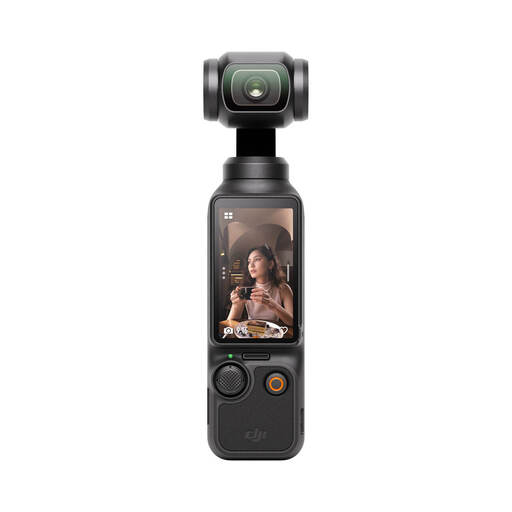
DJI Osmo Pocket 3 vlogging camera

DJI Osmo Pocket 3

The product name describes this model as a camera for video and photography. For pen details, check its close-focusing capability beforehand.

Features listed in the product name: 1″ CMOS, 4K/120fps, 3-axis stabilisation, fast focusing, subject tracking and a rotating 2″ touchscreen.

Joybuy
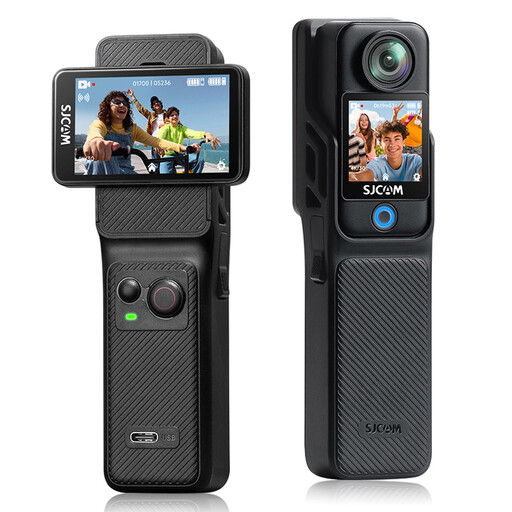
SJCAM C400 4K action camera

SJCAM C400 4K action camera

The product name describes this model as an action camera with photography features. For close-ups of fountain pens, check that you can achieve the composition and working distance you need.

Features listed in the product name: 4K, 6-axis EIS, two touchscreens, 16MP photos, 154° wide angle, 2K slow motion, body dimensions of 14,4 × 3,9 × 3,9 cm and a waterproof housing rated to 30 m.

Joybuy

Frequently asked questions

Is the zoom lens supplied with an interchangeable-lens camera enough for photographing a fountain pen?

A standard zoom can be a good starting point for photographing whole pens. If you want the nib or engraving to fill the frame, check the magnification ratio of the lens included: the Canon, Sony and Nikon kits described here each include a standard zoom, not the separately described macro lenses.

How do I set up a repeatable arrangement on a small table?

First decide on the composition you want, then check your camera position and the space available for lighting. A suitably positioned tripod can help you keep the composition and background consistent when photographing other pens. Stopping down can increase depth of field, but may also mean a longer exposure time.

What should stay the same in comparison photos?

Keep the camera position, background and lighting as consistent as possible, and check the white balance under the light you’re actually using. This makes it easier to assess differences between shots, but doesn’t establish any particular colour accuracy for the models mentioned.

What else should I check before buying?

Compare the exact kit description with your requirements for a macro lens, power supply and a stable setup. Nikon explicitly notes that the Z50II kit described here doesn’t include a charger; Canon lists a charger with the EOS R50 kit described here. What else you need will depend on the deal you choose.

What rights do I have when buying a camera online from a business seller?

According to the EU consumer portal, for a standard online purchase of goods you generally have 14 days from delivery to withdraw from the contract; exceptions and conditions regarding return costs should be noted. Separately, if goods are faulty, you have a statutory right to a remedy from the seller for at least two years from receipt. These consumer rights don’t apply in the same way when you buy from a private individual.