
Lieferung heute & morgen

Qualitätsgarantie

Willkommens-Angebote freischalten: KOSTENLOSE Lieferung | Bis zu 80 % RABATT | Kostenlose 30-Tage-JoyPlus-Testphase
App herunterladen
Frame cutting dies are an indispensable tool for many creative projects, from custom card making to intricate scrapbooking layouts. However, the vast selection can quickly become overwhelming. It's not uncommon for a purchase to lead to disappointment when the result doesn't meet expectations. This guide will help you navigate the most common pitfalls and find the perfect metal cutting dies for your needs.
Before you invest your money, you should be aware of the typical problems that can arise with low-quality or unsuitable dies.
To avoid these problems, focus on a few objective criteria. These will help you realistically assess the quality and suitability of a cutting die.
The durability and cutting precision of a die depend directly on the material. Most high-quality dies are made of Carbon Steel. This material is robust and allows for the creation of sharp, long-lasting cutting edges. When making your selection, especially for intricate designs like a floral die or lace patterns, look for a clean and burr-free finish on the edges. This is an indicator of precise cutting results.
This is a non-negotiable point. Measure the maximum pass-through width of your die-cutting and embossing machine. Always compare this measurement with the length and width specifications provided in the product description. This is particularly important for dies for card making, as these often involve standard formats that require a corresponding frame size.
Consider what you primarily want to use the die for. Are you looking for versatile scrapbooking supplies or a special wedding die or Christmas die?
Here are some recommendations from our range, tailored to different creative needs.
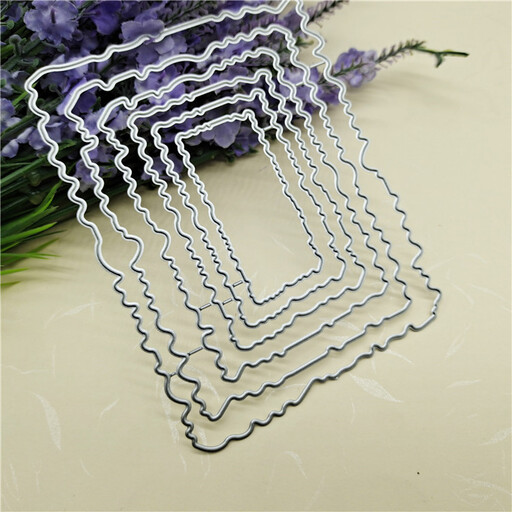
Why This Fits Their Persona: This set is an ideal starter kit. Rectangular frames in various sizes are extremely versatile and form the basis for countless card and scrapbooking projects without requiring a large budget.
The simple design minimises the risk of unclean cuts, which are more common with complex patterns. The standard shape ensures high compatibility with most common die-cutting machines.
The set includes several nested sizes, which simplifies creating layered looks and mats. An excellent value for money for getting started with DIY craft supplies.
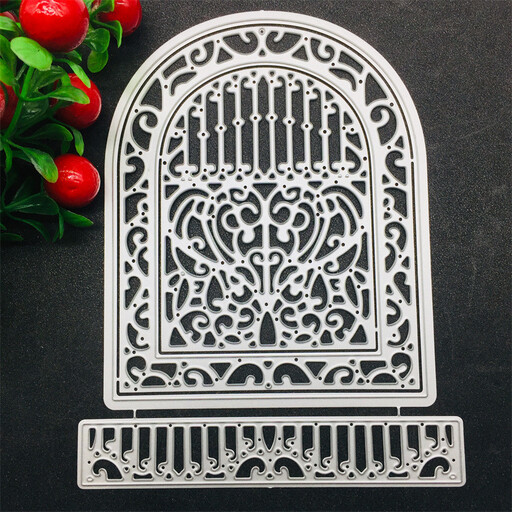
Why This Fits Their Persona: Ideal for crafters designing sophisticated projects like wedding invitations or themed albums. This die creates a unique, decorative element that immediately catches the eye.
Its intended use as an "invitation cover" is clearly defined, which manages expectations about the design's intricate nature. The product images clearly show its application as an elaborate decorative element.
Creates a special three-dimensional effect that transforms a simple card into a small work of art. Perfect for making a lasting impression.
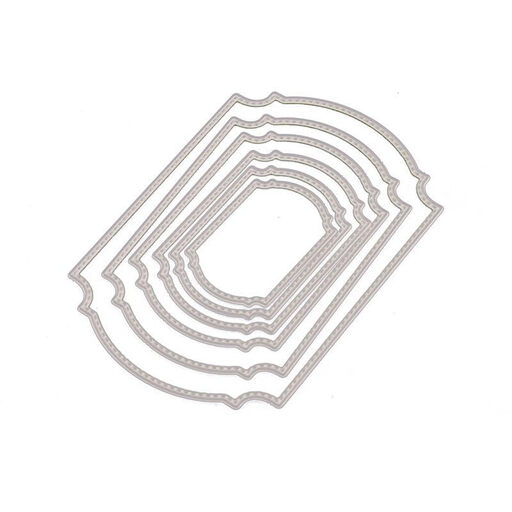
Why This Fits Their Persona: Perfect for creatives who love working with layers and textures. The irregular shape and decorative stitched edge lend a modern, handmade feel to any project.
As a set of multiple dies, it offers high utility value. Even if one size is used less frequently, the purchase pays for itself through the versatility of the other elements. Compatibility is largely ensured by the smaller sizes in the set.
The set contains 6 different sizes for maximum layering flexibility. The decorative stitched edge provides a professional finish that is otherwise only achievable through laborious hand-stitching.
We have compiled a complete, up-to-date list of products that fully meet these strict selection criteria and quality standards.
Most standard manual die-cutting machines are suitable for metal cutting dies. The decisive factor is not the brand, but the maximum pass-through width of the machine. Always compare this with the die's dimensions before you buy new die cuts to ensure they will fit.
After cutting, small paper scraps can be removed from the die with a brush or a pointed tool (pokey tool/prickler). A useful trick: run a piece of wax paper through with the die. This helps to release paper scraps and lightly conditions the blades. It's best to store the dies flat, for example on magnetic sheets, to prevent them from bending.
First, check the configuration of your "sandwich" plates. Sometimes, adding an extra sheet of thin cardstock (a "shim") can help increase the pressure. For very intricate designs, it can also help to rotate the die 90 degrees and run it through the machine a second time. If the result is still unsatisfactory, there may be a quality issue with the die itself.