What should you look for when buying?
First, identify the ingredients you need to avoid. For suitable varieties, compare the carbohydrates per portion and the size of the bar with your planned training fuel.
| What to look for |
What to check when buying |
Who should pay particular attention |
| Allergens and gluten |
Check the ingredients, highlighted allergens and any “may contain” warnings against the specific substances you need to avoid. If you need to avoid gluten, look for the explicit “gluten-free” claim. |
If I need to avoid certain ingredients, a general “free-from” label shouldn’t obscure what the product contains. Around 42% of consumers put checking the specific substances they need to avoid first. |
| Carbohydrates per portion |
Compare the carbohydrates per bar; if the figures are given per 100 g, calculate the amount based on the bar’s weight. Also take into account any other carbohydrate sources in your plan. |
For a long training run, I want to know how a bar contributes to my planned fuelling. Carbohydrate content is the main consideration for around 33% of consumers. |
| Portion size and ingredients |
Compare the size of the bars and the ingredients in each variety, rather than assuming that vegan, gluten-free and nut-free mean the same thing. |
If I’m planning to have a bar on the go, its portion size and specific recipe need to suit my needs. Around 25% of consumers prioritise this practical fit. |
Joybuy products: gluten-free wafer bars
This gluten-free wafer bar is an option for planning your portions. If you need to avoid ingredients other than gluten, check the allergen information on the specific pack before choosing it.
 No image available
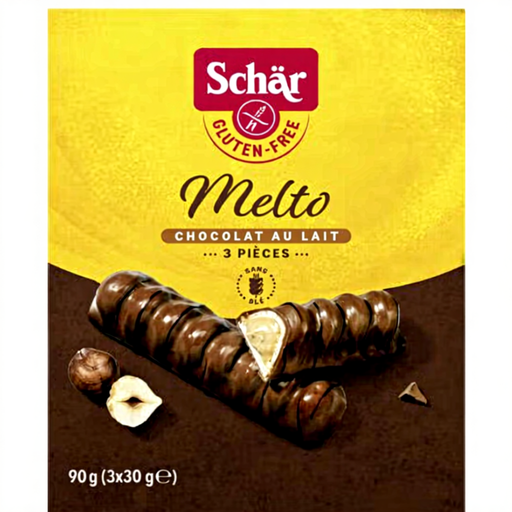
Schär Melto gluten-free hazelnut wafer bars, 3 × 30 g
If you’re avoiding gluten and planning individual bars as part of your fuelling, the explicit gluten-free label is important. The pack contains three 30 g bars; this variety isn’t suitable if you need to avoid hazelnuts. Check the pack for any other ingredients you need to avoid and the carbohydrates per portion.
View on Joybuy
Frequently asked questions
Is a vegan bar automatically gluten-free or allergen-free?
No. Vegan means it contains no animal-derived ingredients; it doesn’t mean it’s free from gluten, nuts, peanuts, sesame or soya. Check the information for the specific variety, and if you need to avoid gluten, look for the explicit “gluten-free” label.
How many bars should I plan to take on a long training run?
The number depends on the carbohydrates in each bar and your fuelling plan for the duration and intensity of your session. A 2015 article in Ned Tijdschr Geneeskd recommends 30–60 g of carbohydrates per hour for exercise lasting 1 to 2.5 hours; remember to include any other planned sources in your calculations.
Does the absence of a “may contain” warning mean an allergen is definitely not present?
No. The Verbraucherzentrale notes that unintended contamination is not covered by mandatory allergen labelling. So the absence of a “may contain” warning is not a general guarantee that a substance isn’t present.
What information should I compare when choosing packaged bars?
Compare the ingredients list, highlighted allergens and nutritional information for the specific variety. According to the European Food Safety Authority, 14 major allergens must be labelled when used as ingredients in the EU. For training plans, it’s also important to check whether the carbohydrates are listed per 100 g or per bar as well.
When can a bar be labelled “gluten-free”?
Commission Implementing Regulation (EU) No 828/2014 allows a food to be labelled “gluten-free” if it contains no more than 20 mg/kg of gluten. Oats used in the product must also meet additional requirements designed to prevent contamination with wheat, rye, barley or their cross-bred varieties.


