Who should consider these criteria?
A free-from claim only answers part of the question. What matters when choosing a bar depends on whether you’re focusing on portion planning, a particular allergen or the overall nutritional profile.
People planning their carbohydrate intake
If you need to factor carbohydrates into a personal meal or treatment plan, the amount you actually eat is what matters. diabetesDE – Deutsche Diabetes-Hilfe highlights the importance of calculating carbohydrates, particularly for people who use insulin.
People with diabetes and an additional allergy or coeliac disease
You’ll need to check both the nutritional information and the specific allergen you need to avoid, or the gluten-free labelling required. A general free-from claim is no substitute for checking the ingredients and allergen information.
People looking at fibre content
For you, fibre is another point to compare alongside portion size, carbohydrates and ingredients. No single nutrient tells you whether a bar fits into your overall diet.
What should you check when buying?
Start with the portion size and carbohydrate content. Then check any allergen or gluten information you need, and compare other nutritional values and sugar claims.
| Criteria |
What to check |
Who it matters to |
| Carbohydrates per portion |
Compare the portion weight and carbohydrates in g for the amount you actually eat. Values per 100 g help you compare bars of different sizes. |
If I’m including a bar in my meal plan, I need a clear figure for the amount I’ll eat, not just a value per 100 g. This kind of carbohydrate planning is the main priority for around 36% of consumers. |
| Allergens and gluten |
Check the ingredients and allergen information for the specific allergen you need to avoid. If you need to follow a gluten-free diet, look for the relevant labelling on the product. |
If I have an additional allergy or coeliac disease, a general free-from claim isn’t enough. This specific check is the main concern for around 29% of consumers. |
| Fibre |
Consider fibre in g per portion alongside carbohydrates, portion size and ingredients. |
If you choose a bar partly for its fibre content, you’ll want to consider how it fits into your overall diet. This criterion takes priority for around 21% of consumers. |
| Sugar claims |
Check the sugar and carbohydrate values in the nutritional information, as well as the ingredients list. Don’t assume ‘sugar-free’ and ‘no added sugar’ mean the same thing. |
If I’m specifically looking for a bar with no added sugar, I still want to know what sugars and other ingredients it contains. Understanding these claims is the main consideration for around 14% of consumers. |
Brands to consider
The product ranges below illustrate different types of labelling and ingredients. Their characteristics may not apply to every bar from the same brand.
RAWBITE
RAWBITE makes fruit and nut bars, which it describes as having no added sugar.
- RAWBITE says its bars contain dried fruit and nuts.
- For RAWBITE Protein Smooth Cacao, the manufacturer states that it contains 40 g of carbohydrates and 35 g of sugar per 100 g. Check the portion size and avoid any ingredients you’re allergic to.
Schär
Schär offers bars labelled gluten-free, among other products. This can be a useful factor when choosing a bar for a gluten-free diet.
- The manufacturer describes the Schär Cereal Bar as gluten-free.
- According to the manufacturer, this Cereal Bar contains milk, soya and almonds, and has 59 g of carbohydrates and 24 g of sugar per 100 g. Check allergens and nutritional information separately from the gluten-free claim.
Frusano
Frusano offers bars with claims about fructose and other dietary characteristics. The key is to check what applies to the specific product you’re considering.
- Frusano describes its Cream ’n Crunchy Peanut bar as low in fructose.
- For a 40-g bar, Frusano states that it contains 19,2 g of carbohydrates and 10,8 g of sugar. The product contains peanuts, so if you have an allergy, check the other information on the packaging too.
Snack bars at Joybuy
This selection features individually portioned bars to help you compare nutritional information and sugar claims. The product names alone won’t tell you whether a bar has the right amount of carbohydrates for you, or whether it has the allergen or gluten labelling you need.
 Image unavailable
Frankonia Sugar Free Nutrition Bar Chocolate Brownie, 50 g
For a 50-g portion, you can use the carbohydrate and sugar values on the current packaging to make a comparison.
Don’t rely on ‘Sugar Free’ in the product name alone. Check the claim against the nutritional information. If you have an allergy, check the ingredients and allergen information too.
View at Joybuy
 Image unavailable
Corny Free Chocolate No Added Sugar cereal bars, 6 × 20 g
The 20-g bars are individually portioned, so you can check their carbohydrate content against the latest nutritional information.
‘No Added Sugar’ doesn’t replace the need to compare sugar and total carbohydrates. Check the ingredients and allergen information too if you need to avoid particular ingredients.
View at Joybuy
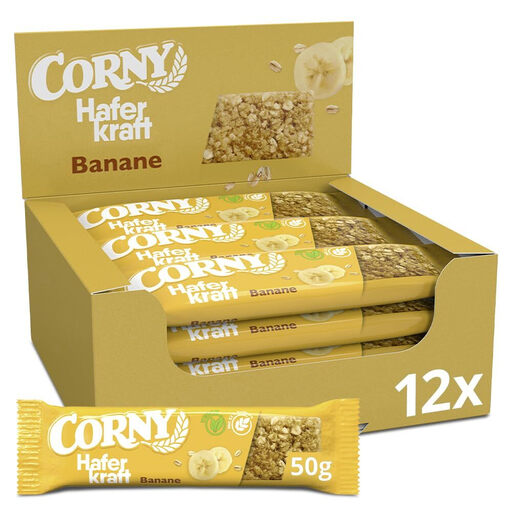 Image unavailable
Corny Haferkraft Banana oat bars, 12 × 50 g
If you’re planning to eat a whole 50-g bar, compare its carbohydrate and sugar content with your personal targets.
The product name doesn’t include a free-from claim. If you have a specific dietary requirement, check the labelling and ingredients on the current packaging.
View at Joybuy
Frequently asked questions
Is a bar with no added sugar automatically suitable for people with diabetes?
No, you can’t tell whether it’s suitable from ‘no added sugar’ alone. It may contain naturally occurring sugars, so check the total carbohydrates for your portion, the sugar content and the ingredients list.
Do ‘sugar-free’ and ‘no added sugar’ mean the same thing?
No, the claims describe different characteristics. Lebensmittelklarheit points out that a product with no added sugar may still contain naturally occurring sugars. Your choice should also take account of the nutritional information and the amount you actually eat.
Is a gluten-free bar also free from other allergens?
No, ‘gluten-free’ doesn’t tell you whether a product is free from all other allergens. If you have an allergy, check the ingredients and information for the specific bar. If you have diabetes, the carbohydrate content and portion size matter too.
Which figure matters when planning your carbohydrate intake?
The key figure is the amount of carbohydrates in the portion you actually eat. Check the weight of each bar, the nutritional information and, if relevant, the number of portions per pack. How it fits into your treatment plan will depend on your individual guidance.
Is a high fibre content enough to choose a bar?
No, fibre is only one part of the nutritional information. Compare the carbohydrates and portion size too, and check the ingredients if you need to avoid particular allergens.


