When choosing a free-from snack bar for the school day, the first thing to consider is which specific ingredient needs to be avoided. A bar labelled gluten-free does not automatically answer questions about nuts, milk or soya; the information for the particular variety on the packet is what matters.
Who needs to take particular care when choosing?
Children who need to avoid a specific ingredient
If you need to avoid gluten, milk or soya, for example, you’ll need information about the individual variety rather than a general free-from claim. Always check the ingredients and allergen information on the packet.
Children with a nut allergy
Gluten-free or vegan doesn’t mean nut-free. For fruit and nut bars and some protein bars, it’s particularly important to check which nuts are listed and look for other allergen information.
Children with several dietary requirements
If you’re looking for a bar to take on the go and also want it to be vegan, lactose-free or soya-free, for example, check that the specific variety meets all the requirements you have.
What should you look for when buying?
First, work out exactly what needs to be avoided. Then compare the information for each bar; how easy it is to carry and the portion size only come into it after that.
| Criterion |
What to check |
Who it matters most to |
| Specific ingredient to avoid |
Check the gluten-free claim and the variety’s ingredients list against the ingredient you need to avoid, and look out for highlighted allergens. |
If I need to avoid a particular ingredient, a general free-from label isn’t enough for me. Around 45% of consumers put checking for the specific ingredient they need to avoid first. |
| Several requirements |
Check that the same variety meets every requirement, such as being gluten-free, lactose-free or soya-free. |
I need a snack bar that meets several of my requirements at once, without assuming that one claim applies to the others. This combination is the priority for around 33% of consumers. |
| School break and ingredients |
Check the portion size and the ingredients, including which nuts are listed, on the packet. |
For a short break, I want a bar that’s easy to take with me and has a clear ingredients list, unless I have another requirement that takes priority. This practical choice is the main consideration for around 22% of consumers. |
Common misconceptions
-
‘Free from’ doesn’t mean free from all allergens
A gluten-free or vegan bar may still contain nuts or other ingredients that you need to avoid.
Work out exactly what needs to be avoided, then read the ingredients and allergen information for the variety you want.
-
‘Gluten-free’ doesn’t mean zero gluten
Under Commission Implementing Regulation (EU) No 828/2014, foods labelled ‘gluten-free’ can contain no more than 20 mg of gluten per kg.
If you need to avoid gluten, look for the relevant label on the packet and follow any individual advice from a healthcare professional.
-
A brand-wide claim won’t necessarily apply to every variety
Ingredients and free-from claims can vary between bars from the same brand.
Check the information on the current packet of the variety you’re actually planning to pack.
Brands to consider
RAWBITE
RAWBITE describes its fruit and nut bars as vegan and gluten-free.
- The brand lists its main ingredients, including almonds and cashews.
- As they contain nuts, these bars aren’t a suitable choice for anyone with a nut allergy.
health yeah.
health yeah. markets its bars as free from gluten, soya and lactose.
- The specific claims make it easier to check whether a bar meets several requirements.
- Check the ingredients and allergens for the variety you choose.
HistaFood
HistaFood describes its organic KörnerRiegel as gluten-free, lactose-free, vegan and soya-free.
- The product description lists several dietary features and its ingredients.
- HistaFood specifically says the bar is unsuitable for people with salicylate or sorbitol intolerance, or an oral nickel allergy.
BE-KIND
BE-KIND offers gluten-free bars and a Protein Max bar.
- The gluten-free claim can help you shortlist varieties labelled as such.
- BE-KIND lists peanuts as a main ingredient in its Protein Max bar; gluten-free doesn’t mean peanut-free.
Joybuy bars labelled gluten-free
This bar may be suitable for the school day if you’re specifically looking for one labelled gluten-free. If you need to avoid other ingredients too, check the ingredients and allergen information on the packet of the specific product.
 No image available
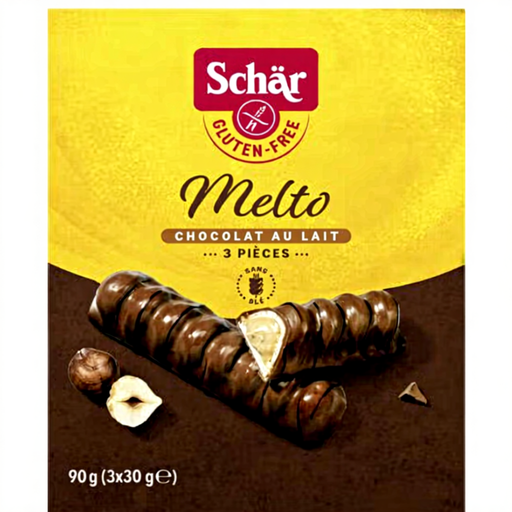
Schär Melto Hazelnut Wafer Bars, gluten-free, 3 × 30 g
A good option for the school day if you’re looking for a bar specifically labelled gluten-free. The pack contains three bars, each weighing 30 g. If you need to avoid hazelnuts, milk, soya or other nuts, check the ingredients and allergen information on the current packet before buying.
View at Joybuy
Frequently asked questions
Is a ‘gluten-free’ label enough for coeliac disease?
Under Commission Implementing Regulation (EU) No 828/2014, ‘gluten-free’ refers to foods containing no more than 20 mg of gluten per kg. Check the packet and follow professional advice to decide whether a particular bar meets your individual needs.
Is a gluten-free bar also free from nuts, milk and soya?
No. ‘Gluten-free’ refers to gluten and doesn’t tell you whether the bar contains these other ingredients. Check the ingredients list and highlighted allergens for the variety you want.
Does the packet have to mention possible traces of allergens?
No. According to the consumer advice centre, there’s no legal requirement to label unintended traces. So, if you have a severe allergy, the absence of a trace warning isn’t enough on its own to make a decision.
What should you check before packing a bar for the school day?
Check the ingredients, highlighted allergens and the specific free-from claims you need for that variety. An individually wrapped bar is easy to take along for the school run and break time.


