What should you look for when buying?
First, identify the specific substance your child needs to avoid. Then check the shape of the pieces and, for savoury snacks, compare the salt content per 100 g.
| Criteria |
What to check when buying |
Who it matters most to |
| Specific allergen |
Check the allergen your child needs to avoid against the ingredients list and highlighted allergen information on the current pack; also look out for any precautionary ‘may contain’ statements. |
If my child has a diagnosed allergy, I need to know whether the product contains the specific substance they need to avoid. For around 42% of consumers, checking for a particular allergen is the main consideration. |
| Gluten-free or lactose-free labelling |
Look for the specific label you need, and check the other ingredients and allergen information separately. |
I’m looking for a clearly labelled gluten-free or lactose-free option, without assuming that this means it’s free from other allergens. For around 33% of consumers, this type of labelling is the main selection criterion. |
| Piece size and salt |
Check for whole nuts and pieces of nuts in snack mixes; for savoury snacks, compare the salt content per 100 g on the nutrition information. |
For my toddler’s snack, I mainly want to avoid pieces of nuts and very salty snacks. Around 25% of consumers prioritise these points when choosing. |
Brands and own-label products: examples
The information below applies to the specific products named, not to each brand’s entire range.
REWE frei von
REWE sells gluten-free organic pretzel sticks as a savoury snack.
- REWE labels this particular product gluten-free, lactose-free, vegan and organic.
- REWE states that the product may contain traces of egg, sesame and soya, and contains 3,6 g of salt per 100 g. The label doesn’t automatically make these pretzel sticks a suitable snack for every toddler.
EDEKA / GUT&GÜNSTIG
The GUT&GÜNSTIG Snack Mix is an example of a traditional snack mix where you need to check the allergens for that specific product.
- EDEKA provides allergen information for this particular Snack Mix.
- The listed allergens include wheat, barley, sesame and milk; EDEKA also states that it contains 2,9 g of salt per 100 g. This product isn’t a general-purpose free-from option.
Lorenz
NicNac's Original shows why a snack containing peanuts needs to be considered separately from a toddler’s snack.
- Lorenz lists peanuts as an ingredient, making up 51% of the product, as well as other ingredients including wheat flour.
- Because it contains peanuts, this product shouldn’t be chosen for a toddler without careful checks: the German Federal Institute for Risk Assessment warns of the risk of nuts and pieces of nuts entering the airways.
funny-frisch
goldfischli Original is an example of why you need to check each snack’s ingredients and nutritional information individually.
- funny-frisch publishes the ingredients for this particular product, including wheat flour and barley malt extract.
- goldfischli Original may contain sesame and milk, and contains 2,9 g of salt per 100 g. It therefore can’t be considered allergen-free across the board.
Suitable products at Joybuy
If you’re looking for a gluten-free alternative to a traditional snack mix, individually packaged snack sticks are another option. If your child has a specific allergy, the information on the pack remains essential.
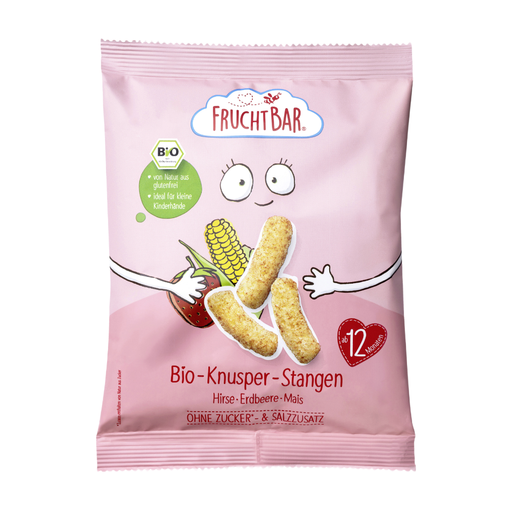 Image unavailable
FruchtBar Bio Crispy Sticks Millet & Strawberry, 30 g
Gluten-free millet and strawberry sticks for anyone looking for an alternative to a snack mix. The pack contains 30 g. Check the age recommendation for your child and, if they have a specific allergy, check the ingredients and any precautionary ‘may contain’ statements on the current pack.
View at Joybuy
Frequently asked questions
Does ‘free from’ mean a snack contains no allergens?
No. The claim applies to the specific substance named. For example, ‘gluten-free’ doesn’t tell you whether peanuts, sesame, egg or soya are relevant to that particular product. So check the ingredients and allergen information on the pack.
If my child has an allergy, is it enough if there’s no ‘may contain’ statement?
No. The absence of a ‘may contain’ statement alone doesn’t answer every question about possible accidental contamination. Check the information on the current pack against your child’s individual requirements, rather than assuming the product is suitable just because there’s no such statement.
Are snack mixes containing nuts suitable for toddlers?
Snack mixes with whole nuts or pieces of nuts shouldn’t be chosen for toddlers without careful checks. The German Federal Institute for Risk Assessment highlights the increased risk of nuts or pieces of nuts entering the airways, particularly for children under four.
Are gluten-free pretzel sticks automatically a suitable snack?
No. Being gluten-free says nothing about other allergens or the salt content. REWE states that its gluten-free organic pretzel sticks may contain traces of egg, sesame and soya, and contain 3,6 g of salt per 100 g. Check this information for your child, and serve savoury snacks only as a small, occasional portion.


