
Lieferung heute & morgen

Qualitätsgarantie

Willkommens-Angebote freischalten: KOSTENLOSE Lieferung | Bis zu 80 % RABATT | Kostenlose 30-Tage-JoyPlus-Testphase
App herunterladen
Purchasing a new cooker is a major decision for any kitchen. A freestanding cooker with a ceramic hob is often the top choice, as it combines a cooktop and an oven in one appliance and offers flexible installation. However, the market is flooded with appliances boasting seemingly endless features and marketing promises. This can complicate the selection process and lead to expensive purchasing errors.
As your Joybuy Product Recommendation Officer, I will help you filter the essential information. In this guide, I'll show you the most common pitfalls and the crucial features you should look for to find an appliance that truly fits your needs.
Before we dive into the important features, let's look at the typical mistakes that often lead to dissatisfaction. If you know what they are, you can actively avoid them.
To avoid a bad buy, focus on the following three core aspects. These determine how well the cooker performs in everyday use.
Modern ovens offer more than just top and bottom heat. An indispensable feature is a cooker with true convection. A ring heating element with a fan distributes heat evenly throughout the oven cavity. This allows for baking on multiple levels simultaneously and ensures consistent results for roasts and casseroles.
For the ceramic hob, you should look for flexible cooking zones. A dual-circuit zone can be adapted for small pots and large pans, while a roaster zone activates an oval-shaped area for large roasting pans. This saves energy and makes cooking more convenient.
A freestanding cooker with self-cleaning can significantly reduce kitchen chores. Here is an objective breakdown of the most common systems:
Weigh how intensively you use the oven and how much cleaning effort you are willing to invest.
On the EU energy label, don't just look at the efficiency class; compare the energy consumption per cycle in kWh for conventional mode and fan/convection mode. A lower value means lower running costs.
Material quality is also crucial for longevity. A stainless steel freestanding cooker is not only visually appealing but also robust and easy to care for. Look for well-finished control knobs and a sturdy oven door with double or triple glazing, which keeps the heat inside and the exterior cool.
Here are two models that represent a considered choice for different user profiles based on their objective features.
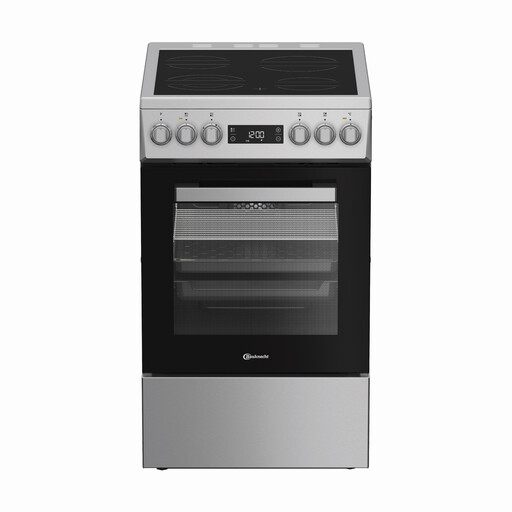
Why it's a good fit: This Bauknecht freestanding cooker focuses on the essentials: reliable cooking and baking results. It is ideal for households looking for solid basic features without costly extras, but who don't want to compromise on important functions like true convection.
The appliance features a hydrolytic cleaning function. This is clearly communicated as a steam-based cleaning aid and doesn't create false expectations of fully automatic pyrolysis, which keeps the purchase price fair.
Offers 8 oven functions including true convection and a relatively low energy consumption of 0.76 kWh/cycle in convection mode, which is a solid value for its Energy Efficiency Class A rating.
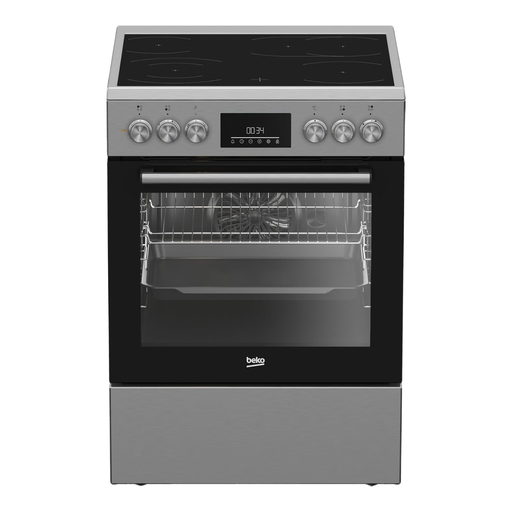
Why it's a good fit: With a large 72-litre oven and a flexible hob, this cooker is designed for families or ambitious home cooks who regularly prepare larger meals and need flexibility.
The hob's roaster and dual-circuit zones prevent the problem of pots and pans not matching the cooking zone. The SteamShine function is declared as a steam cleaning aid, which sets realistic expectations.
The above-average oven capacity of 72 litres offers plenty of space. The 8 heating modes, including true convection with a ring heating element, provide versatile cooking options.
We have compiled a comprehensive, up-to-date list of products that meet the selection criteria mentioned here and comply with German safety regulations.
1. What is the difference between true convection and fan-assisted convection in a freestanding cooker? With fan-assisted convection (Umluft), a fan distributes the heat generated by the top and bottom heating elements throughout the oven. With true convection (Hei?luft), a dedicated ring heating element located directly in front of the fan heats the air. This results in even faster and more uniform heat distribution, which is particularly advantageous when baking on multiple levels.
2. What is the average lifespan of a freestanding cooker with a ceramic hob? The lifespan of a freestanding cooker depends heavily on the intensity of use and its maintenance. With regular cleaning and proper use, high-quality appliances can last for 10 to 15 years. The quality of the heating elements, electronics, and mechanical parts like hinges and knobs is crucial.
3. Does every freestanding electric cooker require a high-voltage connection? The vast majority of freestanding cookers with a ceramic hob and oven require a three-phase connection (400 V), colloquially known as high-voltage power, to achieve full functionality. The connection must be carried out by a qualified electrician. There are very few lower-power models that can be plugged into a standard 230 V socket, but their performance is severely limited. Always check this before purchasing.