
Lieferung heute & morgen

Qualitätsgarantie

Willkommens-Angebote freischalten: KOSTENLOSE Lieferung | Bis zu 80 % RABATT | Kostenlose 30-Tage-JoyPlus-Testphase
App herunterladen
A freestanding freezer offers a flexible and efficient way to expand your food storage. Whether for stockpiling, freezing produce from your own garden, or organising meals for the week, choosing the right appliance is crucial. This article serves as a guide to help you understand the most important features and make an informed decision. We present a selection of models that cover different requirements in terms of size, technology, and features.
Selecting the right model depends on your individual needs. The following points will help you narrow down the options and find the perfect appliance for your household.
The required capacity is a key criterion. As a rule of thumb, you can plan for about 50 to 80 litres per person in the household.
A No-Frost freezer is one of the most practical innovations of recent years. This technology prevents the formation of ice and frost on the interior walls and on the frozen goods. A convection system removes moisture from the freezer compartment, completely eliminating the need for manual defrosting. This not only saves time and effort but also ensures a constant temperature and more efficient energy consumption, as thick layers of ice do not impair cooling performance.
The running costs of a freezer that operates 24/7 are an important factor. The EU energy label provides information on electricity consumption. The classes range from A (very efficient) to G (less efficient). An appliance with a better energy efficiency class can lead to significant savings over the years.
The noise level, measured in decibels (dB), is particularly relevant if the appliance is placed in an open-plan kitchen or another quiet area. A quiet freezer with a value below 40 dB is generally not perceived as disruptive.
Here we present three models that stand out for their different features and are suitable for various use cases.

What sets this model apart The Comfee' RCU60WH2(E) is a compact and space-saving solution. With its small dimensions (44.5 D x 47.5 W x 84.5 H cm), it fits easily under standard countertops and is ideal for small spaces.
Pros
Who is this appliance for? This model is a great choice for singles, students, small offices, or as a secondary appliance for households that need specific, compact additional freezer space.
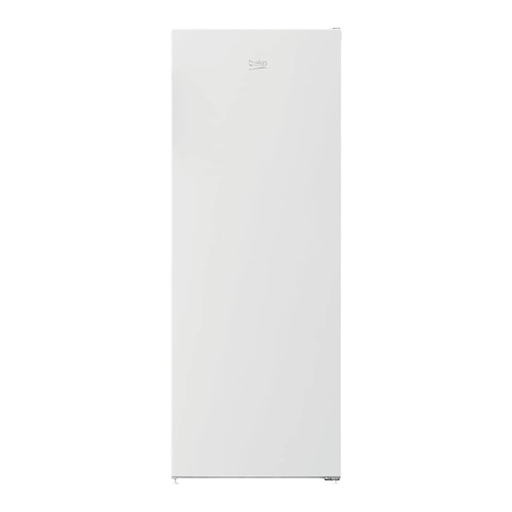
What sets this model apart The Beko freezer RFNM200T40WN combines a solid 177-litre capacity with convenient No-Frost technology. A special feature is its ability to operate in unheated rooms with ambient temperatures as low as -15°C.
Pros
Who is this appliance for? Ideal for couples and small families looking for a low-maintenance appliance with medium capacity. Its robustness against low ambient temperatures makes it an excellent choice for placement outside the main living area.
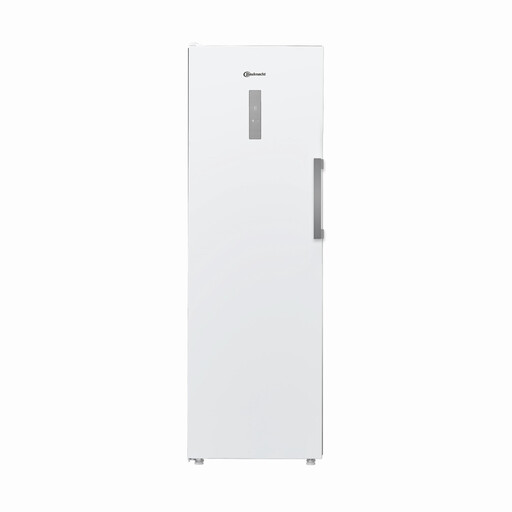
What sets this model apart The Bauknecht freezer GKN 18660DW offers a very large capacity of 286 litres and is exceptionally quiet with a noise emission of only 34 dB. This makes it perfect for open-plan kitchens.
Pros
Who is this appliance for? This model is aimed at large families or demanding users who need plenty of space, high-end features, and particularly quiet operation.
If the models presented here do not exactly match your requirements, you can find a wider selection of appliances in our category. There, you can filter by specific features such as size, brand, or energy efficiency.
Discover more white freezers here
1. What does “No Frost” mean in a freezer? No-Frost technology prevents ice from forming in the freezer compartment by using a convection system that actively removes moisture. This eliminates the need for manual defrosting, keeps the temperature constant, and optimises energy consumption.
2. Where can I place a freestanding freezer? A freestanding freezer can generally be placed in any well-ventilated room. Pay attention to the climate class specified by the manufacturer, which defines the optimal ambient temperature range. Some models are specifically designed for operation in cooler rooms like a basement (down to -15°C ambient temperature).
3. How much capacity do I need? A common recommendation is to plan for about 50 to 80 litres of capacity per person in the household. If you frequently buy in bulk, hunt, or process a large garden harvest, a larger capacity of over 100 litres per person may be useful.