Choosing a freestanding fridge-freezer involves analysing technical parameters that should be tailored to your household's individual needs. Key criteria include usable capacity, energy efficiency class, cooling technology, and noise emissions. This article highlights the essential features and presents a selection of models with various specifications.
What to Look For When Choosing: A Technical Guide
Your decision should be based on a balance of objective performance data and the specific conditions of your household.
1. Capacity and Dimensions
The required capacity depends directly on the size of your household. The following benchmarks can serve as a guide:
- Single-person household: A capacity of 100 to 150 litres is generally sufficient.
- Two-person household: Appliances with 150 to 250 litres of capacity are a popular choice.
- For families (three or more people): A capacity of 250 litres or more is recommended to accommodate the storage needs for larger quantities of food.
Before purchasing, measure the available space precisely, and remember to account for the necessary clearance from walls and other furniture to ensure adequate ventilation.
2. Energy Efficiency Class
The energy efficiency class, shown on the EU energy label on a scale from A (most efficient) to G (least efficient), is a key factor in long-term running costs. An energy-efficient appliance, for example in class B or C, consumes significantly less electricity than models in lower classes. This not only helps the environment but also your budget.
3. Cooling Technologies
Modern fridge-freezers offer various technologies to improve food preservation and user convenience.
- No Frost: This technology prevents ice and frost from forming in the freezer compartment by actively reducing humidity. This completely eliminates the need for manual defrosting and keeps energy consumption consistently low.
- Low Frost: A variation where ice build-up is significantly reduced but not entirely prevented. Defrosting is required less frequently and is easier than with appliances lacking this feature.
- 0°C Zone: Special drawers where the temperature is kept near 0°C and humidity is regulated. This zone is ideal for storing perishable foods like meat, fish, fruit, and vegetables, as it preserves their freshness and nutrients for longer.
4. Noise Emissions
A low operating noise level is crucial, especially in open-plan kitchens. Noise emissions are measured in decibels (dB). Appliances with a rating below 40 dB are considered quiet. Models around 35 dB are barely audible.
5. Design and Material
Freestanding models are available in various designs and colours. Stainless steel surfaces are robust and easy to clean, often featuring an anti-fingerprint coating. Classic white finishes or modern black designs allow for seamless integration into different kitchen styles.
Our Top Picks for 2026
The following models have been selected based on their technical specifications and practical benefits for different user profiles.
Comfee by Midea 174L Freestanding Fridge Freezer, Black RCB169DK2 (E)
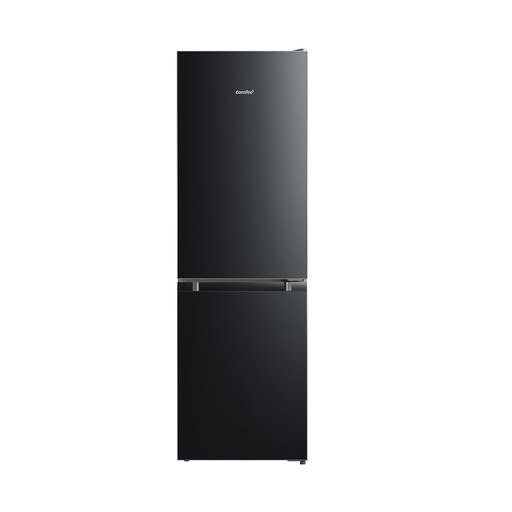
- Why we recommend it: Thanks to its compact dimensions and well-designed interior, this model is perfect for smaller households or as a secondary appliance. The Low Frost technology reduces maintenance.
- Advantages:
- Compact Capacity: 115L fridge and 59L freezer space within a small footprint (470x511x1500mm).
- Low Frost Technology: Significantly reduces ice build-up in the freezer compartment.
- Flexibility: The reversible door hinge and height-adjustable feet allow for easy adaptation to your space.
- LED Lighting: Ensures bright and even illumination of the interior.
- Best for: Ideal for single-person households, student flats, or offices where space is limited.
Bosch KGN49AIBT Serie 6 Freestanding Fridge-Freezer, 440 L, Energy Class B
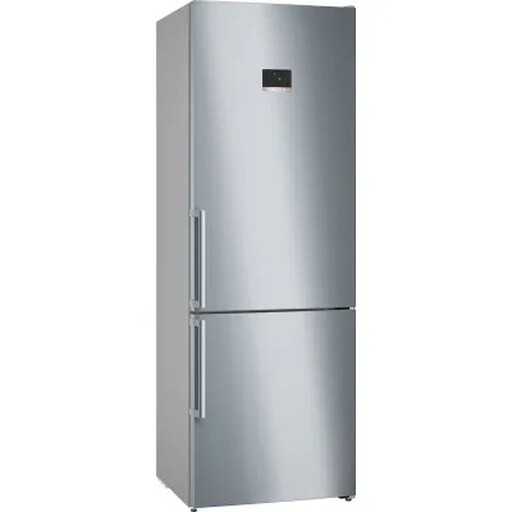
- Why we recommend it: This model combines a very large capacity with high energy efficiency (Class B) and advanced freshness technologies. It is designed to meet the needs of demanding households.
- Advantages:
- High Capacity: 311L in the fridge and 129L in the freezer provide ample space.
- Total No Frost: No more manual defrosting required.
- VitaFresh XXL (0°C Zone): Two separate freshness drawers for meat/fish and fruit/vegetables to extend their shelf life.
- Extremely Quiet: At just 35 dB, its operation is barely audible.
- Premium Design: Brushed stainless steel front with an anti-fingerprint coating.
- Best for: An excellent choice for families or households that store large quantities of fresh food and value energy efficiency and low noise levels.
Beko Fridge-Freezer, Energy Efficiency Class C, 35 dB, 301 L, NoFrost, White
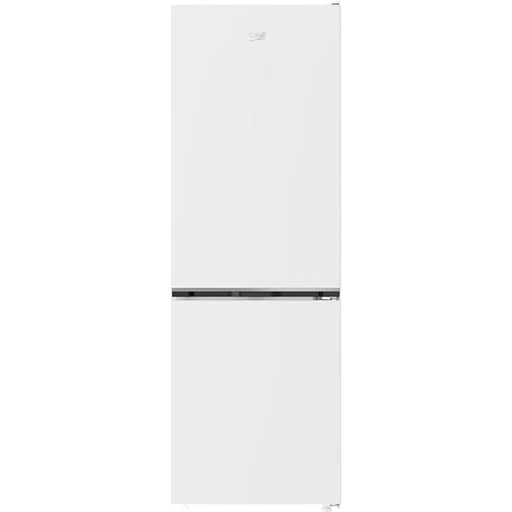
- Why we recommend it: It offers a balanced combination of modern technology, good energy efficiency, and practical features like HarvestFresh, which, according to the manufacturer, helps preserve vitamins in fruit and vegetables for longer.
- Advantages:
- Good Energy Efficiency: Rated in Class C.
- NoFrost Dual Cooling: Separate cooling circuits for the fridge and freezer prevent odour transfer and ice build-up.
- HarvestFresh Technology: A 3-colour light system in the vegetable drawer simulates the natural daylight cycle.
- Quiet Operation: At 35 dB, this appliance is also very quiet.
- SmoothFit Design: The door opens flush, allowing the appliance to be placed directly next to a wall or piece of furniture.
- Best for: Suitable for couples and small families looking for a modern, energy-efficient appliance with innovative freshness features.
Discover More Models
If the models presented here don't perfectly match your requirements, you can find a wider selection of appliances with different specifications and price points in our main Refrigeration category. There, you can filter specifically by size, energy class, and other features.
Frequently Asked Questions (FAQ)
1. What does "No Frost" mean in a fridge-freezer? No Frost is a system that circulates air to remove moist air from the freezer compartment. This prevents ice crystals from forming on food and the interior walls. The main advantage is that manual defrosting of the freezer is no longer necessary, which saves time and ensures consistently efficient operation.
2. What capacity does a family of four need? For a family of four, a total capacity of at least 300 litres is recommended. This should be split into approximately 200-240 litres for the fridge section and 80-100 litres for the freezer. The actual requirement can vary depending on shopping habits (e.g., a large weekly shop vs. daily shopping).
3. What is a good energy efficiency class for a new fridge-freezer? Following the introduction of the new EU energy label in 2021, the standards have become stricter. Appliances in classes A, B, and C are considered very energy-efficient. A model in one of these classes will lead to noticeably lower electricity costs over the appliance's lifespan compared to models in classes E, F, or G.
Written by: Joybuy Product Recommendation Officer

