
Lieferung heute & morgen

Qualitätsgarantie

Willkommens-Angebote freischalten: KOSTENLOSE Lieferung | Bis zu 80 % RABATT | Kostenlose 30-Tage-JoyPlus-Testphase
App herunterladen
Buying a new fridge-freezer is a decision that will shape your daily kitchen life for years to come. But the market is flooded with marketing promises and technical specs that confuse more than they clarify. Many buyers only realise months later that their new appliance is louder than expected, uses more electricity, or that its advertised "automatic defrost" feature still requires regular manual defrosting.
As your Joybuy Product Recommendation Officer, I'm here to help you avoid these pitfalls. We'll focus on the facts that truly matter, so you can find an appliance that fits your household, your budget, and your peace of mind.
Before we dive into the important features, let's shed light on the three most common mistakes that lead to dissatisfaction.
To make an informed decision, you should check three core technical aspects. These determine the running costs, convenience, and longevity of your fridge-freezer.
Since March 2021, a new EU energy label with a scale from A (very efficient) to G (inefficient) has been in effect. Old "A+++" ratings are no longer relevant. A modern appliance with energy efficiency class C is already very energy-efficient and a great choice for eco- and budget-conscious households. Pay attention to the annual consumption in kilowatt-hours (kWh/a) on the label to directly compare running costs.
The operating noise is specified in decibels (dB). Especially in open-plan kitchens, a quiet fridge-freezer is crucial for your comfort.
The right size depends on your household size and shopping habits. As a rule of thumb:
Also, pay attention to practical details. A reversible door hinge allows for flexible placement in any kitchen layout. Adjustable glass shelves and door compartments help you make the most of the interior space. Models in black or stainless steel finish also add a modern design touch.
Here are some models that represent a considered choice for different needs, based on objective criteria.
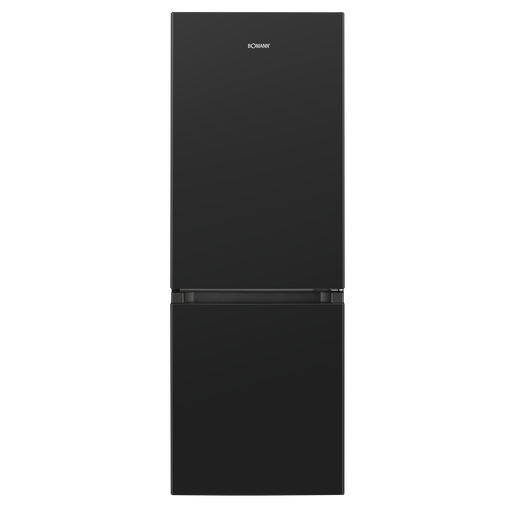
Why This Fits Their Persona: With 175 litres of usable capacity and compact dimensions, this appliance is ideal for a first apartment or small kitchen. It offers all the basic functions without unnecessary and expensive extras. The modern black design fits well into contemporary interiors.
The manufacturer clearly states the noise level is 39 dB, so you won't face any nasty surprises. The reversible door hinge ensures maximum flexibility during installation and prevents placement issues.
Excellent value for money; quiet operation for its size; flexible placement thanks to its compact design and reversible door hinge.
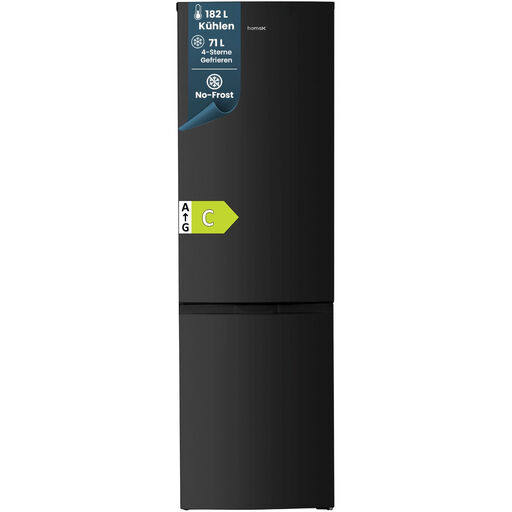
Why This Fits Their Persona: With 253 litres of usable capacity, this model offers ample space for a family. The combination of a very good energy efficiency class C and Total No-Frost technology fulfills the desire for low consumption and high convenience.
This appliance features true Total No-Frost technology, which makes manual defrosting obsolete. The energy efficiency class C rating under the new standard objectively proves its low power consumption and protects against high running costs.
Very energy-efficient (Class C); full No-Frost function for maximum convenience; quiet operation at 39 dB; good amount of space for families.
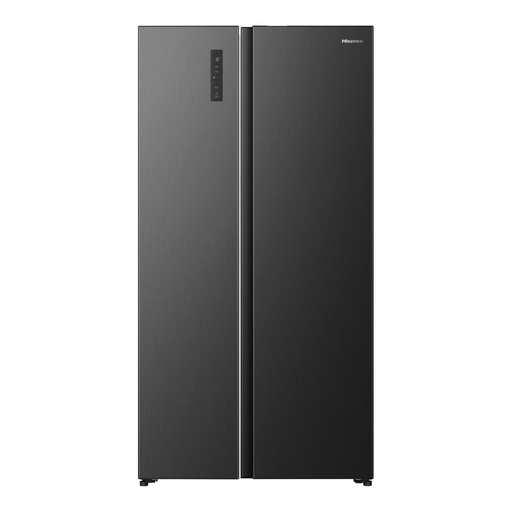
Why This Fits Their Persona: With a massive 544-litre capacity, this side-by-side model is perfect for large families or those who like to buy in bulk. It combines maximum storage space with premium features and very quiet operation.
Despite its size, this appliance is exceptionally quiet at just 35 dB, dispelling the myth that large fridges must be loud. The Total No Frost technology is a must-have here, reliably preventing ice build-up in the large freezer compartment.
Enormous capacity for maximum bulk storage; very quiet operation (35 dB); complete No-Frost technology; modern side-by-side design in black.
A freestanding fridge-freezer isn't the only solution. For open-plan kitchens or noise-sensitive environments, we have put together a special selection.
The average lifespan of a fridge-freezer is about 10 to 15 years. The actual durability depends on the quality of the appliance, correct usage according to its climate class, and regular maintenance (e.g., cleaning the seals and the interior).
The climate class indicates the optimal ambient temperature range for the appliance's operation. N/ST is a common combination and means:
Yes, following the introduction of the new EU energy label in March 2021, energy efficiency class C is a very good rating. The requirements have been made significantly stricter, so only a few, particularly economical models achieve class A or B. A class C appliance is therefore among the most efficient on the market and helps keep electricity costs low.