
Lieferung heute & morgen

Qualitätsgarantie

Willkommens-Angebote freischalten: KOSTENLOSE Lieferung | Bis zu 80 % RABATT | Kostenlose 30-Tage-JoyPlus-Testphase
App herunterladen
Purchasing a new freestanding fridge-freezer is a major decision for any household. The market is vast, and manufacturers' marketing claims are often lofty. However, not every advertised feature delivers on its promise in practice. As your Joybuy Product Recommendation Officer, I'm here to help you identify the crucial features and avoid common purchasing pitfalls, ensuring you find an appliance that truly fits your needs.
Many buyers focus on heavily advertised features that later prove to be impractical or misleading. Pay close attention to these three points:
To make an informed decision, you should focus on the technical fundamentals that determine the daily use and longevity of your appliance.
The heart of any fridge-freezer is the compressor. There is one crucial distinction here:
Manually defrosting the freezer compartment is time-consuming and energy-intensive. An ice layer of just a few millimetres can noticeably increase power consumption.
Since the switch to the new EU energy labels (scale A to G), relying solely on the energy efficiency class is no longer sufficient. A large fridge-freezer, such as a Side-by-Side refrigerator or a French Door refrigerator, can be more efficient in its annual consumption despite a seemingly lower rating like Energy Efficiency Class D or E, compared to a smaller appliance with a better class. The decisive factor is the absolute annual energy consumption in kilowatt-hours (kWh/a), which is stated on the label.
To make your choice easier, we have curated models for different household types and requirements.
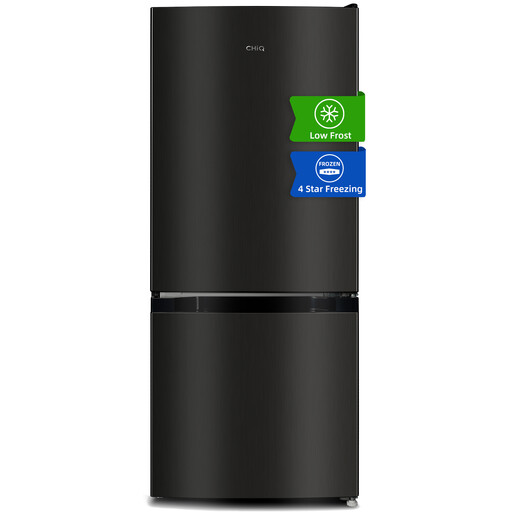
Why This Fits Their Persona: With a footprint of just 0.23 m?, this appliance is ideal for kitchens with limited space. It offers a separate 4-star freezer compartment suitable for long-term food storage—a rarity in compact models. The elegant design in black steel seamlessly integrates into modern living concepts.
This appliance bypasses the "quiet" trap with a clearly specified, low noise level of 39 dB. The Low Frost technology is honestly labelled, not promising complete freedom from ice but rather a reduction, which is a realistic and useful feature for this price range.
Compact design with a full-fledged 4-star freezer compartment reaching -24°C. The reversible door hinge offers maximum flexibility for installation.
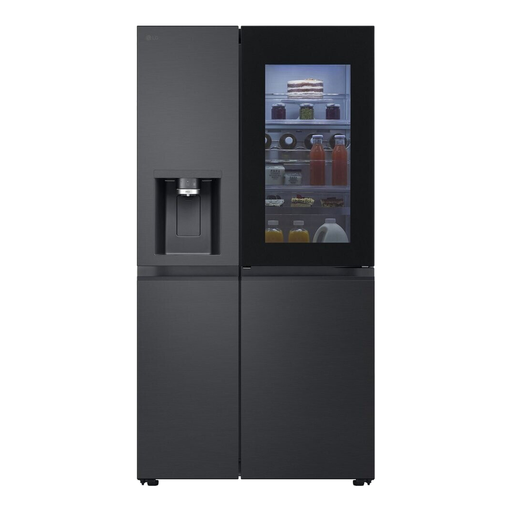
Why This Fits Their Persona: As a family refrigerator, this model offers an enormous 628-litre capacity. The Craft Ice Maker, a special fridge with an ice dispenser that produces slow-melting craft ice spheres, and the InstaView door are highlights for tech-savvy users. Control via the ThinQ app completes the smart package.
This appliance debunks the "quiet" trap with an extremely low noise level of just 35 dB (Noise Emission Class B), achieved through its high-quality inverter compressor. The Total No Frost system is not an empty promise here but a core feature that works reliably.
Outstanding features include its extremely quiet operation and innovative functions like the Craft Ice Maker. Its Energy Efficiency Class D rating is very good for an appliance of this size and feature set.
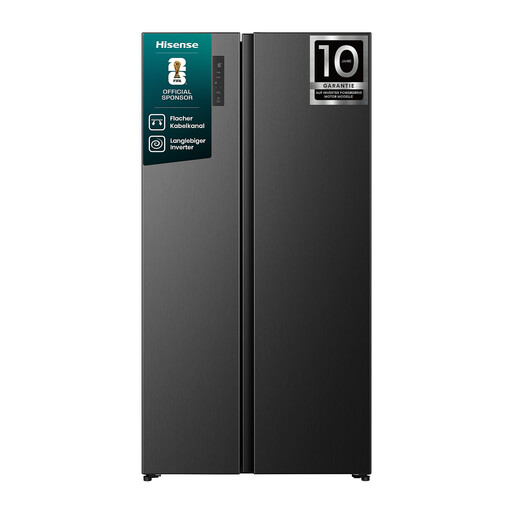
Why This Fits Their Persona: This model is an excellent choice for anyone seeking a large fridge-freezer with a modern aesthetic. The PureFlat design in elegant black is a visual highlight. With 544 litres, it offers ample space and combines this with very quiet operation and good energy efficiency.
This appliance provides concrete, verifiable performance data instead of vague promises. The noise level of just 35 dB is exceptionally low. The Energy Efficiency Class D rating is supported by a low annual consumption of 254 kWh/a, which avoids the "usable capacity" trap by successfully combining efficiency and size.
A strong combination of large capacity, high energy efficiency, and extremely quiet operation. The Metal-Tech Cooling backplate ensures stable and even temperature distribution.
We have compiled a complete, real-time list of products that fully satisfy these strict selection criteria and UK safety regulations.
1. How long does a modern fridge-freezer last? The average lifespan of a modern refrigerator is around 10 to 15 years. Models with an inverter compressor tend to have a longer life expectancy because the motor is less subject to wear and tear than in conventional units. Regular cleaning and adhering to the manufacturer's ventilation guidelines can further extend its lifespan.
2. What does the climate class on a refrigerator mean? The climate class indicates the optimal ambient temperature range in which the appliance operates efficiently. The most common classes are:
3. Is a fridge-freezer with Total No Frost really worth it? Yes, in most cases, the investment is worthwhile. You not only save yourself the chore of manual defrosting but also benefit from consistent cooling performance and lower energy consumption, as no insulating layer of ice can form. Furthermore, food stays fresh for longer and doesn't stick together.