
Lieferung heute & morgen

Qualitätsgarantie

Willkommens-Angebote freischalten: KOSTENLOSE Lieferung | Bis zu 80 % RABATT | Kostenlose 30-Tage-JoyPlus-Testphase
App herunterladen
Purchasing a new freestanding fridge-freezer is a decision that will impact your daily kitchen routine for years. However, the market is flooded with marketing promises and technical data that often confuse more than they clarify. Before you make a choice you might later regret, it's crucial to understand the most common pitfalls and know which features truly matter.
Many appliances advertise attractive features, but they don't always deliver on their promises in everyday use. Here are three areas where you should pay close attention:
To make an informed decision, you should focus on objective, measurable criteria. These three factors are crucial for most households.
The total usable capacity, specified in litres, should match your household size. A common guideline is:
Measure the available space in your kitchen precisely—height, width, and depth. Remember to account for the necessary wall clearance for ventilation. For smaller kitchens or alcoves, particularly slimline models with a width under 55 cm are a practical solution.
An energy-efficient fridge-freezer not only protects the environment but also your wallet. Compare the annual consumption in kWh shown on the EU energy label. A lower value means lower electricity costs.
For living comfort, especially in open-plan kitchens, a quiet appliance is essential. Pay attention to the decibel rating:
Two functions significantly increase flexibility and user convenience:
Here are some models that represent a considered choice for various needs, based on their objective features.
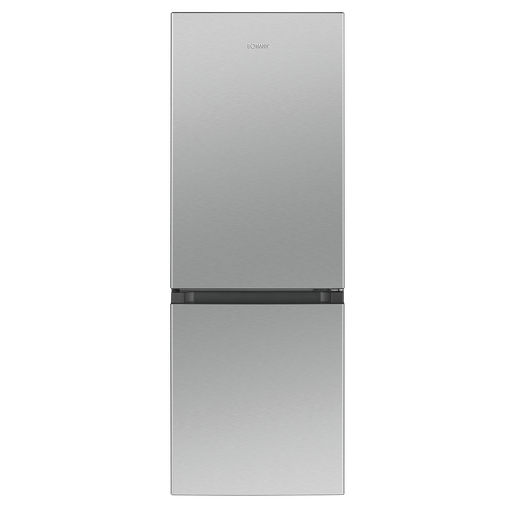
Why This Fits Their Persona: This model is ideal for singles, couples, or as a second appliance. With its slim design (49.5 cm), it fits well even in smaller kitchens. It offers solid value for money without unnecessary and expensive extra features.
It avoids the "quiet" trap with a clear specification of 39 dB—a good value for this price range. The energy consumption is transparently listed at 156 kWh/year (Class D), allowing for a clear cost projection.
Compact dimensions and a reversible door hinge offer maximum flexibility for placement. The 122L fridge and 53L freezer split is well-balanced for small households.
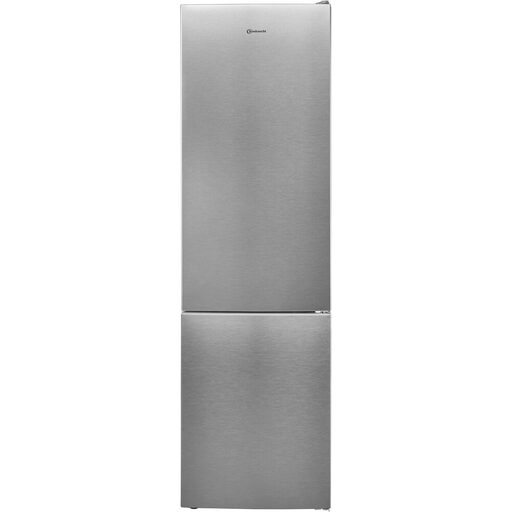
Why This Fits Their Persona: For families who need plenty of storage and want to save on long-term electricity costs. With 355 litres of usable capacity and the highest energy efficiency class (A), this appliance is a future-proof investment.
This model sidesteps the energy trap with an extremely low consumption of just 112 kWh/year (Class A). Furthermore, at 32 dB, it is exceptionally quiet, debunking any vague "quiet" promise.
The NoFrost technology completely eliminates the need for defrosting. The Multi Zone allows a compartment to be used flexibly as either a fridge or freezer. The stainless steel finish is also modern and easy to clean.
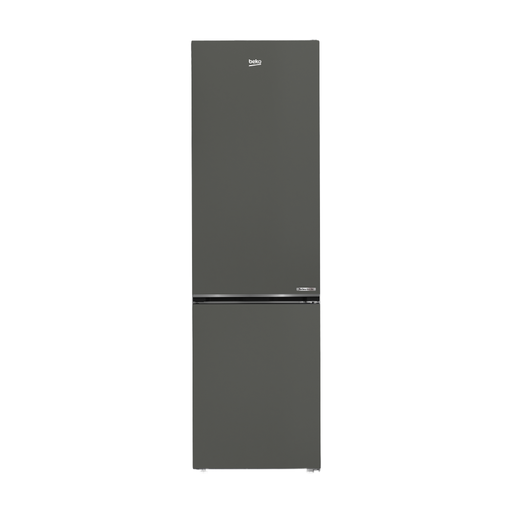
Why This Fits Their Persona: Perfect for modern, open-plan living concepts where minimal operating noise is critical. The combination of ultra-quiet operation, high efficiency, and flexible features meets the highest standards of comfort.
With a sound level of just 32 dBA, this appliance is one of the quietest on the market, making it the ideal solution for noise-sensitive environments. Its Class B energy efficiency with 112 kWh/year is also an objective top-tier value.
The SmoothFit technology allows for a 90-degree door opening without the door protruding—ideal for placement directly next to a wall. The MultiZone and HarvestFresh drawer offer additional flexibility and freshness.
We have compiled a complete, up-to-date list of products that fully meet these strict selection criteria and German safety regulations.
1. How much capacity does my fridge-freezer need? As a rule of thumb, you can plan for about 150 to 200 litres of total usable capacity for a one- to two-person household. For each additional person, you should add about 50 more litres. Also, consider your shopping habits: if you often buy in bulk or freeze large quantities, a larger freezer section is a good idea.
2. What does the climate class on a fridge-freezer mean? The climate class indicates the ambient temperature range in which the appliance operates optimally. The most common classes are:
3. Is a fridge-freezer with No Frost really worth it? Yes, in most cases, the No Frost function is a worthwhile investment. The main advantage is the huge time saving, as it eliminates the need to manually defrost the freezer. The technology also ensures a more consistent temperature, which can improve the longevity of food. Furthermore, an iced-up freezer compartment consumes more energy, so No Frost appliances operate more efficiently over their lifespan.