
Lieferung heute & morgen

Qualitätsgarantie

Willkommens-Angebote freischalten: KOSTENLOSE Lieferung | Bis zu 80 % RABATT | Kostenlose 30-Tage-JoyPlus-Testphase
App herunterladen
A fridge freezer should keep food organised, cool reliably and require as little day-to-day effort as possible. Yet product descriptions often lead to disappointing purchases: a large capacity says little about the actual layout, a good energy-efficiency rating does not replace checking annual consumption, and “quiet” is only useful when a specific decibel figure is provided.
This buying guide explains which details matter when choosing a freestanding fridge freezer and which models may suit different types of household.
A fridge freezer with a large freezer compartment may look appealing on paper. However, the key figure is the net volume. An appliance with a total capacity of 300 litres may offer considerably more fridge space or freezer space, depending on how it is divided. Families often need a different layout from couples or people who store a lot of frozen food.
So, look for separate figures covering:
A No Frost fridge freezer prevents ice from forming in the freezer compartment through air circulation and automatic defrosting. This reduces the need for manual maintenance. However, the interior, door seals and ventilation openings still need to be cleaned regularly.
Low Frost appliances develop ice more slowly, but occasional manual defrosting is still required. If you want to keep maintenance to a minimum, make sure you distinguish carefully between No Frost, Total No Frost and Low Frost.
The EU energy label ranges from A to G. For planning your costs, the stated annual consumption in kWh is also crucial. Compare appliances with a similar capacity and bear in mind that a very large American-style or side-by-side fridge freezer may use more electricity than a slim fridge freezer, despite its modern features.
A simple rule of thumb:
Annual electricity costs = annual consumption in kWh × your electricity price per kWh
Actual consumption depends on factors including room temperature, how full the appliance is, how often the door is opened and the temperature setting.
Do not just measure the recess. Also check the delivery route, door-opening area and clearance from walls. Consider:
An appliance with a depth of 63.5 cm may visibly protrude from a 60 cm kitchen worktop. American-style or side-by-side fridge freezers also have wider doors and require more room to move around.
For open-plan kitchens, small flats and work areas, the sound level in dB(A) is important. Values of 35 to 40 dB(A) are comparatively low for the models listed. Noise may seem temporarily higher while the compressor is running or during automatic defrosting.
Also check the airborne acoustical noise emission class on the EU label. A quiet fridge freezer should not be chosen solely on the basis of marketing language, but according to a specific measured value.
The freezer compartment’s 4-star rating indicates a storage temperature of at least −18 °C and confirms that fresh food can be frozen. Freezing capacity, measured in kilograms per 24 hours, shows how much food the appliance can freeze under the specified conditions.
Functions such as Fast Freeze, Super Freeze and Super Cool are useful when storing a large shop in one go. However, they should be switched off again afterwards unless the appliance does this automatically.
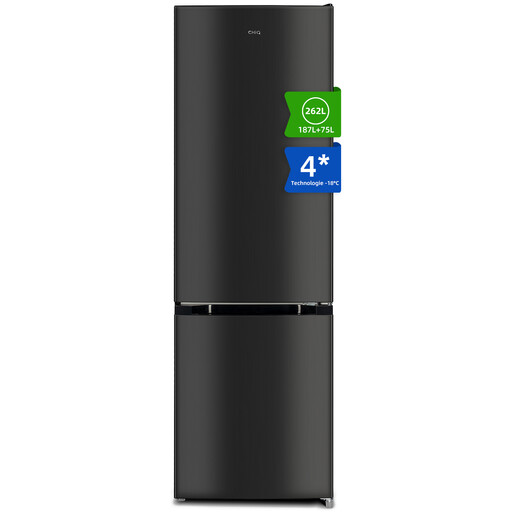
Why this product suits this profile: This 54 cm-wide appliance offers 187 litres of fridge space and 75 litres of freezer space. It is therefore well suited to smaller kitchens and households with limited room.
The product details specify the net volume, width, energy rating E and consumption of 215 kWh per year. Low Frost is clearly stated rather than being presented as a maintenance-free No Frost solution.
Compact width, reversible door hinge, 4-star freezer compartment and a noise level of 39 dB(A).
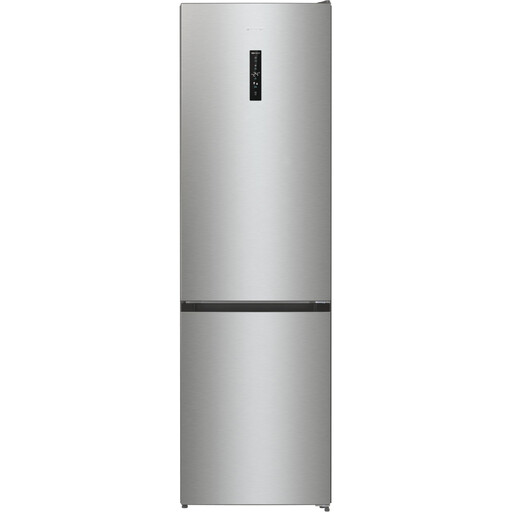
Why this product suits this profile: With 331 litres of net volume, No Frost in both compartments and a noise level of 35 dB, this model is an appealing choice for families and open-plan kitchens.
The specification sheet clearly separates fridge and freezer capacity. It also gives the annual consumption, noise level, dimensions and Super Cool and Fast Freeze functions.
Energy-efficiency class C, annual consumption of 158 kWh, 235 litres of fridge space and 96 litres of freezer space.
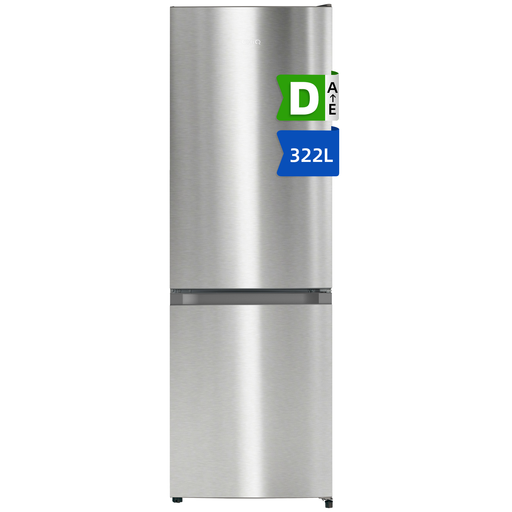
Why this product suits this profile: 226 litres of fridge space and 96 litres of freezer space provide ample room for larger shops. According to the product details, the climate classes N, SN, ST and T allow operation at temperatures from 10 to 43 °C.
The depth of 63.5 cm is clearly stated. This allows you to check before buying whether the appliance will protrude from your kitchen units.
Total No Frost, annual consumption of 196 kWh, Fast Freeze and 37 dB(A).
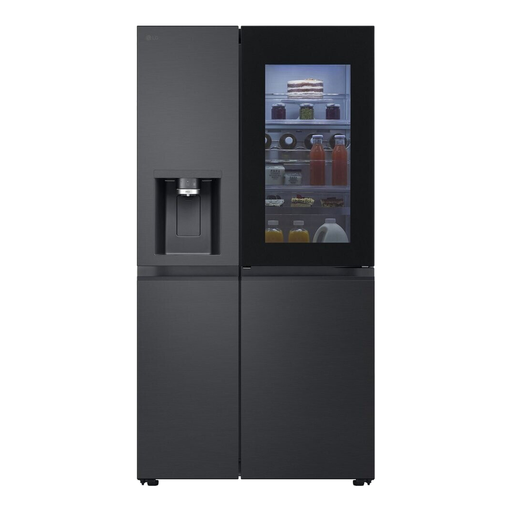
Why this product suits this profile: This side-by-side model provides 407 litres of fridge space and 221 litres of freezer space. It is designed for households that store plenty of fresh and frozen food at the same time.
The width, depth and space required with the door open are specified as 91.3 cm, 73.5 cm and up to 163.5 cm. Check these measurements against the installation location before ordering.
628 litres of total capacity, Total No Frost, 35 dB(A), water and ice dispenser, plus app control.
We have put together a complete, regularly updated list of products that fully meet these strict selection criteria and the safety regulations applicable in the EU.
As a rough guide, families can allow around 60 to 80 litres of total capacity per person. However, the right size depends on how often you shop, how much frozen food you store and how much space is available. For a four-person household, an appliance with around 300 to 400 litres may be suitable, provided the layout matches your habits.
A fridge with a freezer compartment may be sufficient for one person or a couple. Larger households will generally benefit from the greater usable storage space offered by a separate fridge freezer. Do not compare the energy rating alone: always consider the annual consumption in kWh and the respective capacities.
Its lifespan depends on the model, usage, room temperature, care and maintenance. Ensuring that the appliance is level, keeping ventilation paths clear, cleaning the door seals and opening the door as briefly and infrequently as possible can help support reliable operation. Warranty and compressor cover are governed exclusively by the details provided by the respective manufacturer.