
Lieferung heute & morgen

Qualitätsgarantie
App herunterladen
Kategorien
Choosing a freestanding fridge-freezer requires an analysis of technical specifications tailored to your household's unique needs. Key factors include net capacity, energy efficiency, cooling technology, and other special features. This article highlights the essential criteria and presents a selection of models with various specifications.
Your decision for the right appliance should be based on an objective evaluation of the following technical features.
The total capacity, measured in litres, is a primary criterion. As a rule of thumb, a one to two-person household requires about 100 to 150 litres of refrigerator capacity. Plan for an additional 50 litres for each extra person in the household. The required freezer capacity depends heavily on your personal food storage habits. Freestanding models offer placement flexibility, but you must still consider the exact dimensions (height, width, depth) and the clearance needed for the door to open.
The energy efficiency class, rated on a scale from A (most efficient) to G (least efficient), directly impacts your running costs. An energy-efficient appliance in class A or B can significantly reduce annual power consumption. Consumption is shown in kilowatt-hours per year (kWh/a) on the EU energy label, allowing for a direct comparison between different models.
Manually defrosting the freezer compartment is time-consuming and can temporarily impair energy efficiency. Modern appliances offer technological solutions for this:
Specialised freshness systems create optimal storage conditions for delicate foods. These are drawers or compartments where temperature and humidity can be regulated independently. Zones near 0°C are ideal for storing fish and meat, while compartments with adjustable humidity extend the shelf life of fruits and vegetables.
The noise level of a refrigerator is measured in decibels (dB). A quiet appliance is particularly advantageous in open-plan kitchens. Models with a noise emission below 40 dB are generally perceived as quiet. Appliances with ratings around 35 dB or lower are considered exceptionally quiet.
The external appearance and practical details contribute to overall functionality. Stainless steel surfaces with an anti-fingerprint coating are easy to clean and visually appealing. A reversible door hinge allows for flexible adaptation to your kitchen layout. Models with "Perfect Fit" or "SmoothFit" designs can be placed flush against walls or in alcoves without needing side clearance for the door.
The following selection represents appliances with different technical focuses to meet a variety of user profiles.
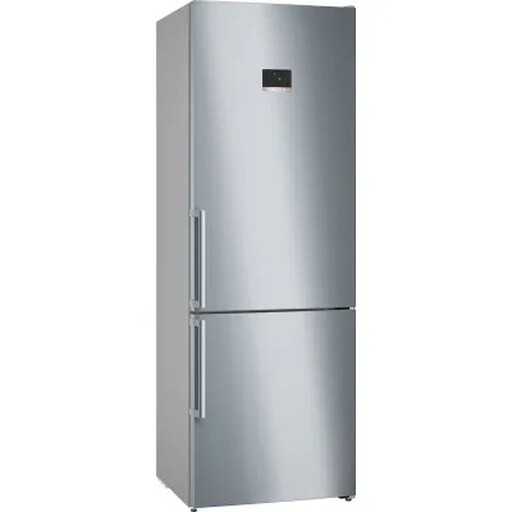
Why we recommend this product This Bosch model combines a very large 440-litre capacity with high energy efficiency (Class B) and advanced technologies. The Total No Frost function and the VitaFresh XXL freshness system offer a high degree of convenience and optimised food preservation. At just 35 dB, the appliance is also very quiet.
Pros
Who it's for This appliance is ideal for larger households and families who need high storage capacity and value maximum energy efficiency, low noise levels, and modern freshness technologies.
View details for the Bosch KGN49AIBT
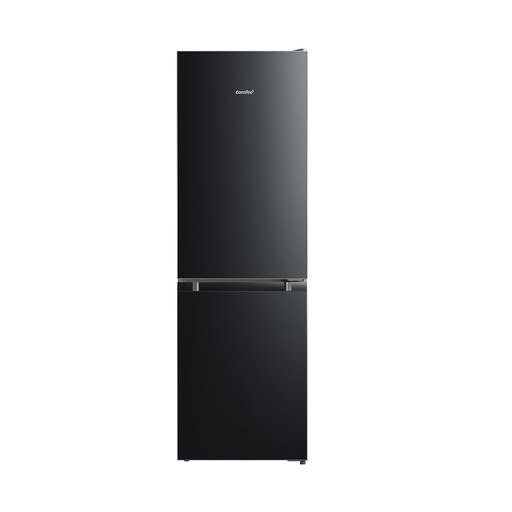
Why we recommend this product The Comfee fridge-freezer, with its 174-litre total capacity, offers a compact and budget-friendly solution. Its Low Frost technology reduces maintenance compared to static appliances. Flexibility is enhanced by the reversible door hinge and adjustable feet, simplifying integration into smaller kitchens or spaces.
Pros
Who it's for This model is a suitable choice for individuals, couples, or as a secondary appliance. It's aimed at users looking for a solid, space-saving fridge-freezer solution without complex extra features.
View details for the Comfee RCB169DK2
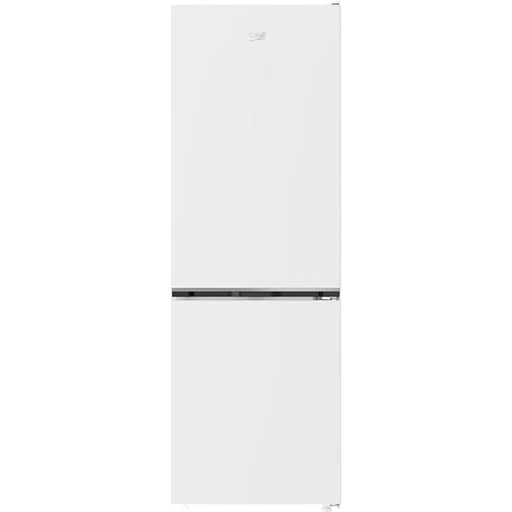
Why we recommend this product The Beko appliance represents a balanced combination of modern technologies and solid energy efficiency. With NoFrost Dual Cooling, the HarvestFresh system, and a quiet 35 dB operation, it offers features often found in higher price brackets. The SmoothFit design allows for space-saving installation.
Pros
Who it's for This model appeals to users who want modern conveniences like No Frost and innovative freshness systems but are looking for an appliance with a balanced price-performance ratio. It's an all-rounder for medium-sized households.
View details for the Beko B5RCNA346HW
If these models don't meet your specific requirements, you can find a wider selection of appliances with different capacities, energy classes, and features in our main category.
Discover more models in the Refrigeration & Freezing category.
No Frost is a technology where a fan system circulates air to remove moisture from the freezer section before it can turn into ice. This dry, cold air is then recirculated. The main advantage is that no layer of ice forms on the interior walls or on frozen food, completely eliminating the need for manual defrosting and keeping the appliance's energy efficiency consistently high.
The energy efficiency class is very important, as a fridge-freezer runs 24 hours a day. An appliance with a better class (e.g., A or B) will consume significantly less electricity over its lifetime than one with a poorer class (e.g., F or G). The initially higher purchase price for an energy-efficient model can be offset by savings on electricity bills.
Noise emission is measured in decibels (dB). A value below 40 dB is generally considered quiet and is unobtrusive in most living situations. Models at 35 dB or less are exceptionally quiet and are perfect for open-plan kitchens or noise-sensitive environments, as their operating sound is barely perceptible.