
Lieferung heute & morgen

Qualitätsgarantie

Willkommens-Angebote freischalten: KOSTENLOSE Lieferung | Bis zu 80 % RABATT | Kostenlose 30-Tage-JoyPlus-Testphase
App herunterladen
A clutter-free countertop and well-organised cupboards are the foundation of a stress-free cooking experience. A freestanding kitchen shelf promises a quick solution for lack of space and disorganisation. However, not every model lives up to its promise. Many products quickly turn out to be impractical or unstable.
As a Joybuy Product Recommendation Officer, I analyse product information daily to help you distinguish functional, long-lasting solutions from short-lived marketing trends. Before you make a purchase, you should be aware of three common pitfalls that separate a good shelf from a useless one.
The selection of kitchen shelves is vast, but many models have hidden flaws that only become apparent with daily use. Pay attention to these three critical points to avoid making a bad purchase.
A common problem is shelves that wobble under even a light load. Thin metal struts or poorly finished engineered wood panels often lack the necessary stability for heavy stacks of plates, canned goods, or glass bottles. The stated maximum load capacity is determined under ideal conditions and is often unrealistic in everyday use if the construction itself is fragile.
A shelf can look as stylish as it wants—if the clearance between tiers is too low to accommodate a standard oil bottle or a salt shaker, it fails to serve its purpose. Many models advertised as a countertop shelf are, in practice, only suitable for small spice jars. Before buying, measure the height of your most commonly used containers and compare it with the product dimensions.
The kitchen is a space with fluctuating humidity and occasional splashes. Unsealed particleboard or MDF panels can swell and lose their shape. Even metals labelled as "rustproof" can quickly show signs of corrosion if they are made from a low-quality alloy or have a damaged coating. A high-quality wood and metal kitchen shelf is distinguished by a meticulous seal on its wood surfaces and a robust powder coating on the metal.
To make an informed decision, you should focus on objective and measurable characteristics. These three parameters are crucial for the functionality and longevity of your kitchen shelf.
The choice of material affects stability, durability, and maintenance.
A reliable kitchen organiser must stand securely. Look for the following features:
Your needs can change. Flexible shelving systems adapt.
Based on the criteria mentioned, we have identified a few products that offer a well-thought-out solution for specific user profiles.
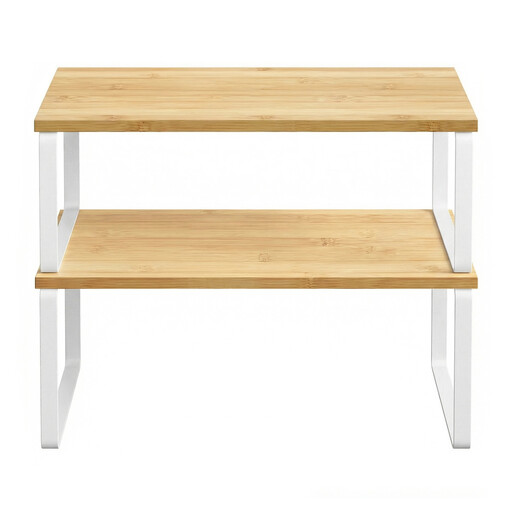
Why This Fits Their Persona: Ideal for anyone seeking a flexible and cost-effective solution to maximise storage space in kitchen cupboards or on small countertops. Its adaptability is its greatest advantage.
The expandable and stackable design bypasses the pitfall of impractical dimensions. You can adjust the shelves to fit the available space, rather than being constrained by fixed measurements.
The combination of a metal frame and an engineered wood shelf offers a good balance of stability and aesthetics. The ability to stack, nest, or use the shelves separately provides high modularity.
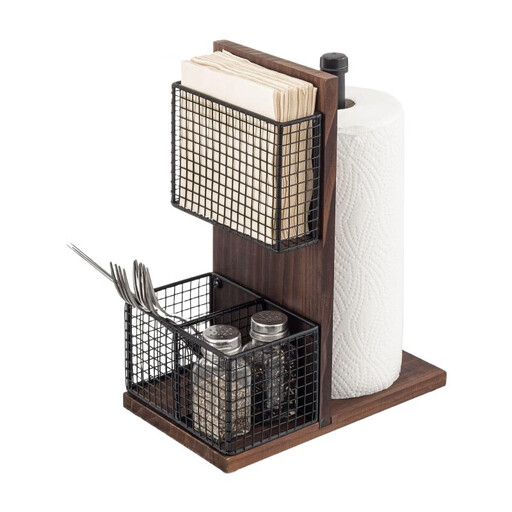
Why This Fits Their Persona: For users who want a shelf that is not just functional but also a deliberate design statement. The combination of dark solid wood and black metal pipes fits well with industrial or farmhouse styles.
Using solid wood and powder-coated metal piping bypasses the pitfall of low-quality materials. The construction is designed for durability and stability, not just looks.
The 3-in-1 function (paper towel holder, napkin holder, spice compartments) consolidates multiple organisational tasks into one compact, aesthetically pleasing product. Silicone feet protect the countertop from scratches.
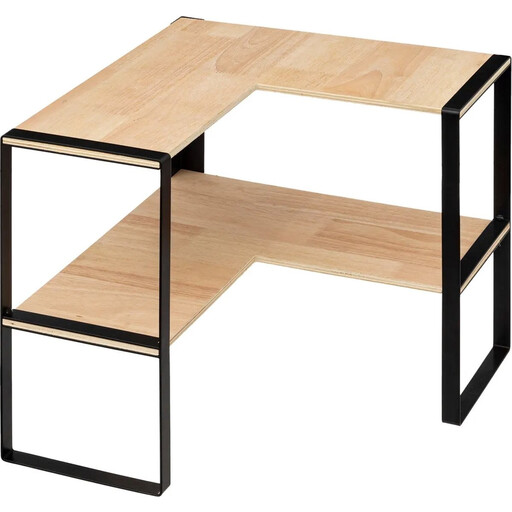
Why This Fits Their Persona: Perfect for utilising "dead corners" on the countertop or in a cupboard. This shelf is a specific solution for the common problem of unused space.
By being specifically designed for corners, it bypasses the pitfall of impractical dimensions. A rectangular shelf never fits optimally in a corner, whereas this model makes full use of the space.
The two-tier design doubles the usable surface area in a corner. It is excellent for storing spices, mugs, or small jars that would otherwise get in the way.
We have compiled a complete, up-to-date list of products that fully meet these strict selection criteria and UK safety regulations.
For daily care, a dry or slightly damp, soft cloth is usually sufficient. Avoid harsh cleaning agents or abrasive sponges, as they can damage the wood's surface seal and the metal's powder coating. For tougher grime, a mild, pH-neutral cleaner can be used. Always wipe the shelf dry afterwards.
The maximum load capacity, usually specified in kilograms per shelf, is the manufacturer's designated upper limit for the weight a shelf can safely support. Exceeding this limit can lead to material fatigue, bowing, or, in the worst-case scenario, the collapse of the shelf. For safety reasons, this value should always be respected.
Yes, many compact, freestanding kitchen shelves are excellent for use as a shelf insert. They help to structure the often-unused vertical space in deep or tall kitchen cupboards. For example, you can divide stacks of plates or organise mugs and glasses on two levels. Before buying, measure the internal dimensions of your cupboard (height, width, depth) to ensure the shelf will fit.