
Lieferung heute & morgen

Qualitätsgarantie

Willkommens-Angebote freischalten: KOSTENLOSE Lieferung | Bis zu 80 % RABATT | Kostenlose 30-Tage-JoyPlus-Testphase
App herunterladen
A freestanding shelf is more than just a place for storage. It's a piece of furniture that creates order, expresses personality, and structures a room. But the search for the right model can quickly become overwhelming. Many products look appealing online, only to prove unstable or impractical after assembly. This guide will help you identify the crucial features and avoid common purchasing pitfalls.
Before you decide on a model, you should be aware of the most common problems that often only become apparent after purchase.
To avoid a bad purchase, focus on three objective criteria: material, stability, and functionality.
The choice of material affects not only the look but, more importantly, the stability and lifespan of your shelf.
A shelf must be stable, especially in households with children or when heavily loaded.
A freestanding shelf can serve various functions. Before buying, consider how you primarily intend to use it.
Here are some recommendations tailored to specific user profiles that meet the quality criteria mentioned above.
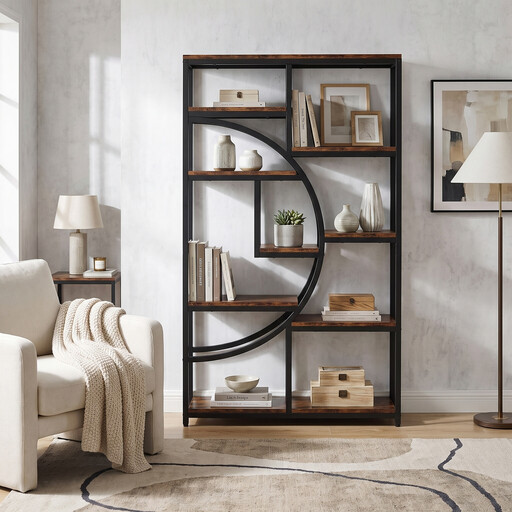
Why This Fits Their Persona: Ideal for anyone looking for a functional piece of furniture that doubles as a design object. The geometric half-moon shape is a showstopper and offers space for books, plants, and decorative items across nine shelves.
The powder-coated iron frame provides solid structural stability, avoiding the wobbliness that is often an issue with purely decorative shelves. The scratch-resistant surface is more durable than simple foil finishes.
Combines unique design with high functionality; versatile for use as a bookshelf or display unit in the living room or office.
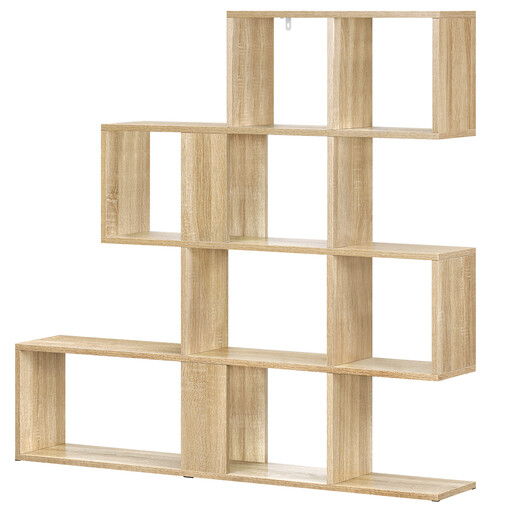
Why This Fits Their Persona: Perfect for users who need maximum flexibility. This stepped shelf can be placed against a wall or used as a modern room divider, offering enormous storage space for various items with its 11 compartments.
The shelf comes with an anti-tip kit to securely fasten it to the wall if needed. Its wide base and non-slip pads ensure good structural stability even when used as a freestanding unit.
Extremely versatile as a bookshelf, room divider, or file shelf; the melamine veneer surface is robust and easy to clean.
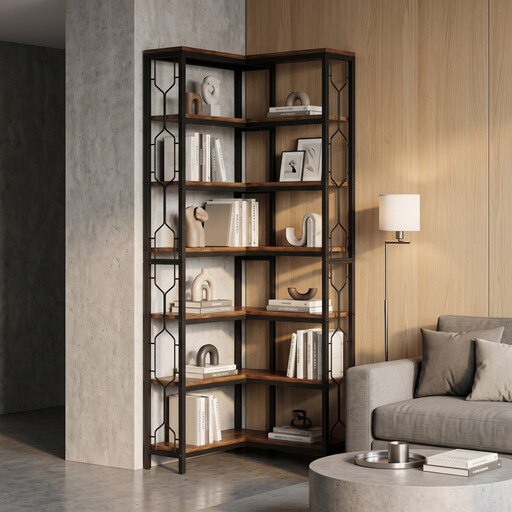
Why This Fits Their Persona: This corner shelf is the solution for anyone looking to transform unused corners into maximum storage space. With seven tiers, it offers plenty of room for books, plants, or kitchen utensils on a small footprint.
The L-shape and sturdy metal frame provide excellent inherent stability. Adjustable feet and an anti-tip kit proactively address the stability issues that can occur with tall, narrow shelves.
Maximises use of corner space; high load capacity of up to 45 kg per shelf according to the manufacturer; side grids prevent items from falling off.
We have compiled a complete, up-to-date list of products that fully meet these strict selection criteria and safety standards.
Most freestanding shelves come with an anti-tip kit. This usually consists of a bracket or strap that is screwed to the shelf and the wall. Use wall plugs and screws appropriate for your wall type. Position the fastener in the upper third of the shelf to effectively minimise leverage and the risk of tipping.
A melamine resin coating is a thermosetting plastic that is fused directly onto the core board (e.g., particleboard) under heat and pressure. This creates a very hard, scratch-resistant, and easy-to-clean surface. A foil finish, on the other hand, is a thin plastic film that is glued to the board. It is more susceptible to scratches and moisture, and can peel at the edges over time.
Yes, an open-back shelf works well as a room divider because it visually separates a space without completely closing it off or blocking light. For this use, pay special attention to a sturdy construction with a solid frame or a wide base, as the shelf will not be supported by a wall. Models explicitly designated as room dividers typically offer the necessary stability.