
Lieferung heute & morgen

Qualitätsgarantie

Willkommens-Angebote freischalten: KOSTENLOSE Lieferung | Bis zu 80 % RABATT | Kostenlose 30-Tage-JoyPlus-Testphase
App herunterladen
A new standing shelf should bring organization, provide storage, and look great while doing it. But the search can quickly become overwhelming. Many models that look impressive online turn out to be unstable or impractical after assembly. As your Joybuy Product Recommendation Officer, I'll help you identify the crucial features and avoid common purchasing traps, so you can make an informed decision.
Before we get to the solutions, it's important to understand the problems. Many buyers regret their choice due to three recurring issues that often only become apparent after assembly.
To avoid these problems, you should check three technical aspects before buying. These define the durability, safety, and functionality of your new furniture.
The choice of material affects not only the appearance but also the sturdiness.
A freestanding shelf must be secure, especially in households with children or pets.
Measure the available space precisely—height, width, and depth. Then, consider which type of shelf best serves your purpose.
Here are some models tailored to specific needs that incorporate the quality features mentioned above.
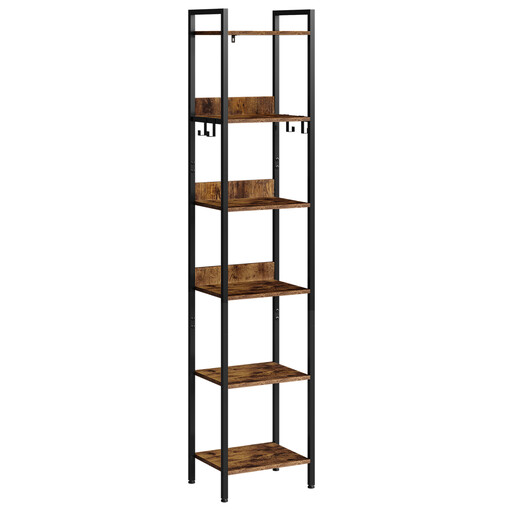
Why it's a great fit: Ideal for anyone who loves the popular industrial style but doesn't want to compromise on functionality. It works equally well as a bookcase in the living room or a practical shelf in the kitchen.
The combination of a powder-coated metal frame, cross-bracing, and an included anti-tip kit counteracts the "wobble trap." The adjustable feet ensure a stable footing on uneven floors.
The 4 movable hooks provide flexible, additional storage for towels, kitchen utensils, or bags—a thoughtful detail that enhances its practicality.
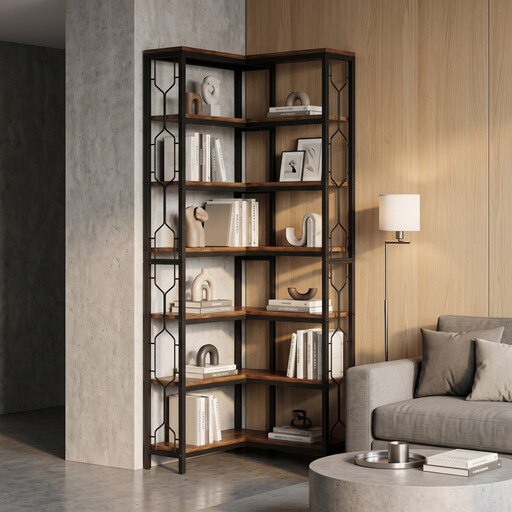
Why it's a great fit: Perfect for anyone looking to transform an unused corner into a functional and decorative storage space. The L-shaped design maximizes the use of space without protruding into the room.
The high load capacity of up to 45 kg per shelf (according to the manufacturer) and the reinforced metal frame ensure high stability. The side mesh panels prevent items from falling off—a simple but effective detail against impractical design.
With seven tiers on a height of 200 cm, this corner shelf offers exceptional vertical storage on a small footprint. Adjustable feet and an anti-tip kit are also included.
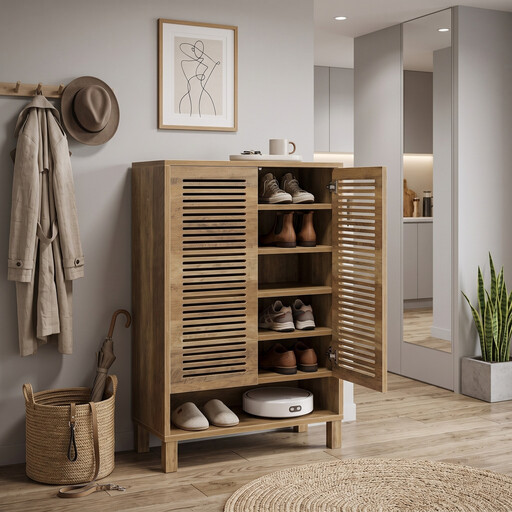
Why it's a great fit: This piece of furniture is a targeted solution to the everyday problem of shoes cluttering the entryway. It combines storage space with an attractive, enclosed design.
The louvered doors provide ventilation for shoes and prevent odor buildup. The adjustable shelves solve the impractical design trap by creating space for boots and high-top shoes.
The closed front with doors creates a tidy, uncluttered look in the hallway. The open bottom compartment is practical for shoes that are worn daily.
We've compiled a complete, up-to-date list of products that fully meet these strict selection criteria and safety standards.
1. How do I securely fasten a standing shelf to the wall? Most tall standing shelves come with an anti-tip kit. This usually consists of a bracket or a strap that is screwed to the shelf and the wall. For wall mounting, use anchors and screws that are appropriate for your wall type (e.g., concrete, drywall). This is a crucial safety step and should not be skipped.
2. What materials are suitable for a standing shelf in a basement or bathroom? In rooms with high humidity, you should choose materials that are resistant to moisture. Shelves made of plastic (polypropylene) or powder-coated metal are a good choice here. Avoid untreated wood or simple particle boards with a foil coating, as they can swell and become damaged.
3. How much weight can an average bookcase hold? This varies greatly depending on the model and construction. There is no one-size-fits-all answer. Always check the maximum load capacity per shelf in the manufacturer's product description. As a rule of thumb, shelves with thick boards and sturdy side panels or a metal frame can typically support more weight than simple, lightweight designs. Always place heavy books and items on the lower shelves to maximize stability.